Spring Turkey Calling in Nebraska’s River Corridors
There's nothing quite like the sound of a gobbler hammering back at your call on a crisp spring morning, but for many Nebraska turkey hunters, that experience has become increasingly elusive. Our river corridors, once bastions of robust turkey populations, now present a unique challenge, often frustrating even the most seasoned callers. This comprehensive guide will arm you with the specific knowledge and tactics needed to effectively call spring turkeys in the dense, often tricky, environment of Nebraska's river bottoms, turning those silent mornings into successful hunts.
Understanding Nebraska's River Corridor Turkeys
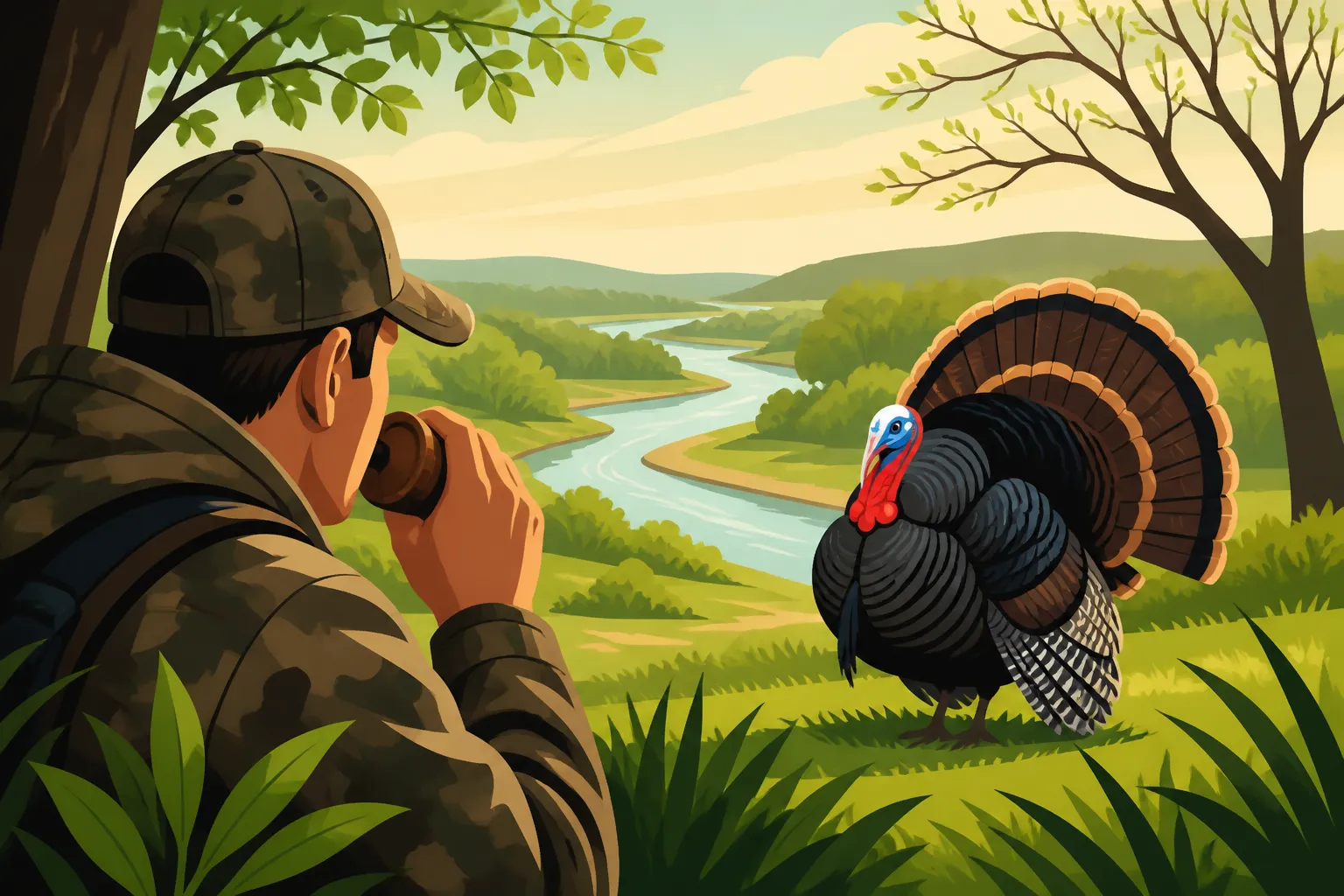
Hunting turkeys in Nebraska's river corridors isn't like chasing birds in open agricultural fields or the sparse timber of other regions. These environments, shaped by waterways like the Platte, Loup, Elkhorn, and Missouri rivers, create unique challenges and behaviors in the birds that call them home. You need to understand these specific nuances before you even think about putting a call to your lips.
The Unique Habitat of River Bottoms
Nebraska's river corridors are linear oases of cover and food, often contrasting sharply with the surrounding agricultural landscapes or open prairies. Picture dense stands of cottonwoods towering over an understory of Russian olive, multiflora rose, wild plum thickets, and mature cedars. This thick cover provides everything a turkey needs: secure roosting sites, abundant nesting cover, and a diverse food source from acorns, wild berries, and insects. However, this density also means limited visibility for both you and the turkeys. A gobbler might be just 50 yards away, but you might never see him until he's practically on top of you, or worse, he sees you first. The terrain can be cut up with old oxbows, sloughs, and steep banks, creating natural barriers and travel routes that turkeys habitually use. Understanding these choke points and natural funnels is paramount to setting up successfully.
The turkeys found in these river bottoms are often a mix of Eastern and Rio Grande subspecies, leading to a blend of their characteristic behaviors. They can be incredibly wary, especially on public lands or areas that see regular pressure. Their survival depends on navigating this patchwork of thick brush and limited sightlines, making them experts at using cover to their advantage. Recognizing these habitat characteristics and how they influence turkey movement is your first step toward success.
Turkey Population Challenges in Nebraska
It's no secret that turkey populations across Nebraska, and indeed in many parts of the country, have faced significant declines in recent years. This trend has made hunting, especially calling in birds, considerably more challenging. Factors like habitat loss, changes in land use, increased predation, and disease outbreaks like Avian Influenza and Lymphoproliferative Disease Virus (LPDV) have all played a role. While the Nebraska Game and Parks Commission is actively working on conservation efforts, hunters must recognize that the sheer number of birds simply isn't what it once was. This means you might hear fewer gobblers, and those you do hear might be more reluctant to commit.
This decline leads to genuine frustration for hunters who remember days of multiple gobblers sounding off from every river bend. You might spend hours hearing nothing, or only sporadic gobbling from birds that seem uninterested in your calls. This isn't necessarily a reflection of your calling skill; it's often a direct result of lower turkey densities. Therefore, every encounter, every response, becomes more critical. You must maximize your chances by being more patient, more precise, and more adaptable in your calling and setup strategies. This context informs every other tactic we'll discuss, as effective river corridor calling now demands a higher degree of finesse and understanding than ever before. For a deeper dive into the broader picture, check out our guide on Wild Turkeys in Nebraska and Their Decline.
Understanding River Turkey Behavior
Turkeys in river corridors exhibit behaviors uniquely adapted to their environment. Unlike birds in more open country that might travel long distances across fields, river bottom turkeys tend to stick to established travel routes along the water, old logging roads, or game trails. They are masters of using the available cover, often slipping silently through dense thickets. This means a gobbler might respond vigorously to your call from afar but then approach with extreme caution, often "hanging up" just out of sight, relying on his superior eyesight to spot the hen.
They also tend to be very punctual with their daily routines, especially if not pressured. Locating their roosting sites and understanding their preferred fly-down areas and feeding zones is critical. Because of the limited visibility, they rely heavily on their hearing. A loud, aggressive call might pull a bird in, but often a softer, more subtle approach is necessary to coax a wary gobbler through the last few yards of dense cover. They are less likely to run across an open field to a call and more likely to follow the contours of the river, using every available piece of brush for concealment. This requires you to think like a turkey, anticipating their movements through the labyrinthine river bottom, and setting up accordingly.
Scouting the River Bottoms Before the Season
Effective turkey hunting, especially in the challenging environment of Nebraska's river corridors, begins long before opening day. Pre-season scouting is not just an advantage; it's a necessity. It helps you understand the lay of the land, predict turkey movements, and identify key locations that could mean the difference between tagging out and going home empty-handed.
Identifying Roost Trees and Fly-Down Zones
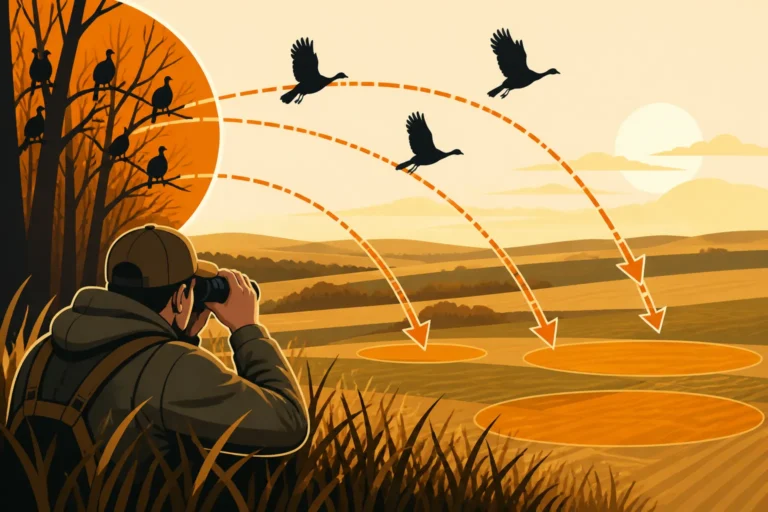
Locating roost trees is arguably the most critical piece of pre-season scouting for river corridor turkeys. Turkeys are creatures of habit, often roosting in the same general areas, especially in the largest, tallest trees that offer good visibility and security. In river bottoms, these are almost exclusively giant cottonwoods or mature sycamores along the main river channel or larger tributaries. Head out before sunrise or just before sunset during the weeks leading up to the season. Listen for gobbling at dawn as they wake up, or for their distinctive "tree yelps" and wing beats at dusk as they fly up to roost.
Once you identify potential roosts, pay close attention to the terrain directly below and around them. This is their fly-down zone. Turkeys prefer to fly down into open areas where they can strut, feed, and feel safe from ground predators. Look for subtle clearings, old logging roads, or the edges of agricultural fields adjacent to the timber. Mark these spots on your mapping app, perhaps using a tool like GoHunt to drop pins and even note specific tree characteristics. Knowing these spots allows you to position yourself strategically before light, placing you directly in their path when they hit the ground, ready to make those first crucial morning calls.
Locating Turkey Travel Corridors and Dusting Bowls
Turkeys don't just wander aimlessly through the river bottom; they use established travel corridors, especially where the cover is dense. These are essentially turkey highways, and identifying them is key to intercepting birds. Look for well-worn game trails, often paralleling the river or following old logging roads or dry creek beds. Pay attention to pinch points—places where the dense cover funnels turkeys into a narrow strip of travel. These might be spots where the river bends sharply, or where a slough cuts off easy passage, forcing birds to walk a specific land bridge.
Beyond travel routes, turkeys, like all wild birds, need to dust themselves to rid their feathers of parasites. Look for shallow depressions in dry, sandy soil, often near the edges of thickets or in sunny spots. These "dusting bowls" will have telltale turkey feather and droppings. Finding active dusting bowls tells you birds are using that specific area during the day. Similarly, search for strut marks—dragged wingtips in bare earth—and droppings, especially large, J-shaped droppings from gobblers. These signs, along with tracks, confirm not only that turkeys are present but also their preferred daily routes and activities. A platform like GoHunt can help you scout these features by analyzing satellite imagery for open areas within the timber.
Identifying Key Food and Water Sources
While river bottoms generally provide ample water, identifying specific feeding areas can be a game-changer. Turkeys are opportunistic feeders, and their diet changes with the seasons. In spring, they'll be keying in on fresh green growth, insects, and residual mast from the previous fall. Look for areas with open grassy patches, clover, or alfalfa fields adjacent to the timber. If there are oak or hackberry trees, scout for acorn or berry production from the previous year. You might find turkeys scratching through leaf litter in search of remaining nuts.
Water is usually abundant in river corridors, but turkeys might have preferred watering holes, especially during dry spells or if the main river is high. Look for shallow puddles, seepages, or quiet sloughs. While less critical than food, consistent water sources can sometimes concentrate birds, particularly later in the spring when temperatures rise. By combining knowledge of roosts, travel corridors, and feeding areas, you can develop a comprehensive picture of a gobbler's daily pattern, allowing you to intercept him as he moves through his territory.
Essential Calling Strategies for River Corridors
Calling turkeys in Nebraska's river corridors is an art form that requires nuance and adaptability. The dense cover and often wary nature of these birds mean that a "one-size-fits-all" approach rarely works. You need a diverse arsenal of calls and a keen understanding of when and how to deploy them.
Mastering Subtle and Soft Calls
In the thick, broken terrain of river bottoms, less is often more. Over-calling or making loud, aggressive calls right off the bat can often scare off a wary gobbler or cause him to hang up just out of sight. Instead, focus on mastering subtle and soft calls. Think light tree yelps as the first rays of dawn hit the timber, soft clucks, purrs, and quiet hen yelps. These non-threatening sounds often pique a gobbler's curiosity without putting him on high alert.
Soft calls are especially effective when a gobbler is close, but you haven't seen him, or when he's hung up. A series of quiet clucks and purrs, mimicking a contented hen, can sometimes be enough to draw him those last critical few yards. Use a pot call or a mouth call for these, as they allow for precise volume control. Sometimes, all it takes is a few soft calls, followed by a long period of silence, to make a gobbler think the hen is moving away, compelling him to close the distance. Patience is paramount with this strategy.
Aggressive Calling and Gobbling Tactics
While subtlety is often key, there are times when an aggressive approach is precisely what's needed, especially when dealing with a boss gobbler or a bird that's further out. Aggressive calling doesn't necessarily mean just being loud; it means calling with conviction and mimicking the urgency of a breeding hen. This includes sharp, excited yelps, cutting, and cackles. A box call or a loud diaphragm call is excellent for these.
Sometimes, a bit of gobbling, either with a gobble tube or by mimicking a gobble on a mouth call, can challenge a dominant tom and draw him in. However, use gobbling sparingly and with extreme caution, particularly on public land, as it can attract other hunters. The goal with aggressive calling is to create a sense of urgency or competition, making the gobbler believe another tom is moving in on "his" hen, or that a hot hen is about to leave his territory. This can be particularly effective during the peak of the rut when toms are most competitive. Remember, if you use a gobble call, always assume there's another hunter in the area and take extra precautions to identify your target before shooting.
Decoy Placement and Realism
In dense river bottoms, decoy use needs careful consideration. Unlike open fields where a full-strut tom might be visible from hundreds of yards, limited visibility means your decoys won't be seen until a gobbler is much closer. This necessitates placing them where they will be immediately visible upon the gobbler's approach. Look for small clearings, old logging roads, or open areas along game trails. The best placement is usually 15-20 yards from your setup, allowing for a close shot.
A single hen decoy, or a hen-and-jake combination, is often more effective than a full-strut tom in these environments. A lone hen appears less threatening, while a jake can often infuriate a mature gobbler enough to come investigate. Make sure your decoys are realistic. Cheap, flimsy decoys can often do more harm than good. Brands like Avian-X, Dave Smith Decoys, or Primos often offer highly realistic options. Position them to face away from your setup, as an approaching gobbler will often circle to face the decoy head-on, presenting a perfect broadside shot. Ensure your decoys are visible but not so exposed that they look out of place. If you're Hunting Turkeys With a Bow in Nebraska, closer decoy placement is even more critical.
Setting Up for Success: Blinds and Ambush Points
The dense cover of Nebraska's river corridors provides both a challenge and an opportunity. While visibility can be frustratingly limited, it also offers ample natural concealment. Your setup needs to leverage this cover to your advantage, ensuring you remain hidden from the sharp eyes of an approaching gobbler.
Utilizing Natural Blinds and Terrain Features
In the thick river bottoms, Mother Nature often provides the best concealment. Instead of hauling in a heavy pop-up blind, look for opportunities to set up against large trees, fallen logs, or dense thickets of cedars or Russian olive. The key is to break up your outline completely. A thick, multi-trunked cottonwood can be an excellent natural blind, especially if you can get directly against it. Always set up with your back to something wider than your shoulders to prevent a gobbler from seeing your outline from behind.
Look for areas where the terrain creates natural ambush points. A sharp bend in a creek, a narrow strip of timber between two sloughs, or the edge of a small clearing are all excellent locations. Turkeys often follow the path of least resistance, and these natural funnels can guide them directly into your lap. When you choose a spot, take a moment to clear any noisy leaves or twigs from your immediate shooting lane. The last thing you want is a crunch underfoot when a gobbler is about to step into range. Our guide on Setting Up Against a Cottonwood offers more specific tips for these types of natural blinds.
Portable Ground Blinds in Strategic Locations
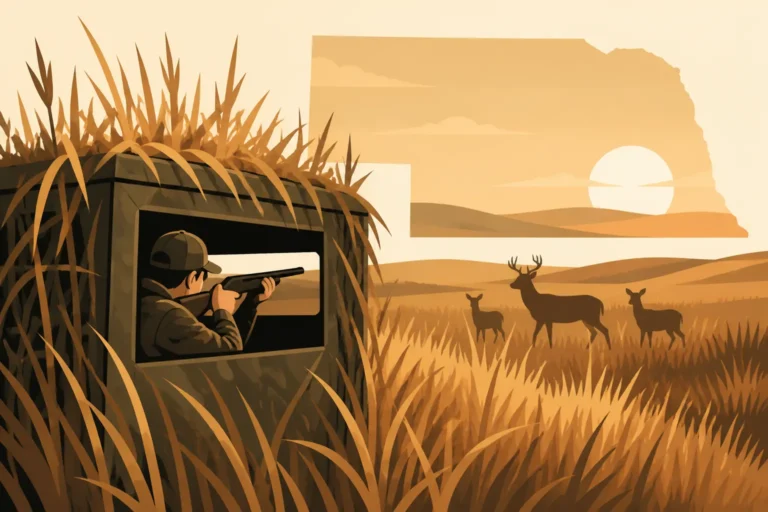
While natural blinds are fantastic, sometimes the cover isn't quite right, or you need more flexibility. This is where a portable ground blind truly shines. Brands like Primos, Barronett, and Ameristep offer lightweight, packable blinds that can be set up quickly. The advantage here is not just concealment but also the ability to comfortably move and call without being easily detected. This is especially useful if you anticipate a long sit or if the area you've chosen has limited large trees or thick undergrowth to hide behind.
When using a portable blind in a river corridor, consider its visibility. You don't want it sticking out like a sore thumb. Brush it in with natural vegetation – dead grass, small branches, or leaves – to help it blend seamlessly with the surroundings. Place the blind where you have good shooting lanes in multiple directions, but most importantly, towards the most likely approach route of a gobbler. Remember that these blinds can catch the wind, so make sure it's anchored securely, especially if hunting on an exposed riverbank.
Strategic Entry and Exit Routes
Often overlooked, but critically important in pressured river bottoms, are your entry and exit routes. Turkeys are incredibly sensitive to disturbance, and busting them on the way in or out can ruin a spot for days. Use your scouting information and mapping tools (like GoHunt) to plan routes that keep you concealed and quiet. Try to use natural depressions, creek beds, or dense tree lines to shield your approach. Avoid skylining yourself on ridges or walking through open areas if possible.
Early morning entry means using the cover of darkness to your advantage. Try to be in your setup well before fly-down, giving the woods time to settle around you. When exiting, especially after a successful hunt, try to avoid making unnecessary noise and definitely don't walk through areas where you expect turkeys to be feeding or roosting later in the day. Your goal is to be a ghost in the woods, leaving no trace of your presence to alert the wary birds that call the river corridor home. This strategic planning also ties into public land hunting where other hunters might be around, as discussed in Run-and-Gun Turkey Tactics on Nebraska Public Ground.
Adapting to Different Stages of the Spring Season
Spring turkey hunting in Nebraska is not a static endeavor. The birds' behavior changes dramatically from the chilly days of early season to the warmer, sometimes more challenging, late season. Your calling and hunting tactics must evolve to match these shifts.
Early Season Strategies: Patience is Key
The early days of Nebraska's spring turkey season, typically starting in mid-April, can be characterized by cold mornings and less intense gobbling activity. Hens may still be grouped up, and gobblers might be more focused on locating these larger groups rather than responding to a lone hen call. Patience is truly key during this period. Turkeys are often still in their winter patterns, meaning they might roost together and then move to established feeding areas.
Focus on locating roosting birds and setting up very close, but stealthily, before fly-down. Your calling should be moderate, focusing on soft tree yelps and contented clucks as they fly down. As the morning progresses, try some soft hen yelps and purrs, mimicking a hen feeding contentedly. Don't be afraid to sit in one spot for an hour or more if you've heard a bird. They might be slow to respond, or they might be waiting for other hens to join them before coming to your call. Decoy use can be very effective here, as a visible hen or jake can be a strong visual attractant to a gobbler still looking to establish his pecking order or gather a harem.
Peak Rut Tactics: Aggression and Competition
As the season progresses into late April and early May, you're usually hitting the peak of the breeding season, or "rut." This is when gobbling activity typically increases, and toms are most aggressive and responsive to calls. Hens are often starting to nest, which means more lonely gobblers are out searching. This is when you can often get away with more aggressive calling. Excited yelps, cutting, and cackles can mimic a "hot" hen and often draw a competitive gobbler in quickly.
During the peak, gobblers might come charging in, but they can also be very henned-up, meaning they have real hens with them. If a gobbler is with hens, he's less likely to leave them for your calls. In this scenario, trying to call the hens to you can sometimes pull the gobbler along. If you hear multiple gobblers, play on their competitive nature. A series of cuts and yelps, followed by a gobble (used cautiously!), can sometimes bring in a territorial tom. Being mobile, especially on public ground, can also be effective. If a bird isn't coming, break down your setup and try to circle ahead of him or reposition to cut him off.
Late Season Challenges: Wary Birds and Silent Toms
By late May, the Nebraska spring turkey season is winding down, and hunting can become significantly more challenging. Hens are largely on their nests, meaning most gobblers are lonely, but they've also been called at, spooked, and hunted for weeks. These late-season birds are often incredibly wary, highly educated, and prone to being "silent." You might not hear them gobble much, even if they're close. This requires extreme stealth and a different calling approach.
During the late season, subtle, drawn-out calling often works best. Long pauses between a few soft yelps or purrs can make a gobbler think you're a real hen moving through the woods. Focus heavily on scouting to identify travel corridors and feeding areas, and then sit patiently. Decoys are still valuable, but opt for a single hen or a submissive jake setup. Gobblers might still come in, but they'll often circle wide, using all available cover, so be ready for them to come from unexpected directions. Persistence and patience are your greatest allies when dealing with these seasoned, late-season toms. If you are interested in extending your season, consider Hunting Nebraska Turkeys in Late Season.
| Call Type | When to Use It | Volume/Aggression | Purpose |
|---|---|---|---|
| Tree Yelps | Pre-dawn on roost, fly-down | Soft to Moderate | Mimic hen waking up, announcing presence |
| Soft Yelp/Cluck | Early season, wary birds, close-range | Low to Moderate | Contented hen, coaxing a hung-up gobbler, non-threatening |
| Excited Yelp/Cut | Peak rut, competitive birds, distant calls | Moderate to High | Impassioned hen, creating urgency/competition |
| Purr/Putt | Close range, calm hen, getting gobbler to commit | Very Low | Contentment, close-quarters communication, often mixed with soft clucks |
| Cackle | Fly-down, breaking from a roost, very excited hen | Moderate to High | Mimics hen flying down from roost, aggressive |
| Gobble | Sparingly, to challenge a dominant tom (with caution!) | High | Aggression, challenging male turkeys (use with extreme care, especially on public land) |
Troubleshooting Common Calling Challenges
Even with the best preparation, turkeys can be incredibly unpredictable, especially in the nuanced environment of river corridors. You'll inevitably face situations where birds just don't do what you expect. Learning to troubleshoot these common calling challenges is a critical skill for any Nebraska turkey hunter.
The Hung-Up Gobbler Dilemma
One of the most frustrating scenarios in turkey hunting is the "hung-up" gobbler. You've called him in, he's hammering, but he just won't commit. He's often visible, but just out of range, or hidden behind a final barrier of thick brush, waiting for the "hen" to come to him. This is particularly common in river bottoms where turkeys can rely on thick cover for security. The instant reaction is often to call more aggressively, but this can actually make the problem worse, confirming his suspicion that the hen isn't moving.
When a gobbler hangs up, the best tactic is often to stop calling. Go completely silent for 15-20 minutes. This can make the gobbler think the hen has lost interest or moved away, sometimes prompting him to come investigate. If that doesn't work, try moving away from him very subtly, making a few soft "lost hen" yelps as you go. This can play on his instinct to find the "leaving" hen. If you have a decoy, sometimes just gently rocking it to simulate movement can draw his eye and bring him closer. Remember, he's looking for the hen to come to him, so reversing that expectation can be a powerful motivator.
Dealing with Silent and Spooked Birds
Silent gobblers are the bane of many a turkey hunter. You know they're in the area from scouting or previous encounters, but they just won't gobble, even to your calls. This is especially prevalent in the late season or in heavily pressured areas. A silent approach requires extreme patience and a deep understanding of turkey patterns. Instead of trying to force a gobble, focus on subtle calls: soft clucks, purrs, and quiet hen yelps, mimicking a contented hen going about her day.
If you suspect a bird has been spooked, either by you or another hunter, the best thing to do is usually back off and give the area several hours, or even a day, to cool down. A spooked bird will be on high alert and very difficult to call in. If you want to continue hunting, move to an entirely different location. When a bird simply isn't gobbling, even to aggressive calling, try a "shock gobble" with a crow call, owl hooter, or coyote howl. Sometimes an unexpected loud noise can trigger a reflex gobble, revealing his location without putting him on edge from a turkey call.
Over-Called and Pressure-Cooked Gobblers
Nebraska's river corridors, especially those on public land, can experience significant hunting pressure, leading to "over-called" gobblers. These birds have heard every yelp, cluck, and cut imaginable, and they've likely been spooked by inexperienced callers. They become incredibly call-shy and wary, often shutting down completely or moving away from any turkey-like sound. This is a common frustration, and it demands a tactical shift.
For over-called birds, less is more. Focus on minimalist calling: just a few soft purrs or clucks, with very long periods of silence in between. Think about the "phantom hen" approach: make a few calls, then move silently to a different position, as if the hen is moving. This can make the gobbler think he needs to find her. Decoy placement becomes even more critical, as the visual of a hen might be the only thing that draws him in. Avoid the aggressive, rapid-fire calling often seen on TV shows; it will only reinforce his wariness. Persistence, stealth, and extreme patience are your only allies when facing these pressure-cooked toms. Additionally, understanding Second Season Pressure on Nebraska Public Ground can help you predict and mitigate these challenges.
Safety and Ethics in the River Bottoms
Hunting Nebraska's river corridors can be an incredibly rewarding experience, but the dense cover, varied terrain, and potential for other hunters demand heightened attention to safety and ethical considerations. We owe it to ourselves, other hunters, and the wildlife to always prioritize responsible behavior.
Hunter Identification and Blaze Orange
In the thick cover of river bottoms, identifying your target is paramount. Never, under any circumstances, should you shoot at sound or movement. You must be 100% certain of your target and what lies beyond it. This means waiting for the gobbler to fully step into view, verifying it's a legal bird (often a tom with a visible beard), and confirming there are no other hunters or non-targets in the line of fire. Given the winding paths and dense vegetation, it's easy for another hunter to approach from an unexpected direction.
While not always legally required for archery turkey hunting, wearing some blaze orange when moving through the woods, especially to and from your setup, is a wise safety precaution. Once you're set up, if you're bowhunting, you can remove it, but consider keeping a piece of orange visible if you're with a partner or expect other hunters. During Nebraska's nine-day November firearm deer season, or when any firearm deer season overlaps with archery turkey season, specific orange requirements apply, even for archers. Always check the current Nebraska Game and Parks regulations regarding Orange Requirements for Archers in November or any other applicable blaze orange rules. Visibility is a two-way street; you want to see your target, but also make sure other hunters can identify you as a human, not a turkey.
Respecting Landowner Rights and Boundaries
Nebraska is predominantly private land, and respecting landowner rights is not just good etiquette; it's the law. Before hunting any ground, even river corridors that seem wild and remote, ensure you have explicit permission from the landowner. If you're on public land, such as a Wildlife Management Area (WMA) or Open Fields and Waters (OFW) tract, always consult the Nebraska Public Access Atlas to verify boundaries and specific rules. Trespassing is a serious offense and tarnishes the reputation of all hunters.
River corridors often weave through multiple private properties, making it easy to inadvertently cross boundaries. Use a reliable mapping app (like GoHunt or onX Hunt) to stay aware of your precise location relative to property lines. If you wound a bird that runs onto private land, you must obtain permission from the landowner before pursuing it. Having a landowner's contact information handy is always a good idea. Building positive relationships with landowners is crucial for the future of hunting access in Nebraska, so always leave a good impression. Read our full guide on Nebraska Trespass and Permission Law to understand all the specifics.
Ethical Shot Placement and Game Recovery
Taking an ethical shot is a moral imperative for every hunter. For turkeys, this means aiming for the head and neck, which are relatively small targets but offer the quickest, most humane kill. A body shot on a turkey, especially with a shotgun, often results in wounded birds that can be difficult to recover, and can ruin valuable breast meat. Practice your calling, but also practice your shooting. Know your effective range with your chosen firearm or bow, and stick to it. Don't take Hail Mary shots.
In the thick cover of river bottoms, recovering a downed turkey can be challenging. A bird might drop instantly, but even a head-shot turkey can sometimes flop and run a surprising distance into dense brush. After the shot, keep your eyes on the spot where the bird went down, and if it runs, try to mark its last known direction. If you don't immediately see it, give it a few minutes before starting your search. This allows a wounded bird to expire. Search meticulously, expanding your grid pattern from the point of impact. Look for disturbed leaves, dropped feathers, and any sign of movement. Having a hunting partner for recovery can be incredibly helpful. Always ensure you have retrieved your bird and legally tagged it before moving on or leaving the field.
Disclaimer
Hunting is an inherently dangerous activity. The information provided in this guide is for informational purposes only and should not be taken as professional advice. Always prioritize safety, consult official Nebraska Game and Parks Commission regulations for the most up-to-date laws, and seek proper training before engaging in any hunting activities. The author and publisher are not responsible for any incidents or accidents that may occur from following the advice in this guide.