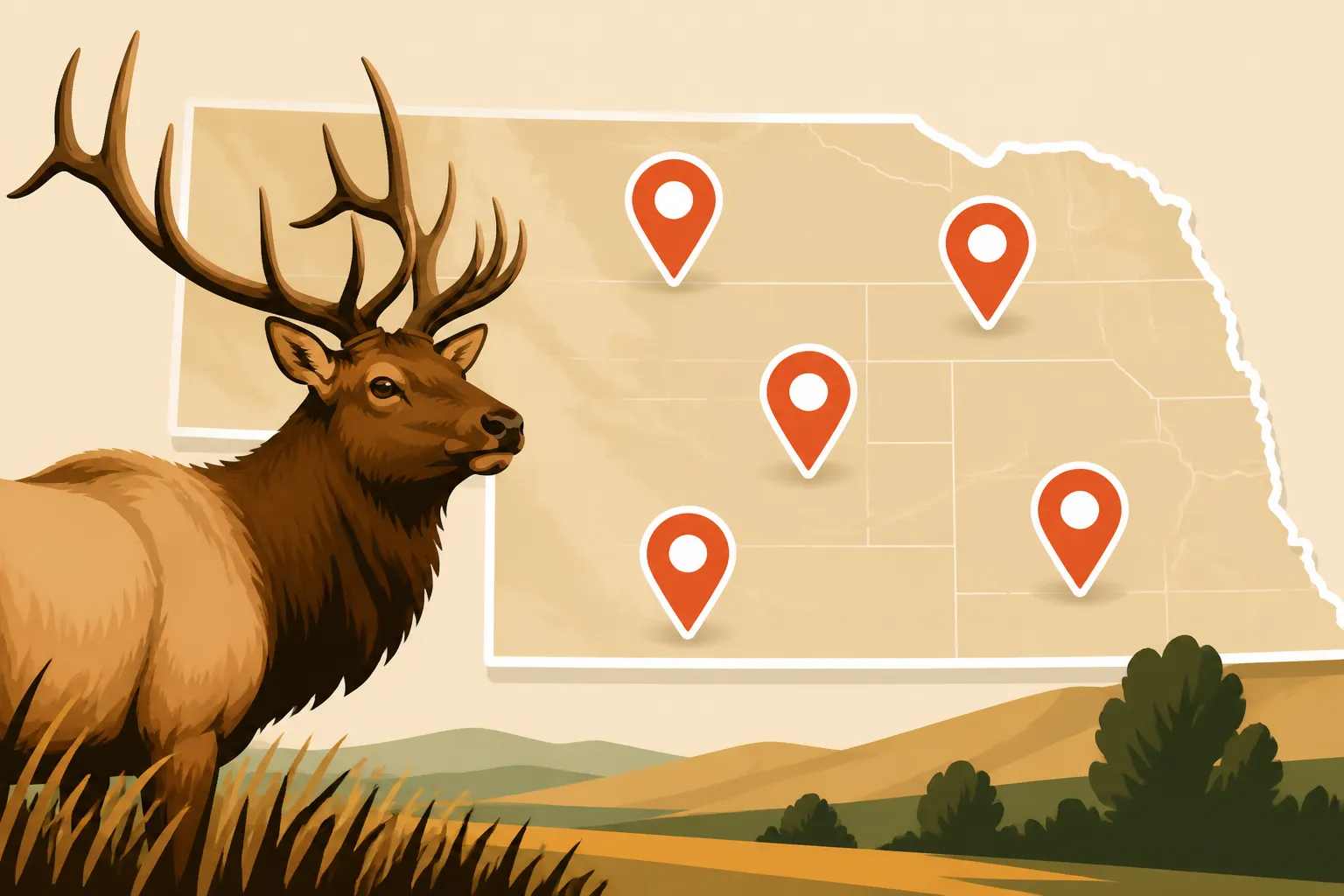
Nebraska Elk Herd Locations
For many hunters, the idea of elk in Nebraska might seem like a myth, a whisper of a bygone era. We're often picturing towering mountains and dense forests when we think of these magnificent animals, not the rolling plains or scattered timber of our home state. But rest assured, elk do roam Nebraska, and finding them is a dream for many. The real challenge isn't just knowing they exist, but understanding where exactly these elusive herds have made their homes, how they use the landscape, and what that means for both conservation and hunting opportunities. This guide is going to pull back the curtain on Nebraska's hidden elk country, helping you pinpoint their stomping grounds.
Where Nebraska's Elk Herds Roam
It’s easy to assume elk are strictly a western mountain species, but Nebraska, with its surprising diversity of habitats, hosts several established and growing herds. These animals are incredibly adaptable, and they've carved out niches in some of the state's most rugged and wild landscapes. Understanding these general regions is the first step toward appreciating the incredible opportunity an elk permit in Nebraska truly represents.
The Pine Ridge: Nebraska's Elk Stronghold
When you talk about elk in Nebraska, the conversation almost always starts with the Pine Ridge. This region, tucked away in the very northwest corner of the state, is the undisputed epicenter of Nebraska's elk population. It’s a truly unique landscape, a dramatic escarpment of ponderosa pine forests, deep canyons, and rugged breaks that stands in stark contrast to the vast grasslands surrounding it. This terrain offers exactly what elk need: cover, water, and varied forage.
Elk here thrive in the dense pine stands that provide excellent thermal cover in winter and shade in summer. The steep draws and canyons offer seclusion from human activity, allowing these large animals to feel secure. Think of areas around Chadron, Crawford, and Harrison – those rugged, timbered hills hold the highest concentrations of elk in the state. Hunters who draw a coveted Pine Ridge permit know they are in for a physically demanding hunt, navigating steep terrain and thick timber, but the reward of encountering a bull elk bugling through the pines is an experience unlike any other in Nebraska. The sheer remoteness and wild character of this area contribute significantly to the elk's ability to survive and expand their numbers.
Keya Paha and the Niobrara River: A Growing Presence
While the Pine Ridge gets most of the attention, a significant and increasingly robust elk population has established itself in north-central Nebraska, primarily within Keya Paha County and along the Niobrara River drainage. This area, characterized by its deep, timbered river breaks, cedar canyons, and patchwork of agricultural fields, offers a different but equally suitable habitat for elk. The Niobrara River itself acts as a vital corridor, providing water and cover, allowing elk to move and expand their range.
The elk here often utilize the dense cedar and hardwood thickets that line the river and its tributaries, especially during the day for bedding. At night, they might move out into adjacent private croplands to feed, which can sometimes lead to conflicts with landowners. This dynamic creates both opportunities and challenges for hunters. Access can be tougher here, as much of the land is private, but persistent scouting and building relationships with landowners can unlock incredible hunting potential. The Keya Paha region, though less talked about than the Pine Ridge, is quickly becoming a significant secondary elk hunting destination, demonstrating the species' resilience and ability to adapt to diverse Nebraska landscapes.
Transient Sightings and Scattered Pockets
Beyond these two primary strongholds, elk sightings can pop up in various other parts of Nebraska, though these usually represent smaller, more transient groups or individual animals. It’s not uncommon for elk to wander significant distances, especially younger bulls searching for new territory or cows moving between fragmented habitat patches. Areas like the Sandhills, particularly where there are larger public lands or extensive private ranches with good cover, have reported occasional elk. These sightings are less predictable and don't typically represent established, breeding herds that are available for regular hunting opportunities.
These scattered populations highlight the dynamic nature of elk distribution. Sometimes, these small groups might be the vanguard of a future herd, slowly colonizing new areas if habitat and tolerance allow. Other times, they might simply be wandering individuals whose journey ends without establishing a permanent presence. For hunters, knowing about these scattered pockets is less about planning a hunt and more about appreciating the wildness of Nebraska and the unexpected encounters it can offer. It serves as a reminder that wildlife doesn't always read the textbooks, and sometimes, nature has its own plans for expansion.
Understanding What Shapes Elk Distribution
Elk don't just randomly appear in Nebraska; their presence and distribution are shaped by a complex interplay of environmental factors, human influence, and the animals' own biological needs. Understanding these forces is crucial not only for hunters trying to locate them but also for conservationists working to manage healthy, sustainable herds. It's never as simple as "they like trees," because even within forested areas, specific conditions must be met for elk to thrive.
Habitat Preferences: More Than Just Trees
While forests are often associated with elk, their habitat preferences are much more nuanced, especially in a state like Nebraska. Elk are edge species, meaning they often prefer areas where different habitat types meet – where dense cover transitions into open feeding grounds. In the Pine Ridge, this translates to ponderosa pine forests providing bedding and security, interspersed with meadows and clearings offering nutritious grasses and forbs. In the Niobrara breaks, it's the cedar thickets and riverine hardwoods meeting the adjacent agricultural fields or native grasslands.
Water is also a non-negotiable factor. Elk need reliable water sources, whether it's flowing rivers, perennial creeks, or seeps and springs. The rugged canyons and drainages of both the Pine Ridge and the Niobrara provide abundant access to water, which is particularly critical during the hotter months and for lactating cows. Moreover, the quality of forage plays a huge role. Elk are primarily grazers, so access to palatable and nutritious grasses, forbs, and browse is essential for their health and reproductive success. A landscape might look great on a map, but if it lacks the specific food sources elk need, it won't hold them.
The Role of Private Land and Agricultural Influence
In a state with a vast amount of private land, the relationship between elk and landowners is a critical factor in their distribution. Elk, being large grazers, can cause significant damage to crops, fences, and hayfields, leading to understandable frustration for farmers and ranchers. This often pushes elk into areas where they are less likely to encounter conflict, or where landowners are more tolerant of their presence. The challenge for game managers is balancing the desire to maintain and grow elk populations with the need to mitigate these impacts on private property. Nebraska Elk Crop Damage in Nebraska is a serious concern that shapes where these herds can realistically expand.
This dynamic also means that many elk, particularly in areas outside of large public land tracts like the National Grasslands within the Pine Ridge, spend a good portion of their time on private ground. This greatly influences hunting access and requires hunters to be proactive in seeking permission from landowners. Hunters who draw a permit must be prepared to spend considerable time identifying potential hunting areas on private land, understanding that simply having a tag doesn't guarantee a place to hunt. This interaction between wild animals and human enterprise is a constant negotiation that determines the actual range of Nebraska's elk.
Herd Dynamics and Range Expansion
Nebraska's elk herds, though relatively small compared to western states, are dynamic populations. Nebraska Elk Herd History shows that these animals are not static; they are gradually expanding their range as populations grow and young animals disperse. Historically, elk were extirpated from Nebraska, and their return is a testament to natural recolonization and focused management efforts. The success of existing herds means that calves survive, grow, and eventually move out to find new territories, often following river drainages or continuous bands of cover.
This natural expansion is exciting for the future of elk in Nebraska, but it also presents management challenges. Where will these dispersing animals find suitable habitat that minimizes human conflict? How will new populations be monitored and managed? The state uses limited permits to control herd numbers and distribution, especially to prevent overpopulation in areas sensitive to agricultural depredation. Understanding these dynamics is essential for both agency staff and hunters, as it paints a picture of a species that is not just surviving but slowly reclaiming its place in the Cornhusker State.
Strategies for Locating Nebraska Elk
Drawing an elk permit in Nebraska is a monumental achievement, a testament to luck and persistence, considering how few are issued each year. But once you have that coveted tag in hand, the real work begins: finding where those elusive elk are hiding. This isn't like deer hunting in many parts of the state; elk require a different level of research, scouting, and understanding of their unique habits. Without a solid plan, you could spend your entire season looking in the wrong places.
Researching Elk Permit Units and Draw Information
Your first step after securing a tag is to dive deep into the specific elk permit unit you've drawn. Nebraska Elk Permit Numbers are extremely limited, and each unit has its own unique characteristics regarding habitat, public access, and elk behavior. You need to gather all the available information from the Nebraska Game and Parks Commission. Their website, hunting guides, and even direct communication with biologists can provide invaluable insights into herd distribution, population estimates, and areas known for elk activity. Pay close attention to unit boundaries, as these define your hunting area and often correspond to specific geographic or habitat features.
Consider utilizing tools like GoHunt's mapping and filtering services if you're a serious hunter. While Nebraska might not be their primary focus for elk, the principles of researching draw odds, understanding unit boundaries, and overlaying public land data are universally applicable. Such platforms can sometimes offer historical harvest data or insights into terrain that might not be immediately obvious from a basic map. This level of granular research before you even step foot in the field will save you countless hours and significantly improve your chances of success.
| Elk Permit Unit (General Area) | Primary Habitat Type | Key Access Challenges | General Elk Density |
|---|---|---|---|
| Pine Ridge | Ponderosa Pine Forest, Canyons | Rugged terrain, mixed public/private | High |
| Keya Paha | River Breaks, Cedar Thickets, Cropland | Mostly private land, permission crucial | Moderate to High |
| Hat Creek | Grassland, Scattered Ponderosa, Canyons | Remote, mixed public/private | Moderate |
| Frenchman | River Bottoms, Agriculture | Predominantly private | Low to Moderate |
| Ash Creek | Grassland, Limited Timber | Predominantly private | Low to Moderate |
This table provides a general overview and is not exhaustive of all Nebraska elk units, which can change.
Utilizing Digital Tools for Scouting and Access
Once you have a general idea of your unit, it's time to leverage modern technology for detailed scouting. Digital mapping applications, especially those tailored for hunters, are indispensable. Look for applications that allow you to view public and private land boundaries, topographical maps, satellite imagery, and even layers showing land cover types. The Nebraska Public Access Atlas is an excellent resource that should be your first stop, outlining publicly accessible lands within your unit, including Wildlife Management Areas (WMAs) and Open Fields and Waters (OFW) tracts.
These apps allow you to identify potential bedding areas (dense cover, north-facing slopes), feeding areas (open fields, prime forage), and travel corridors (ridges, creek bottoms, pinch points) long before you ever set foot on the ground. You can mark waypoints, measure distances, and plan potential access routes. For instance, you might use satellite imagery to spot an isolated patch of timber on private ground adjacent to a public access point, suggesting a potential bedding area if you can secure permission. While GoHunt might not have a Nebraska elk-specific overlay, their core mapping tools and land ownership data are invaluable for identifying these crucial details, helping you understand the puzzle pieces of the landscape.
Interpreting Sign and Understanding Elk Behavior
Even with all the digital tools in the world, nothing beats getting boots on the ground and learning to read the landscape. Elk leave abundant sign, and learning to interpret it is paramount. Look for fresh tracks, especially in muddy areas or along game trails. Rubs on trees (where bulls rub their antlers) and wallows (muddy depressions where elk roll) are definitive signs of their presence. Droppings can also tell you about their diet and the freshness of their presence. Nebraska Muzzleloader Deer Tactics in December emphasizes the importance of reading animal sign, and these same principles apply, perhaps even more so, to elk.
Understanding basic elk behavior is also critical. They are creatures of habit, often moving between bedding and feeding areas at dawn and dusk. They prefer security, so during hunting season, they'll often retreat to the thickest, most inaccessible cover during daylight hours. They also have excellent senses of smell, hearing, and sight, so being stealthy and playing the wind is crucial. Think about how they use thermals – rising air currents in the morning, falling currents in the evening – to detect danger. Patience and persistence are key when hunting Nebraska elk; they are not easily found, but with diligent scouting and a deep understanding of their habits, you can dramatically increase your odds of success. Scouting Nebraska Public Ground Before Opening Day is equally important for elk as it is for deer.
Disclaimer
This article is for general informational purposes only and does not constitute professional advice. Laws, prices and regulations vary by location and change over time. Consult a qualified professional for guidance on your specific situation.