Driving on an Open Fields Tract
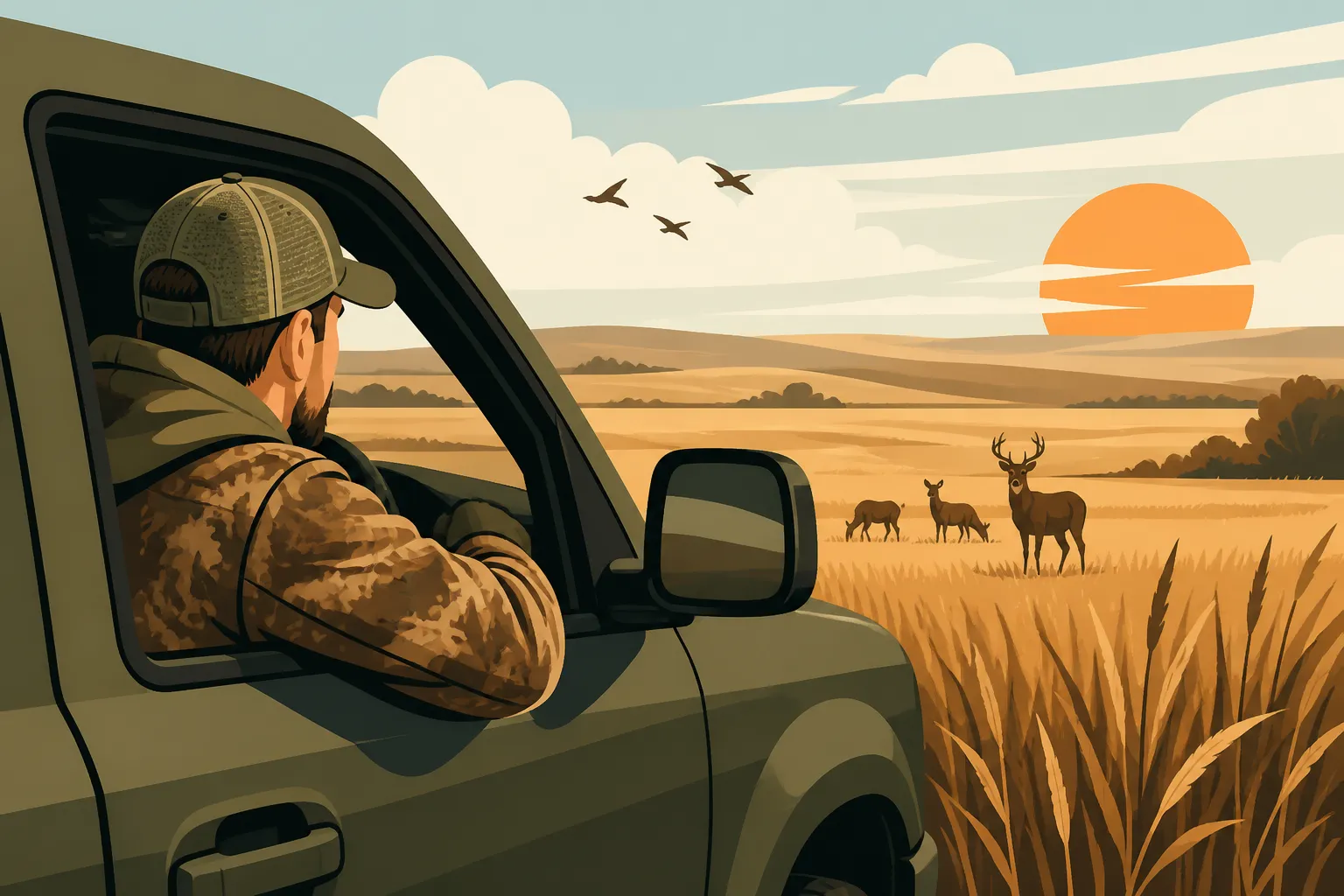
Navigating hunting land in Nebraska, especially those expansive Open Fields and Waters (OFW) tracts, can sometimes feel like trying to solve a puzzle, particularly when it comes to vehicle access. Many hunters, myself included, have pulled up to a promising looking piece of ground, eager to start our hunt, only to be met with signage that leaves us scratching our heads about where we can and cannot drive. This guide is here to untangle the nuances of driving on these specific parcels, helping you understand the rules and how to plan your hunts effectively.
Understanding Open Fields and Waters Tracts and Vehicle Access
Open Fields and Waters (OFW) tracts are a fantastic program here in Nebraska, providing hunters and anglers with access to private lands that might otherwise be completely off-limits. It’s a wonderful partnership between landowners and the state, opening up thousands of acres for public enjoyment. But precisely because it's private land enrolled in a public access program, the rules can be a bit different than what you might expect on traditional public ground, especially when it comes to vehicles.
When you think about accessing an OFW tract, it’s crucial to remember that you are a guest. The landowner is allowing public access, but they often have specific concerns about their property, crops, and livestock. Vehicle traffic can be a major disruptor to these concerns. Driving can compact soil, create ruts, damage crops (even after harvest, stubble can be fragile), spook wildlife, and potentially interfere with farming operations or livestock grazing. These are very real concerns for the people who are generously opening their gates for us. Nebraska's Open Fields and Waters Program explains the whole concept.
The fundamental principle on most OFW tracts is "walk-in access only." This is not an arbitrary restriction; it’s a core component of the agreement between the state and the landowner. It ensures minimal impact on the land, helps maintain the quality of the hunting experience by reducing disturbance, and often serves as a liability protection measure for the landowner. Imagine if everyone drove wherever they wanted – the ground would quickly become a mess, and landowners would be much less likely to participate in the program in the future. So, while it can be frustrating when you've got a long walk ahead of you to reach that perfect Setting Up on a Terrace Bench or Hunting a Creek Crossing in the Sandhills, these rules are in place for good reason and benefit all of us in the long run.
What "Walk-In Only" Really Means
When you see a sign that clearly states "Walk-In Only," it means exactly that: your feet are your primary mode of transportation beyond the designated parking area. This rule is designed to protect the integrity of the habitat, prevent property damage, and ensure a more primitive hunting experience, which many hunters actually prefer once they get past the initial effort.
"Walk-In Only" typically applies to all motorized vehicles, including ATVs and UTVs, unless explicitly stated otherwise. You might think, "Well, my UTV is small and light," but the rule is generally universal for a reason. Imagine the chaos if every hunter decided their specific vehicle was an exception. It would quickly defeat the purpose of the program. This rule also includes electric bikes or other powered forms of personal transportation that aren't considered mobility aids. If you're wondering about specific situations, the Nebraska Public Access Atlas is your best friend, offering detailed maps and rules for each tract. It's truly a wealth of information that can save you a lot of headache and potential violations.
Designated Parking Areas
Even on "walk-in only" tracts, there will almost always be a designated parking area. This is the spot where you can legally park your vehicle before heading out on foot. These areas are usually clearly marked with signage, often a small pull-off, a gravel lot, or a defined grassy area adjacent to a public road or access easement. It's imperative to always use these designated areas. Parking off to the side of a county road, blocking a gate, or pulling into a private drive without permission can lead to major issues. Not only is it disrespectful to the landowner, but it can also result in a ticket or even your vehicle being towed.
Always look for the green and white OFW signs, and within that signage, you'll often find specific instructions for parking. Sometimes, the parking area might seem a little distance from where you want to hunt, adding to that feeling of a long trek ahead. But this is part of the experience. It encourages deeper penetration into the property and helps spread hunters out, which can actually improve your chances of success by reducing pressure near easy access points. Before you even leave the house, check the Public Access Atlas for precise parking locations. Apps like onX Hunt can also be incredibly helpful here, showing property lines, public access points, and sometimes even specific parking icons.
The Rules of the Road (or Lack Thereof) on OFW Land
The vast majority of Open Fields and Waters (OFW) tracts in Nebraska operate under a strict "no driving beyond the parking area" policy. This is fundamental to the program and respecting the landowners who make these opportunities possible. However, understanding the why behind these rules, and recognizing the rare exceptions, can help you plan more effectively and avoid frustrating surprises.
The "no driving" rule isn't just about preventing ruts or crop damage, though those are significant factors. It's also about managing hunter density and minimizing disturbance to wildlife. If every hunter could drive right to their favorite spot, the areas near roads would be heavily pressured, and the sense of solitude and wildness would diminish. By requiring walk-in access, it naturally encourages hunters to spread out and explore deeper into the property, often leading to less crowded and more rewarding hunts for those willing to put in the effort.
General Restrictions and Enforcement
For most OFW tracts, the rules are clear: vehicles are permitted only on public roads and in designated parking areas. Period. This means no driving on two-track trails, field edges, through pastures, or down old farm lanes unless those are specifically marked as public access roads and allow vehicle traffic. The distinction is key. Many old farm lanes or two-tracks you might encounter on an OFW tract are still private property, or part of the managed access, and not for public vehicle use.
Enforcement of these rules falls to conservation officers. They patrol these areas just like any other public hunting ground. A violation could lead to a citation, and in some cases, revocation of hunting privileges. It’s simply not worth the risk. When in doubt, walk. It’s always better to err on the side of caution than to face a fine or alienate a landowner who is doing us all a favor by participating in the OFW program. Walk-In Only Rules on Open Fields Tracts delves deeper into these specific regulations. Remember that these tracts are often leased annually, and disrespecting the rules can jeopardize future agreements.
Rare Exceptions and Special Circumstances
While "walk-in only" is the default, there are occasionally specific situations or tracts where limited vehicle access might be allowed. These are extremely rare and will always be explicitly stated on the OFW signs at the access point and in the Public Access Atlas. I'm talking about very specific scenarios, perhaps a short access road to a boat ramp on an OFW pond, or an area where a road is shared with a public entity.
You might encounter situations where a landowner allows a specific kind of access for a limited time, for example, to retrieve a downed animal. This always requires direct communication and explicit permission from the landowner before you drive onto the property. You cannot assume anything. Never drive on an OFW tract based on what you think the rules might be, or what you heard someone else did. Always confirm with the signage, the Public Access Atlas, or even contacting the Game and Parks Commission if you have a specific question about a specific tract. Trust me, it's far better to make a phone call than to get in trouble or burn a bridge with a helpful landowner.
| Aspect | General OFW Rule (Typical) | Potential (Rare) Exception |
|---|---|---|
| Vehicle Access | Walk-in only beyond designated parking areas. | Explicitly marked access road to a specific feature (e.g., boat ramp). |
| ATVs/UTVs | Not permitted beyond designated parking. | Only if expressly permitted and marked for a specific purpose. |
| Parking | Only in designated, signed parking lots/pull-offs. | None; always use designated areas. |
| Private Roads/Trails | No public vehicle access, even if they look like roads. | Only if clearly marked as public access roads on signs and Atlas. |
| Retrieving Game | Often requires carrying game out on foot. | Direct, explicit permission from landowner beforehand may allow limited vehicle use for retrieval. |
| Consequences | Citation, fines, potential loss of hunting privileges. | Compliance means continued access and good landowner relations. |
Navigating Large Tracts When Driving Isn't an Option
Let's be honest, putting in the miles on foot can be daunting, especially when you're looking at a large OFW tract that promises great hunting but has you starting a mile or more from your target area. That initial feeling of "Oh man, that's a long walk" is totally normal. But with the right mindset and a bit of preparation, these longer walks can become some of the most rewarding parts of your hunting experience.
Think of it this way: if it's a long walk for you, it's a long walk for everyone else too. That means less hunter pressure deep in the tract, and often, more undisturbed game. Deer, pheasants, and turkeys learn quickly where the pressure is, and they'll gravitate towards areas that offer sanctuary. Your willingness to hike further could put you right in the middle of those secluded honey holes.
Gear and Planning for Extended Walks
When you know you're going to be hoofing it for a while, your gear choices become even more critical. Comfort and efficiency are key. Start with your feet: good quality, broken-in boots are non-negotiable. Blisters can ruin a hunt faster than anything. Consider lightweight but durable boots designed for walking miles in various terrain – Nebraska's varied landscape from sandy hills to stubble fields to muddy river bottoms can be brutal on footwear. You'll want to think about Boots for Walking Nebraska Grass and Sand.
Your pack should be comfortable and sized appropriately for a day hunt. Don't overload it, but make sure you have essentials: water (more than you think you'll need, especially on early season hunts), snacks, a first-aid kit, and adequate layers for changing weather. Packs for a Day on Public Ground is a great reference. If you're hunting deer and expecting to pack out meat, a good frame pack can make a world of difference. Trust me, dragging a deer out of a deep draw on a warm day without a plan is a quick way to learn this lesson the hard way.
Planning your route beforehand is crucial. Use tools like the onX Layers for Nebraska Land Status or the Public Access Atlas app to study the terrain, identify potential pinch points, cover changes, and water sources. Look for contours that might offer easier walking or natural funnels for game. Knowing the topography can save you valuable energy. I also like to mark potential bedding areas, feeding zones, and escape routes, allowing me to plan my approach and exit strategically. This kind of detailed scouting, even from your couch, is invaluable when you can't rely on your vehicle to get you close.
Strategies for Deeper Penetration
Once you’re out on the tract, don't just trudge straight to your "spot." Think like a hunter from the moment you leave the parking area. Your walk in is part of the hunt. Still-hunting, moving slowly and observing, can be incredibly effective. Pay attention to fresh sign, tracks, droppings, and rubs. Listen for subtle sounds. You might jump a pheasant in the first quarter-mile, or spot a buck bedded in a draw a few hundred yards off. Still-Hunting Nebraska Cedar Draws offers excellent advice that can be applied to many different cover types.
Consider setting up a ground blind. If you're going deep, a lightweight, portable ground blind can be a game-changer for concealment, especially on open prairie or along a fenceline. Using a Ground Blind on Nebraska Public Ground shares some useful tactics. These allow you to settle in and observe an area quietly for extended periods, letting the game feel comfortable moving around you. When hunting these larger tracts, especially for deer, remember that deer drives can also be an effective strategy if you're hunting with a partner or a small group. A two-person deer drive, strategically executed, can push game towards a waiting hunter. Two-Person Deer Drives on Small Timber might give you some ideas.
Finally, manage your expectations. A long walk means less time actively hunting in your prime spot. You might need to adjust your approach, focusing on key areas that offer the highest probability of success rather than trying to cover every inch. And always remember, the solitude and the challenge of walking in are part of what makes these hunts so special.
Planning Your Hunt: Scouting and Tools for Walk-In Access
Successfully hunting Open Fields and Waters tracts, especially those with extensive walk-in requirements, really hinges on meticulous planning and smart use of available resources. You can’t just show up and expect to drive to your hot spot. Instead, it becomes a strategic game of scouting, mapping, and anticipating game movement. This is where modern tools and old-fashioned legwork truly shine.
One of the biggest frustrations for hunters is investing time and effort into a hunt only to realize they've misjudged access or game patterns. With OFW, the walk-in rule means you need to be efficient with your time and energy once you leave the vehicle. This section focuses on how to leverage technology and good scouting practices to make those walk-in hunts more productive and enjoyable.
Utilizing the Public Access Atlas and Digital Mapping
The first and most critical tool for any hunter in Nebraska is the Public Access Atlas. This invaluable resource, available digitally and in print, details every single OFW tract, along with Wildlife Management Areas (WMAs) and other public lands. It provides maps, property boundaries, specific rules for each tract (including vehicle access limitations), and designated parking areas. Before you even consider visiting an OFW tract, download the Atlas or pick up a hard copy. Reading the Nebraska Public Access Atlas is essential reading for anyone hunting public ground here.
Beyond the Atlas, digital mapping applications like onX Hunt and GoHunt are absolute game-changers for walk-in access. These apps layer property boundaries, public land designations, topographic maps, satellite imagery, and even owner information right onto your phone or GPS device. With onX Hunt, you can mark potential parking spots, identify game trails, pinpoint water sources, and plan precise routes to and from your hunting locations. This is incredibly helpful for estimating distances and evaluating the terrain you’ll be covering on foot. I always mark my truck's location, so even if I wander further than planned, I have a clear path back.
GoHunt also offers valuable tools for drawing unit boundaries, seeing previous harvest data, and overlaying various habitat types. While onX Hunt is particularly strong for in-field navigation and identifying granular property details, GoHunt can offer a broader strategic view, helping you pick which tracts to focus on based on overall game potential. Using these tools to pre-scout from home can save you countless hours of unproductive walking and dramatically increase your chances of finding game in those hard-to-reach areas. For more on this, check out The Nebraska Public Access Atlas Mobile App.
Pre-Season Scouting and Identifying Key Features
Even with the best maps, nothing beats actual boots-on-the-ground scouting. Since you won't be driving into the heart of an OFW tract, your pre-season scouting needs to focus on identifying access points, understanding the surrounding landscape, and locating game sign from the perimeter. Walk the fencelines, observe from public roads (with binoculars!), and note where deer are crossing into the tract, where birds are feeding, or where turkeys are roosting.
Look for natural funnels, such as narrow strips of cover between open fields, creek bottoms, or shelterbelts. These are often high-traffic areas for game. Identify bedding cover, like thick cedar draws, tall grass CRP fields, or dense cattail sloughs. Note potential food sources, such as harvested cornfields, milo stubble, or stands of oak trees if present. Since you'll be walking, understanding the flow of the land and how game moves through it is paramount.
Also, pay close attention to topography. A deep ravine or a winding creek might seem like a barrier, but it could also act as a natural highway for animals, providing concealment and directing their movement. Understanding wind direction in relation to these features, especially on the open prairie, is critical for planning your approach. Wind Direction on Open Nebraska Prairie Stands is a good read if you plan on hunting these areas. Remember, scouting is an ongoing process; conditions change with the seasons, so what was a hot spot in September might be different in December. But the more you know before you step out of your truck, the more successful your walk-in hunt will be.
Disclaimer
This article is for general informational purposes only and does not constitute professional advice. Laws, prices and regulations vary by location and change over time. Consult a qualified professional for guidance on your specific situation.