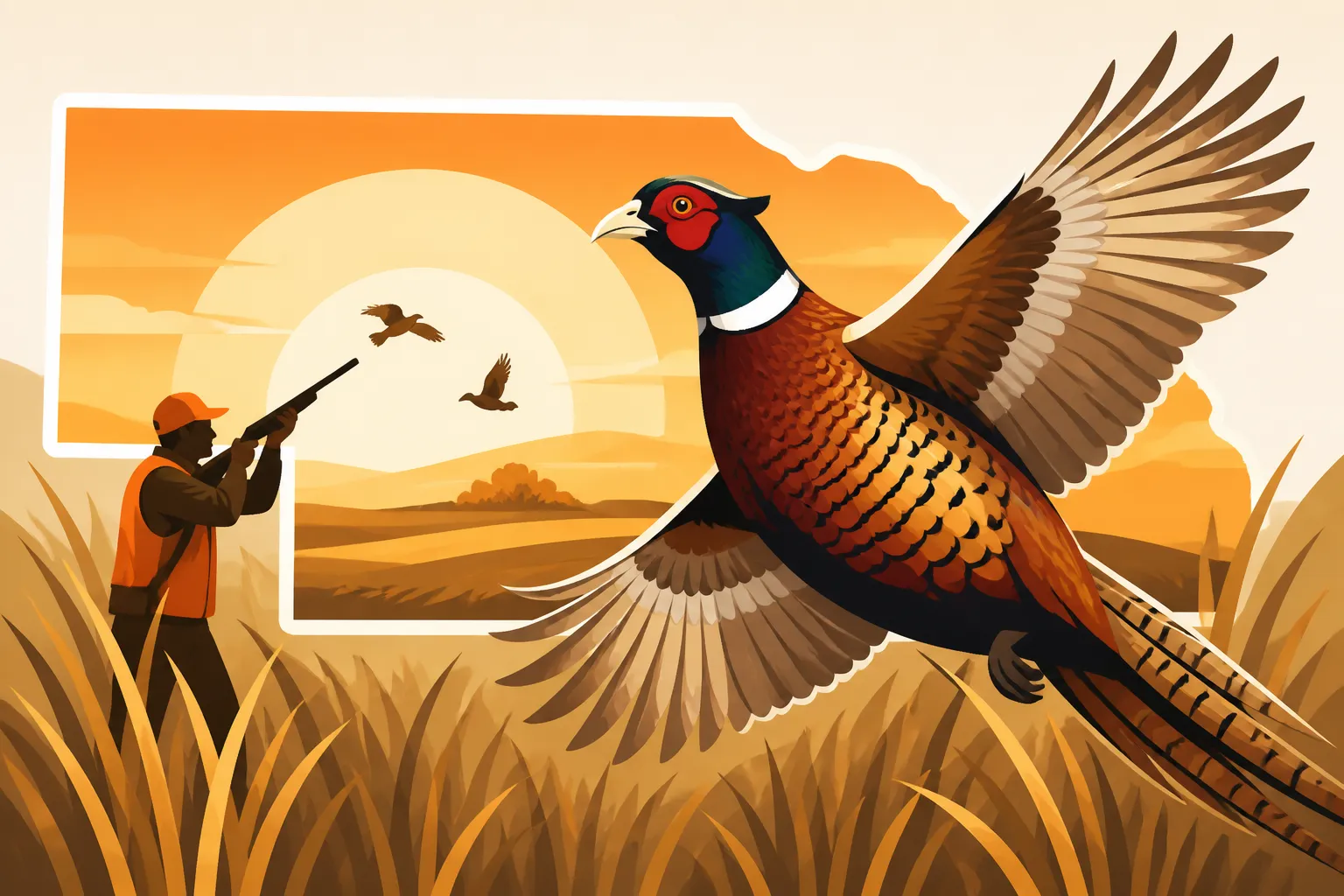
Nebraska’s Ring-Necked Pheasant Story
For those of us who grew up hearing the tales of Nebraska's pheasant hunting glory days, the current reality can sometimes feel a bit… quieter. It’s no secret that the corn-fed rooster populations that once defined our state's hunting landscape have seen their ups and downs, leading to seasons where finding birds felt like searching for a needle in a haystack. This comprehensive guide will take a deep dive into Nebraska’s storied pheasant past, explore the challenges facing these iconic birds today, and detail the dedicated efforts underway to ensure the ring-neck's future in the Cornhusker State.
The Arrival of the Ring-Necked Pheasant in Nebraska
It’s hard to imagine Nebraska without the vibrant flash of a ring-neck pheasant bursting from cover, but these birds aren't native to our plains. Their presence here is a testament to persistent introduction efforts and the unique adaptability of a species that thrives alongside human agriculture. Understanding their journey to Nebraska helps us appreciate why they became such a dominant force in our hunting culture.
Early Introduction Efforts and Their Challenges
The very first pheasants to arrive in North America were brought over from China in the late 18th century, but it wasn't until the late 19th and early 20th centuries that widespread, successful introductions began. Here in Nebraska, the early attempts to establish these exotic game birds were a mixed bag, to say the least. Many private individuals and early conservation groups, often fueled by personal passion rather than scientific strategy, released small batches of pheasants into various parts of the state. Imagine crates of squawking birds being unloaded from trains in rural towns, eager local farmers hoping these newcomers would take root.
These initial releases, which often lacked sufficient numbers, genetic diversity, or suitable release sites, frequently failed to establish viable, self-sustaining populations. The birds either dispersed too widely, fell prey to predators, or simply couldn't find the necessary food and cover to survive Nebraska's often harsh winters and dry summers. It was a learning process, with each setback offering valuable lessons about what these tenacious birds truly needed to thrive. Nebraska Game and Parks, then in its formative years, observed these attempts and began to understand the critical ecological components required for successful establishment.
The success of these introductions really hinged on overcoming various environmental hurdles. While a few isolated populations managed to cling on, it wasn't until larger, more coordinated efforts were made, often backed by state agencies and a growing understanding of pheasant biology and habitat needs, that the birds truly began to spread across the landscape. The commitment to these early, often frustrating, efforts laid the groundwork for the incredible pheasant numbers that would eventually characterize the state. You can learn more about how pheasants reached Nebraska by delving into the historical records of game introductions.
The Critical Role of Habitat in Pheasant Establishment
For the ring-neck pheasant, habitat isn't just a place to live; it's the entire foundation of their survival. They are, at their core, a grassland bird that has learned to co-exist, and even thrive, in agricultural landscapes. When pheasants first arrived in Nebraska, the state was undergoing massive transformations. Vast prairies were being broken by the plow, giving way to an intricate mosaic of small farm fields, hedgerows, creek bottoms, and native grasslands. This diverse agricultural environment, especially as dryland farming became more prevalent, created a nearly perfect storm of habitat elements.
Pheasants need a combination of things: dense cover for nesting and escape from predators, reliable food sources, and protection from winter weather. The early 20th-century Nebraska landscape provided this in spades. Small grains like wheat and oats offered excellent nesting cover in the spring, while corn and milo fields provided abundant food through the fall and winter. Crucially, the patchwork farming style, with its many field edges, brushy draws, and unfarmed corners, offered vital "edge habitat" — the transition zones where different cover types meet, which pheasants absolutely adore.
These varied habitat components were critical. The tall grasses along railroad tracks, the uncultivated ditches, the shelterbelts planted around farmsteads, and the ungrazed corners of pastures all contributed to a complex tapestry that allowed pheasants to nest, raise broods, find food, and escape predators. Without this specific blend of agricultural and native cover, even the most extensive stocking efforts would have likely failed. It was the serendipitous combination of suitable habitat evolving alongside the introductions that truly allowed the ring-neck to take hold and become a staple of Nebraska's game bird population.
The Golden Age of Nebraska Pheasant Hunting
For many veteran hunters, the mere mention of Nebraska pheasant hunting conjures images of endless fields, abundant flushes, and heavy game vests. There was a time, stretching from the mid-20th century into the early 1990s, when Nebraska was undeniably one of the premier pheasant hunting destinations in the nation. This era wasn't just about good hunting; it was about an entire way of life, deeply intertwined with the state's agricultural rhythm and cultural identity.
Post-WWII Agriculture and Habitat Boom
The years following World War II ushered in a new era for American agriculture, and for Nebraska pheasants, it was a golden ticket. As farming practices evolved, and particularly with the rise of government conservation programs, pheasants found themselves in an almost ideal environment. The shift from traditional small-scale, diversified farming to more intensive, but still varied, operations coincided with a boom in federal programs designed to protect soil and water.
One of the most significant programs, the Conservation Reserve Program (CRP), began in the mid-1980s and had a monumental impact. CRP incentivized farmers to take highly erodible or environmentally sensitive land out of production and plant it with grasses and other beneficial cover. For pheasants, these vast acreages of undisturbed, dense perennial grasslands became unparalleled nesting and brooding habitat. Suddenly, what might have been marginal farmland was transformed into prime pheasant country, offering secure cover from predators and the elements, along with abundant insects for growing chicks. This surge in high-quality nesting and wintering habitat, spread across hundreds of thousands of acres, directly contributed to skyrocketing pheasant populations. You can dive deeper into the history by exploring Nebraska's peak pheasant population numbers during this time.
Moreover, while agriculture was intensifying, it still maintained a certain level of diversity. Farmers still grew a rotation of corn, soybeans, wheat, and milo, providing a smorgasbord of food sources year-round. Critically, practices like fall tillage were less widespread than they would become, leaving standing stubble and crop residue to provide winter cover and food. Ditches were often left unmowed, fence rows weren't routinely grubbed out, and small, odd-shaped corners of fields remained undisturbed. This mosaic of crop fields, managed grasslands, and unkempt edges created the perfect storm for pheasants, allowing their numbers to reach historic highs.
Peak Populations and Legendary Harvests
The combination of ideal habitat and the pheasant's prolific breeding capabilities led to an explosion in their numbers. For decades, Nebraska was synonymous with robust pheasant hunting. Hunters would describe driving down rural roads and seeing pheasants literally erupt from the ditches, or walking into a standing cornfield and having birds flush continuously. Harvest numbers from this period are truly legendary, with hundreds of thousands of pheasants taken annually. In some peak years, Nebraska hunters, alongside a significant number of non-residents drawn by the reputation, would harvest well over a million pheasants across the state.
Imagine a typical November morning in the 1970s or 80s: pickup trucks lined along gravel roads, hunters in blaze orange vests and chaps, dogs eagerly straining at leashes. The air would be crisp, maybe a touch of frost on the ground, and the anticipation palpable. You'd step into a milo stubble field or a patch of CRP, and within minutes, the air would fill with the cackle of roosters and the whir of wings. It wasn't uncommon for a small group of hunters to fill their daily limits quickly, making for memorable hunts that solidified Nebraska's reputation as a pheasant paradise.
This era of abundance wasn't just anecdotal; the numbers backed it up. Nebraska Game and Parks pheasant surveys, including the crucial Rural Mail Carrier Survey, consistently showed high counts, indicating thriving populations. Hunters planned their vacations around the opening weekend, traveling from across the country to experience what was widely considered some of the best wild pheasant hunting available anywhere. These weren't pen-raised birds; these were tough, wild roosters that had survived and thrived on the Nebraska landscape, offering a challenging and incredibly rewarding hunting experience. It was during this time that many indelible memories were forged, connecting generations to the land and the thrill of the hunt.
The Cultural Impact of Pheasants on Rural Nebraska
Beyond the impressive harvest statistics and exciting hunts, the ring-neck pheasant carved out a profound cultural and economic niche in rural Nebraska. These birds weren't just game; they were an integral part of the fabric of small towns and farming communities across the state. The opening weekend of pheasant season was, and to some extent still is, a major event, marking the transition from harvest season to hunting season.
Economically, the influx of hunters, especially non-residents, provided a significant boost to local economies. Small-town motels would be booked solid, gas stations saw increased traffic, diners served hearty breakfasts and suppers, and local general stores sold everything from ammunition to hunting licenses. Farmers, even if they weren't charging for access, would benefit from hunters stopping by for directions or to buy a pie from the farm wife. It created a seasonal rhythm where the arrival of hunters was anticipated as much as the spring rains or the fall harvest.
Culturally, pheasant hunting became a tradition passed down through generations. Grandfathers taught their grandchildren to walk a row, read a dog, and appreciate the sudden flush of a rooster. It fostered a deep connection to the land and its wildlife. Local cafes became hubs of storytelling, where hunters recounted their successes (and failures) over coffee. These birds were a source of pride for Nebraskans, a symbol of the state's agricultural abundance and its wild beauty. Even today, though populations fluctuate, the image of the ring-neck remains firmly embedded in the state's identity, a powerful reminder of the rich hunting heritage that defined decades of rural life.
The Decline: Understanding the Challenges Pheasants Face
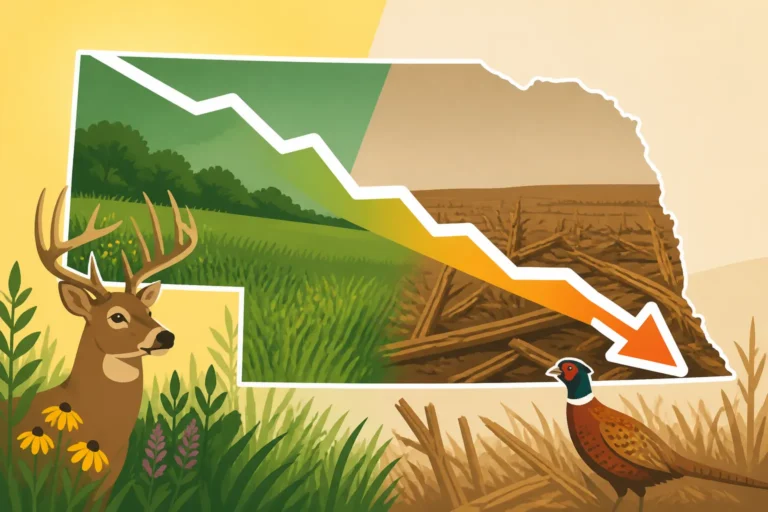
Sadly, the glory days of seemingly endless pheasant flushes began to wane. Over the past few decades, Nebraska's pheasant populations have faced a series of significant challenges, leading to a noticeable decline from their peak numbers. This isn't a simple story of one culprit; rather, it's a complex interplay of habitat loss, changing agricultural practices, and environmental factors that have collectively impacted the birds.
The Loss of CRP and Other Conservation Lands
Perhaps the most significant factor contributing to the decline of Nebraska's pheasant populations has been the dramatic reduction in Conservation Reserve Program (CRP) acres. While CRP was a boon for pheasants in its heyday, providing millions of acres of prime nesting and winter cover, its enrollment ebbed and flowed with agricultural commodity prices and federal farm bills. As corn and soybean prices climbed, more farmers opted to pull land out of CRP and return it to crop production, shrinking the vital habitat base that pheasants relied upon.
The loss of CRP wasn't just a reduction in acreage; it was a loss of quality habitat. These dense, undisturbed grasslands were crucial for successful pheasant nesting, offering protection from predators and disturbances during the critical spring and early summer breeding seasons. When these lands were converted back to row crops, pheasants lost secure places to lay eggs and raise their broods. This directly translates to lower recruitment rates — fewer young birds surviving to bolster the population each year. It’s a stark reminder that habitat quantity and quality are paramount for robust wildlife populations, especially for a ground-nesting bird like the pheasant.
Beyond CRP, other less formal conservation lands have also diminished. Wetlands have been drained, odd corners of fields have been put into production, and shelterbelts have been removed. Each of these small losses, cumulatively, adds up to a substantial reduction in the total available secure cover. The fragmentation of remaining habitat also makes it harder for pheasants to move safely between different areas for food, nesting, and wintering, increasing their vulnerability to predation and other pressures. This ongoing erosion of diverse cover has profoundly impacted Nebraska pheasant numbers today.
Changes in Agricultural Practices and Their Effects
Modern agricultural practices, while incredibly efficient for food production, have inadvertently created a less hospitable environment for pheasants. The trend towards larger fields, monoculture (planting vast acreages of a single crop like corn or soybeans), and intensive fall tillage has drastically altered the landscape that pheasants once thrived in. When you drive across much of Nebraska today, you see immense fields stretching to the horizon, often devoid of the diverse edges, fence rows, and brushy draws that pheasants need.
Fall tillage, in particular, is a major issue. While beneficial for preparing fields for the next planting season, it eliminates much of the standing crop residue and stubble that historically provided critical food and thermal cover for pheasants during the harsh winter months. Without this cover, birds are more exposed to predators and severe weather, leading to higher winter mortality. Imagine a blizzard sweeping across a landscape of bare, tilled earth – pheasants have nowhere to hide and insulate themselves from the extreme cold and wind.
Furthermore, the widespread use of herbicides and pesticides, while essential for crop health, can also impact pheasants. Herbicides reduce the broadleaf weeds that often produce seeds pheasants eat and that harbor insects, which are a vital protein source for growing pheasant chicks. Pesticides can directly reduce insect populations, further limiting this critical food source for young birds. The relentless drive for agricultural efficiency, while understandable from an economic perspective, has unfortunately come at a significant cost to pheasant habitat and overall bird survival.
The Impact of Weather Patterns and Disease
Even with ideal habitat, pheasants are still vulnerable to the whims of Mother Nature. Nebraska's weather can be extreme, and certain patterns can have devastating effects on pheasant populations. Harsh winters, characterized by deep, prolonged snow cover and extreme cold, can decimate bird numbers, especially when combined with a lack of adequate winter cover. Deep snow makes it difficult for pheasants to access food, and sustained cold can lead to starvation and exposure.
Conversely, wet springs, particularly during the peak nesting and brood-rearing periods (typically May and June), can be equally detrimental. Cold, rainy weather can lead to high mortality rates for pheasant chicks, which are vulnerable to hypothermia in their first few weeks of life. Flooding in low-lying nesting areas can destroy clutches of eggs. A series of poor weather years, even with good habitat, can prevent populations from rebounding effectively.
While less common than habitat and weather impacts, disease outbreaks can also contribute to localized declines. Pheasants, like any wild animal, are susceptible to various pathogens. While no widespread, major disease has been identified as a primary driver of overall pheasant decline in Nebraska, localized issues could certainly play a role. Ultimately, weather variability, especially when coupled with reduced habitat, amplifies the challenges pheasants face, making their populations more susceptible to significant swings and prolonged downturns.
Counting Pheasants: How Nebraska Tracks Populations
Understanding pheasant populations isn't as simple as just counting birds you see on a drive. Nebraska Game and Parks employs several scientific methods to track pheasant numbers, assess population health, and make informed management decisions. These surveys are crucial for setting seasons and bag limits and for directing conservation efforts.
The Rural Mail Carrier Survey Explained
The cornerstone of Nebraska's pheasant population monitoring program is the Rural Mail Carrier Survey (RMCS), a methodology that has been in place for decades. This annual survey leverages the intimate knowledge and extensive routes of rural mail carriers, who are, in many ways, unofficial experts on the wildlife in their areas. The premise is simple: mail carriers drive the same routes five or six days a week, covering vast distances through prime pheasant country. Who better to observe pheasant trends?
During a specific two-week period, typically in late July or early August, mail carriers across designated routes are asked to record the number of pheasants they observe, categorizing them as adults, juvenile males, or broods (and the number of chicks per brood). This timing is critical because it's after the primary nesting season, when chicks are visible but not yet fully grown, allowing for an assessment of reproductive success. The data collected by these carriers, often totaling thousands of observations, provides a broad snapshot of pheasant numbers and distribution across the state.
The RMCS is an incredibly valuable tool because it provides a long-term, consistent dataset that allows biologists to track trends over many years. While it's not a perfect count of every bird, the standardized method allows for year-to-year comparisons, indicating whether populations are increasing, decreasing, or stable. It's a cost-effective way to cover a massive amount of ground and has been instrumental in understanding Nebraska pheasant numbers today. You can learn more about how pheasant numbers are counted by examining the specifics of the Rural Mail Carrier Survey.
Other Survey Methods and Data Collection
While the Rural Mail Carrier Survey provides a broad overview, Nebraska Game and Parks also utilizes other methods to gather more detailed and localized pheasant data. These supplementary surveys help refine population estimates and provide insights into specific aspects of pheasant biology. One such method involves roadside counts conducted by agency personnel. These surveys are often carried out along fixed routes at specific times of day, usually early morning when pheasants are most active and visible along road edges. This data can offer more precise information about local densities and habitat use.
Brood surveys, often conducted in conjunction with roadside counts, focus specifically on observing hen-to-chick ratios. Biologists are interested in how many chicks a successful hen is raising, as this directly reflects the reproductive success of the year. High chick-to-hen ratios suggest a good hatch and favorable conditions for chick survival, while low ratios can signal problems like poor nesting habitat, adverse weather during hatching, or high chick mortality. This information is critical for predicting fall populations.
Another important data source comes from hunters themselves, through programs like the hunter harvest survey and wing collection. Hunters are asked to voluntarily provide information about their harvest, including the number of birds taken and their age and sex composition. The collection of pheasant wings, often facilitated through drop-off points or mail-in programs, allows biologists to examine feather patterns to determine the age of harvested birds. This "age structure" data helps assess the proportion of young birds in the population, which is another key indicator of reproductive success and overall population health. When considering your hunting strategy, services like GoHunt often incorporate this public data to provide insights into regional pheasant trends.
Interpreting Population Trends for Hunters
For hunters, understanding these population trends is more than just academic; it directly influences their season expectations and hunting strategies. When the Rural Mail Carrier Survey or other data indicate a strong year with high chick production, hunters can generally anticipate better success in the field, with more birds available and potentially larger coveys. Conversely, a poor survey year signals that hunters will likely need to work harder, cover more ground, and adjust their expectations.
For example, if the surveys show a significant drop in chick-to-hen ratios due to a cold, wet spring, a savvy hunter might focus their efforts on areas with more robust winter cover that offered better protection during potential harsh conditions, or perhaps shift their focus to later in the season when young birds are more mature. Knowledge of these trends can help hunters plan their trips more effectively, identify promising regions, and understand what to expect when they hit the field. This objective data helps temper expectations, especially for those who remember the truly "golden" years, and highlights the cyclical nature of wild pheasant populations.
It’s also important to remember that statewide averages don't always tell the whole story. While overall trends might be down, specific regions or even individual sections of land with excellent habitat might still hold good numbers of birds. This is where localized scouting and staying informed about regional reports, which often use this population data, become invaluable. Armed with this knowledge, hunters can make more informed decisions about where and how to pursue Nebraska's wild pheasants.
Efforts to Revitalize Nebraska's Pheasant Numbers
Recognizing the decline in pheasant populations and the concerns of hunters and conservationists, Nebraska Game and Parks, along with numerous partners, has been actively working to restore and enhance pheasant numbers across the state. These efforts primarily focus on critical habitat restoration and creation, acknowledging that habitat is the bedrock of any successful game bird population.
The Berggren Pheasant Plan and Its Evolution
One of the most significant initiatives launched to address pheasant decline in Nebraska is the Berggren Pheasant Plan. Named after a dedicated conservationist, this ambitious plan was initially conceived as a strategic blueprint to reverse the downward trend in pheasant populations by focusing intensely on habitat. The core idea behind the Berggren Plan, which was spearheaded by Nebraska Game and Parks, was to identify key landscapes where habitat restoration efforts would have the greatest impact and then concentrate resources in those areas.
The original plan aimed to create a substantial amount of new, high-quality pheasant habitat, primarily through partnerships with private landowners. This involved incentivizing farmers to enroll land in various conservation programs, establishing diverse grass plantings for nesting and winter cover, and incorporating food plots to provide crucial sustenance during lean times. The goal wasn't just to add acres, but to add contiguous and diverse acres that truly functioned as pheasant factories. The plan recognized that scattered, small patches of habitat are less effective than larger, connected blocks. You can find out more about what the Berggren Plan set out to do by looking at its original objectives.
Over time, the Berggren Plan has evolved, adapting to changing agricultural landscapes, funding opportunities, and biological insights. It’s moved into what’s known as Berggren Plan 2.0, which continues to refine its strategies, often focusing on specific "focus landscapes" where the potential for pheasant recovery is highest. These updated iterations emphasize not only the quantity of habitat but also its quality and diversity, recognizing that robust nesting cover, brood-rearing cover (rich in insects), and winter cover are all essential components that need to be present and accessible to birds throughout the year. These plans often involve working with federal programs like the Environmental Quality Incentives Program (EQIP) and the Conservation Reserve Enhancement Program (CREP) to maximize conservation benefits on private lands.
Habitat Improvement Projects and Partnerships
The success of any large-scale conservation effort relies heavily on collaboration, and pheasant restoration in Nebraska is no exception. Nebraska Game and Parks works hand-in-hand with a variety of organizations and private landowners on a multitude of habitat improvement projects. One of the most prominent partners in this endeavor is Pheasants Forever. This dedicated conservation group, with its numerous local chapters across Nebraska, actively raises funds and organizes volunteers to implement habitat projects directly on the ground.
These projects take many forms. They include planting native grasses and wildflowers that provide excellent nesting cover and attract insects for chicks. They also involve establishing strategically placed food plots, often consisting of corn, milo, or sunflower, which serve as vital winter food sources and emergency cover when snow blankets the landscape. Other efforts focus on improving water quality, restoring wetlands, and managing existing grasslands through prescribed burning or rotational grazing to enhance their value for pheasants and other wildlife. For instance, creating thick, brushy draws or shelterbelts can provide crucial thermal cover during severe winter weather, literally saving birds from freezing.
The partnership aspect is crucial because a vast majority of Nebraska's land is privately owned. Without the cooperation of farmers and ranchers, large-scale habitat improvement would be impossible. Conservation organizations provide technical assistance, cost-share programs, and even equipment to help landowners implement these beneficial practices. These collaborative efforts are vital to whether the Berggren Plan has worked in specific regions, demonstrating a collective commitment to bringing back the vibrant pheasant populations that once defined the state.
The Open Fields and Waters Program
Beyond large-scale habitat projects, Nebraska Game and Parks has also developed innovative programs to connect hunters with existing and improved habitat, particularly through the Open Fields and Waters (OFW) program. This initiative is a critical component of increasing public hunting access while simultaneously incentivizing landowners to manage their property in ways that benefit pheasants and other game.
The OFW program works by offering financial incentives to private landowners who open their property to public hunting, trapping, or fishing. In return, the public gains access to land that might otherwise be unavailable. These OFW sites are often specifically chosen because they contain valuable habitat for pheasants, such as CRP fields, crop stubble, grasslands, or areas adjacent to public lands that enhance overall access. This program directly addresses the challenge of dwindling public access in a state largely dominated by private land. If you're looking for places to hunt, consider exploring Hunting Open Fields and Waters Tracts for Pheasants.
The beauty of OFW is its dual benefit: it increases opportunities for hunters and provides an economic incentive for landowners to maintain or enhance habitat that benefits pheasants. By enrolling land in OFW, a landowner receives payment, and in many cases, is also offered technical assistance for habitat improvements, further blurring the line between private land management and public access for conservation. The program is clearly marked with distinctive signs, and details about enrolled lands are published annually in the Nebraska Public Access Atlas, making it easier for hunters to find available ground. It's a pragmatic solution that acknowledges the reality of private land ownership while working to sustain hunting traditions and wildlife populations.
Hunting Nebraska Pheasants Today: Tactics and Expectations
Hunting Nebraska pheasants today requires a blend of traditional skills, modern knowledge, and realistic expectations. The landscape has changed, and while the birds are still here, finding them consistently means adapting your approach. It’s no longer just about walking a section; it’s about smart scouting and strategic hunting.
Adapting to Current Conditions
The days of simply showing up and flushing dozens of pheasants from every patch of cover are largely behind us in many parts of Nebraska. Today, hunters need to be more strategic and adaptable. Pheasants are concentrated in areas with the best available habitat, which can be fragmented and smaller than in past decades. This means thorough scouting, often using digital tools like GoHunt's mapping features or the Nebraska Public Access Atlas app, to identify promising areas before you even set foot in the field. Look for areas with a mix of dense grass, food sources, and thermal cover.
A critical adaptation is understanding pheasant behavior in relation to current agricultural practices. After the corn comes off, birds will often gravitate towards unharvested milo, standing bean stubble, or the thickest CRP available. They will also utilize brushy draws, shelterbelts, and creek bottoms as safe havens. Your hunting strategy needs to revolve around these remaining pockets of cover. Instead of blindly walking large areas, focus on working the edges, corners, and dense centers of these specific habitat types. Consider still-hunting Nebraska cedar draws if you're in the right part of the state, or concentrate on the deeper, cattail-lined sloughs in late season when other cover is gone.
Another important consideration is hunting pressure. Public access areas, especially those designated through the Open Fields and Waters program, can see significant pressure, particularly on opening weekend. To find success, you might need to walk farther, hunt during off-peak times (mid-week or later in the season), or explore lesser-known areas. Sometimes, the best strategy is to put in the effort to find those unpressured pockets of private land with permission, or to thoroughly work the edges of public lands that others might overlook.
The Importance of a Good Bird Dog
While it's certainly possible to hunt pheasants without a dog, a well-trained bird dog is an absolute game-changer in today's hunting conditions. With birds often holding tighter in smaller, denser cover, and frequently running before flushing, a dog's keen nose and relentless drive become invaluable. A good dog can locate birds you would walk right past, flush them into the air (often within shooting range), and retrieve downed birds from thick, difficult terrain.
Whether you prefer a flushing dog like a Labrador or a springer spaniel, or a pointing dog like a German Shorthaired Pointer or a Brittany, their ability to cover ground efficiently, pinpoint scent, and retrieve game minimizes lost birds and maximizes your shooting opportunities. In dense milo stubble or thick cattails, a dog can save you countless hours of grid-pattern walking and prevent frustrating losses of hard-earned roosters. Learning to read your dog’s body language – a sudden change in pace, a stiffening tail, a quick turn of the head – is a skill that comes with experience and greatly enhances the hunting experience.
Furthermore, a dog's presence helps ensure ethical hunting. Wounded birds that might otherwise escape into heavy cover and be lost are much more likely to be recovered by a dedicated retriever. In areas where pheasants are less abundant, every retrieved bird counts, and a dog significantly increases your chances of taking home the game you've shot. For hunters serious about pursuing pheasants in Nebraska, investing in a good dog and its training is one of the best decisions you can make.
Finding Public and Private Access
Securing access to quality pheasant hunting ground is often the biggest challenge for hunters in Nebraska. The vast majority of the state is private land, so understanding how to find both public and private opportunities is crucial.
For public land, your primary tool will be the Nebraska Public Access Atlas. This incredibly detailed resource, available in print and as a mobile app, maps out all public hunting lands, including Wildlife Management Areas (WMAs), National Forests and Grasslands, and especially the Open Fields and Waters (OFW) tracts. The Atlas is updated annually and is indispensable for planning your hunts. It will show you boundaries, access points, and specific rules for each area. Many hunters have found success Walking Milo and Corn Stubble for Pheasants on these public access lands.
However, public land often sees more pressure. For less crowded hunting, gaining private land permission is key. This usually involves knocking on doors, introducing yourself to landowners, and respectfully asking for permission to hunt. Timing is important – don't show up on opening morning unannounced. A polite, well-prepared visit well before the season, or even a letter of introduction, can go a long way. Always be clear about what you intend to hunt, how many people will be in your party, and any specific requests the landowner might have. Offering to share some of your harvest or help with a chore can also build goodwill. Remember, getting private land permission in Nebraska is about building relationships and trust, which is covered in more detail in this article: Getting Private Land Permission in Nebraska. Always carry your permit and follow all local and state regulations.
Gear and Shotgunning for Roosters
Having the right gear and understanding proper shotgunning techniques can make a big difference in your pheasant hunting success and enjoyment. While modern firearms are available, a reliable shotgun remains the tool of choice for pheasants.
When it comes to shotguns, most hunters opt for a 12-gauge or 20-gauge, with the 12-gauge offering a bit more punch and shot capacity, which can be useful on longer flushing birds. An over/under, side-by-side, or semi-automatic shotgun are all popular choices. You'll want a gun that you can comfortably carry all day while walking considerable distances, so weight is a factor. As for loads, early season pheasants can often be taken with smaller shot sizes like 6s or even 7.5s (lead, where permitted). However, as the season progresses and birds become wilder, Step Up Shot Size in December or use heavier loads with 5s or even 4s to ensure clean kills on longer shots. Always check local regulations regarding shot type, especially if hunting on Nebraska WMAs, where nontoxic shot is often required. You can find more detail on Choosing a Shotgun for Walking Prairie Birds.
Choke selection is another critical element. For walking birds that might flush at varying distances, a modified choke is a versatile choice, offering a good balance of spread and pattern density. Some hunters prefer an improved cylinder for closer flushes in dense cover, or a light modified for slightly more open shooting. If you're blocking the end of a field or expecting longer shots, a full choke might be appropriate, but it's generally less forgiving on closer birds. Remember to practice your swing and follow-through, as pheasants are fast, erratic flyers. Lead them appropriately, focusing on the bird's head and front half, and ensure you're swinging through the bird as you pull the trigger.
| Aspect | Peak Years (e.g., 1970s-1990s) | Current Trends (2000s-Present) |
|---|---|---|
| Habitat Abundance | Vast CRP, diverse crop rotation, plentiful edges | Fragmented CRP, larger monoculture fields, fewer edges |
| Winter Cover | Abundant standing stubble, brush, shelterbelts | Reduced standing stubble, reliance on specific cover |
| Nesting Cover | Extensive, undisturbed CRP and hayfields | Limited, often disturbed; increased predation risk |
| Population Density | Very high, widespread across pheasant range | Moderate to low; concentrated in quality habitat |
| Harvest Numbers | Often >1 million birds annually | Varies greatly, typically 200,000-400,000 annually |
| Hunter Effort | Relatively easy, many flushes | Requires significant scouting, strategy, and walking |
| Dog Importance | Helpful, but not always essential | Highly recommended, greatly increases success rate |
| Primary Challenge | Weather variability | Habitat loss, agricultural changes, weather variability |
Disclaimer
The information provided in this guide is for general informational purposes only and is not intended as legal advice. Hunting regulations and conditions can change rapidly. Always consult the most current Nebraska Game and Parks Commission regulations and guidelines before planning and undertaking any hunting activity. Ensure you have all required permits, stamps, and licenses. Hunting involves inherent risks, and hunters should prioritize safety, ethical practices, and responsible land use at all times.