Setting Up Against a Cottonwood
Hunting in Nebraska can often feel like a constant battle to find adequate cover. You scout miles of open country, scanning endless fields and sparse draws, only to come up empty-handed when it comes to a natural spot that truly blends you into the landscape. This guide is all about honing in on one of Nebraska's most underrated natural assets for hunters: the majestic cottonwood tree. We’ll dive deep into how to leverage these towering giants for superior concealment and strategic advantage, transforming your hunting experience in the expansive Nebraska landscape.
Why Cottonwoods Are a Hunter's Best Friend in Nebraska
When you picture Nebraska's landscape, you probably think of rolling plains, cornfields, and maybe the rugged Sandhills. What often gets overlooked are the critical riparian corridors, creek bottoms, and old homesteads dotted with some of the largest trees in the state: cottonwoods. For a deer hunter, especially one who prefers to keep their feet on the ground, these colossal trees are an absolute game-changer, offering cover and strategic advantages that other natural features simply can't match.
Natural Concealment and Thermal Regulation
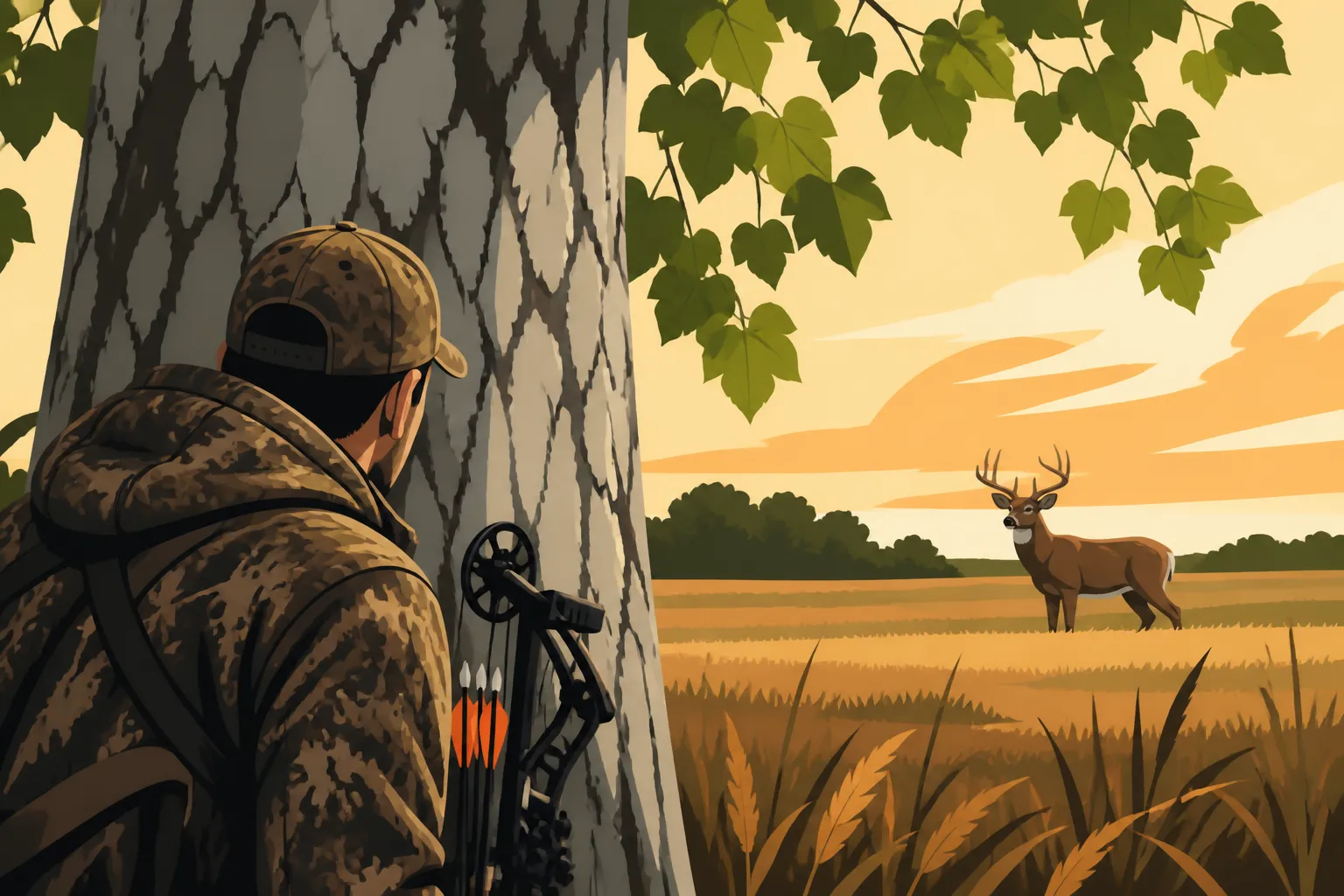
Cottonwoods, particularly the mature giants you find along river systems or in established shelterbelts, provide exceptional concealment simply due to their sheer size. Their massive, often gnarly trunks can easily swallow a hunter, breaking up your silhouette far better than a flimsy shrub or a quickly constructed ground blind. In areas where other trees are scarce, a single mature cottonwood can stand out like an oasis, drawing deer to its shade and the cover it provides. It’s not just about visual concealment, either. These trees, with their dense canopies and often thick undergrowth around their bases, can offer a surprising degree of thermal regulation. On a crisp late-fall morning, the trunk can block some of the biting north wind, making a still-hunt or a long sit far more bearable. Conversely, during a warm early archery season, the deep shade can be a welcome relief, helping you stay comfortable and focused for longer periods. Think about how much more comfortable you'll be sitting out of the direct sun or a cold breeze, leading to a more patient, effective hunt.
Prime Locations and Deer Movement Corridors
Cottonwoods are intrinsically linked to water sources – rivers, creeks, irrigation ditches, and even old stock ponds. This is absolutely crucial for understanding deer movement. Deer, like all wildlife, need water, and these riparian zones become natural travel corridors, feeding areas, and bedding sites, especially in arid or semi-arid regions of Nebraska. When you find a line of cottonwoods, you've likely found a major artery in the local deer's movement patterns. They'll use the cover to travel undetected from bedding areas to food sources, or simply to move along a watercourse. This makes setting up against a cottonwood particularly effective in areas like the Platte River valley or along smaller tributaries in eastern Nebraska, where whitetails thrive in the river bottom habitat. These trees often form natural pinch points or funnels where deer traffic is concentrated. For instance, a bend in a creek lined with cottonwoods might force deer to move within bow range, or a single large cottonwood on a field edge could be the transition point deer use to enter a cornfield to feed. Understanding these natural pathways is key to anticipating where your target buck might emerge.
Strategic Placement: Where to Find the Best Cottonwoods
You can’t just set up against any cottonwood. The truly effective setups require a keen eye for terrain, an understanding of deer behavior, and a bit of scouting know-how. Identifying the right tree in the right spot is paramount to success.
Identifying Key Terrain Features and Water Sources
The first step in finding your perfect cottonwood is to study the landscape. As we discussed, cottonwoods thrive near water. So, pull out your aerial maps, or better yet, use a robust hunting app like GoHunt to scan for major river systems, creek beds, drainage ditches, and even isolated ponds. Look for areas where these water features intersect with other forms of cover, such as thickets, tall grass, or timber patches. These intersections are often deer magnets. Pay close attention to any unusual clusters or lines of cottonwoods that break up the otherwise uniform landscape. Sometimes, an old abandoned farmstead will have a few massive cottonwoods that were planted decades ago for shade, and these isolated giants can be exceptional ambush points, especially if they’re close to active agricultural fields. When you're scouting, walk these creek bottoms and river edges. Look for well-used game trails, rubs, and scrapes around the bases of these trees. A cottonwood with fresh sign around it is a prime candidate. Don't be afraid to put some miles on your boots before the season to really understand how deer are using these specific features.
Leveraging Aerial Imagery and On-the-Ground Scouting
Before you even step foot in the field, spend significant time poring over aerial imagery. Google Earth or your GoHunt app can reveal patterns that are hard to spot from the ground. Look for dark green lines indicating timbered creek beds or isolated groves of trees in otherwise open areas. Notice how these features connect different parcels of land – perhaps a bedding area on one side of a field to a food source on the other. Mark potential cottonwood locations that appear to be bottlenecks or natural travel corridors. Pay attention to changes in elevation, even subtle ones, as deer often prefer to travel along contours or benches. Once you have a handful of promising spots identified on your map, it’s time for some boots-on-the-ground scouting. Visit these locations at different times of day to observe any deer activity. Are there fresh tracks leading to and from the cottonwood? Are there any rubs or fresh scrapes on nearby saplings? What's the predominant wind direction? During this phase, you can also identify potential entry and exit routes on flat farm ground, which are crucial for minimizing disturbance. Don't forget to consider how deer might bed in row-crop country nearby, as these cottonwoods could be a prime staging area before they move into fields at dusk.
Optimal Setup Techniques Against a Cottonwood
Once you've found that perfect cottonwood, the real work begins: crafting an optimal setup. It's not just about leaning your back against the trunk; it's about making yourself invisible, controlling your scent, and being ready for a shot.
Mastering Your Wind Direction and Sun Angle
This is arguably the most critical aspect of any successful ground setup, and it’s especially true when setting up against a cottonwood in relatively open country. You need to position yourself so that your scent is carried away from where you expect deer to approach or pass. This means knowing the prevailing wind direction on open Nebraska prairie stands for your specific hunting day. A simple wind checker powder is your best friend here. Always approach your setup from a direction that keeps the wind in your face or quartering. Once you're at the tree, ensure the wind will carry your scent behind you or off to the side, never into the likely travel path of deer.
The sun's angle is another factor many hunters overlook. Setting up with the sun at your back means deer approaching from in front of you will be looking directly into it, making it harder for them to spot you. Conversely, if you’re looking into the sun, it will impair your vision and make target acquisition difficult. Plan your morning and evening sits accordingly. For instance, on a morning hunt, you'd ideally want the sun rising behind you, while in the evening, you'd want it setting in front of you. This might mean having two different setup spots around the same cottonwood, depending on the time of day and the expected deer movement.
Enhancing Concealment and Shooting Lanes
Even with a massive cottonwood breaking up your outline, you can always enhance your concealment. Don't just sit directly against the trunk. Look for any natural depressions, fallen branches, or surrounding vegetation that you can use to further hide yourself. Sometimes, building a rudimentary natural ground blind out of surrounding deadfall, tall grasses, or cedar branches can make you virtually disappear. Remember, the goal is to break up your human form, not necessarily to create a solid wall. A good quality camouflage pattern, including face paint or a mask, is essential.
While you want maximum concealment, you also need clear shooting lanes. Before settling in, identify all potential shot opportunities. How far are these lanes? Are there any small branches or twigs that could deflect an arrow or bullet? Take a few minutes to silently and carefully trim any small obstructions with hand pruners. Envision the deer moving through the area and where your shot would be. For bowhunters, this is even more critical; you need wider, closer lanes. For rifle hunters, ensure you have a solid rest and a clear view of where deer are likely to appear. Make sure you can comfortably draw your bow or shoulder your rifle without making unnecessary noise or movement. Always consider the possibility of a deer circling downwind; having a secondary, albeit less ideal, shooting lane in that direction could save your hunt. You might also want to practice using grunt calls in thick river timber, as these dense areas are exactly where cottonwoods thrive, and calling can often bring a curious buck out of the shadows.
Adjusting Your Cottonwood Setup for Different Scenarios
The beauty of hunting lies in its unpredictable nature. No two days are ever the same, and deer behavior can change on a dime due to weather, pressure, or even their own whims. Being adaptable and having a plan for different scenarios is what separates successful hunters from those who just hope for the best.
Adapting to Changing Conditions and Deer Pressure
Nebraska weather can be notoriously fickle. A morning that starts calm and clear can quickly turn windy and overcast. If the wind direction shifts significantly, your prime setup might become a liability. This is where pre-scouting alternative spots or having a flexible approach becomes invaluable. Sometimes, you might need to make a quick, silent adjustment to the opposite side of the cottonwood, using the trunk as a wind break and a new backdrop. Other times, it might mean abandoning the spot for a few hours and relocating entirely. Always carry a compass or use your GPS/GoHunt app to keep track of wind changes relative to your position.
Deer pressure is another huge factor. On public lands, or even heavily hunted private ground, deer become incredibly wary. If you notice increased hunting activity in an area, deer might start moving earlier, later, or through thicker, less obvious cover. Your cottonwood setup might still be good, but you may need to increase your concealment efforts, focus more on still-hunting a snow-covered river bottom towards your cottonwood, or consider using a pop-up ground blind for added visual breakup. Ground blinds that handle Nebraska wind are a great option if you need to quickly adapt to a change in deer patterns or simply need more comfort during a long sit in adverse weather. Remember, deer will often move with an almost supernatural sense of caution when they feel pressured.
Bowhunting Versus Rifle Hunting Considerations
While the core principles of wind, sun, and concealment remain, there are distinct differences in how you approach a cottonwood setup depending on whether you're carrying a bow or a rifle.
Bowhunting:
For bowhunters, proximity is everything. Your setup against a cottonwood needs to offer high-probability shots within 20-30 yards, maximum. This means focusing on tight funnels, pinch points, and active scrape lines along a fenceline or natural barriers that force deer past your ambush. You'll need more refined shooting lanes, meticulously clearing any twigs or branches that could deflect an arrow. Patience is key, as you might need to wait for a deer to be in the perfect position, quartering away, before taking a shot. Entry and exit routes on flat farm ground are even more critical for bowhunters, as any disturbance can spook deer well before they come into range. You might also consider decoying a Nebraska whitetail buck, using a strategically placed decoy to draw a buck closer to your cottonwood.
Rifle Hunting:
Rifle hunters have the advantage of greater range, which offers more flexibility. Your setup can be further from the primary deer trail, allowing for a wider field of view. However, you still want to be close enough to make an ethical shot and avoid extreme long-range attempts, especially in areas with varying terrain. A cottonwood still provides excellent concealment, but you might also use it as a backstop against which to position yourself for a stable shooting rest, perhaps with a bipod or shooting sticks. Pay attention to the background beyond your target for safety. While you can shoot further, still aim to get within a reasonable distance to minimize variables like wind drift. When judging a mule deer buck in the field or a whitetail, having a clear, unobstructed view from your cottonwood hide is invaluable.
| Setup Factor | Bowhunting Focus | Rifle Hunting Focus |
|---|---|---|
| Proximity | Very close (20-30 yards max) | Moderate to further range (50-200+ yards) |
| Shooting Lanes | Meticulously clear, wide arcs required | Clearer sight picture, less critical precise lane |
| Concealment | Absolute priority, full body breakup | Important, but slight movements more forgiving |
| Wind Strategy | Extremely strict, avoid any downwind movement | Strict, but can compensate slightly with distance |
| Entry/Exit | Ultra-stealthy, avoid detection at all costs | Stealthy, but slight noise less impactful at distance |
| Patience | High, waiting for perfect shot angle | High, but can capitalize on opportunities sooner |
| Gear | Rangefinder, Pruners, Camo, Face paint | Optics (scope, binos), Bipod/Sticks, Ammo |
Hunting from the ground, especially against a magnificent Nebraska cottonwood, is an art form that demands patience, observation, and a deep understanding of your quarry. By carefully considering these factors, you’ll not only increase your chances of success but also deepen your appreciation for the subtle nuances of hunting in the Cornhusker State.
Disclaimer
Always check the most current Nebraska Game and Parks Commission regulations before heading afield. Hunting regulations, season dates, and permit requirements can change. This guide is for informational purposes only and does not supersede official state regulations.