Hunting Rainwater Basin Wetlands
Hunting Nebraska's Rainwater Basin wetlands can feel like trying to hit a moving target – literally and figuratively. Water levels change on a dime, public access can be tricky to discern, and knowing where the birds want to be on any given day is a constant challenge. This guide aims to demystify hunting the Rainwater Basin, offering insights into its unique dynamics, effective strategies, and essential preparations to help you make the most of this incredible waterfowl destination.
Understanding the Unique Rainwater Basin Ecosystem
The Rainwater Basin is unlike almost anywhere else in the world, a truly special place that draws millions of migratory birds each year. It’s a network of shallow, temporary wetlands in south-central Nebraska, formed by ancient geological processes, creating a critical stopover point on the Central Flyway. But this unique character also presents hunters with specific challenges and incredible opportunities.
The Dynamic Nature of Basin Wetlands
What truly defines the Rainwater Basin are its playa wetlands – shallow depressions that fill with water from rainfall and snowmelt, then often dry out. This constant flux means that the "best" hunting spot from one week to the next can drastically change. One month, a basin might be a shallow sheet of water buzzing with ducks; the next, it could be a muddy, dry field. This variability is a huge frustration for hunters, especially those traveling from afar, as it makes scouting and planning an ongoing effort right up until opening day. The water isn't typically fed by rivers or streams, so local precipitation dictates everything. You might find some basins holding water year-round, but many are truly ephemeral. This ever-changing landscape is precisely why understanding Rainwater Basin Waterfowl Numbers and monitoring current conditions is paramount.
Historically, over 11,000 wetlands once dotted the landscape, but agricultural conversion has significantly reduced this number. Today, conservation efforts are focused on preserving and restoring these vital habitats, recognizing their immense importance for species like the Northern Pintail, Mallard, and various teal. Knowing how these wetlands function helps you predict bird movement. Shallow, recently filled basins often draw dabbling ducks looking for emergent vegetation and invertebrate life, while slightly deeper, more stable water might appeal to divers. The Duck Production in the Rainwater Basin is directly tied to these water conditions, influencing local bird populations.
Key Waterfowl Species and Their Habits
The Rainwater Basin is a magnet for a vast array of waterfowl, making it a dream destination for many hunters. While mallards are often the star, you'll encounter a diverse cast of characters throughout the season. Early season sees a strong push of teal – blue-winged, green-winged, and cinnamon – along with gadwall and wigeon. As fall deepens, mallards become more prevalent, joined by northern pintails, shovelers, and increasingly, various diving ducks like canvasbacks and redheads. Later in the season, you'll also see strong numbers of White-Fronted Geese in the Rainwater Basin, often called "specklebellies," and of course, Canada geese.
Each species has its preferred feeding and resting habits, which should inform your hunting strategy. Dabbling ducks, like mallards and pintails, prefer shallower water where they can tip up to feed on submerged vegetation and seeds. They're often found in basins with emergent weeds or flooded agricultural fields. Divers, on the other hand, favor deeper water where they can dive for tubers and mollusks. Recognizing the dominant species in a given basin can dictate your decoy spread, calling techniques, and even where you decide to set up your blind. Watching how birds approach and land will give you clues, as their flight patterns and preferences for specific areas are often consistent once they've settled into a routine.
Key Strategies for Successful Hunting in Rainwater Basin Wetlands
Hunting the Rainwater Basin is less about blind luck and more about diligent scouting, adaptability, and understanding bird behavior. Given the dynamic nature of these wetlands, a flexible approach is always best.
Scouting for Active Basins and Roosts
Scouting is undeniably the most critical component of a successful Rainwater Basin hunt. This isn't a "show up and hunt" scenario, especially for nonresident hunters. You absolutely must put in the legwork to find where the birds are actively feeding and resting. Start by checking the Rainwater Basin Wetland Access points available through the Nebraska Game and Parks Commission's Public Access Atlas. Use satellite imagery on mapping apps like GoHunt or ONX Hunt to identify potential basins, then drive the roads to observe water levels and bird presence.
Look for fresh bird sign: droppings on the banks, disturbed water, and most importantly, actual birds. Pay attention to flight patterns in the early morning and late afternoon – Reading Roost-to-Field Flight Lines can tell you which basins are being used as roosts and where birds are heading to feed. Sometimes, birds will be actively feeding in shallower sheet water away from the main basin. Don't be afraid to drive gravel roads for hours, stopping to glass every wet spot you can find. It can be tedious, but it's the only way to consistently find birds in this challenging landscape. Remember that birds often move due to pressure, so a hot spot one day might be dead silent the next if it's been heavily hunted.
Decoy Spreads and Blind Concealment
Once you've found an active basin, your decoy spread and blind concealment are paramount. For dabbling ducks, a spread of 2-4 dozen decoys, mostly mallards with a few pintails or wigeon, is often effective. Place them in loose family groups, leaving a landing zone directly in front of your blind. Consider adding a spinning-wing decoy on calm days to attract attention from a distance, though be mindful of local regulations which might restrict their use. Setting Decoys Around a Layout Blind can be incredibly effective in open basins where natural cover is sparse.
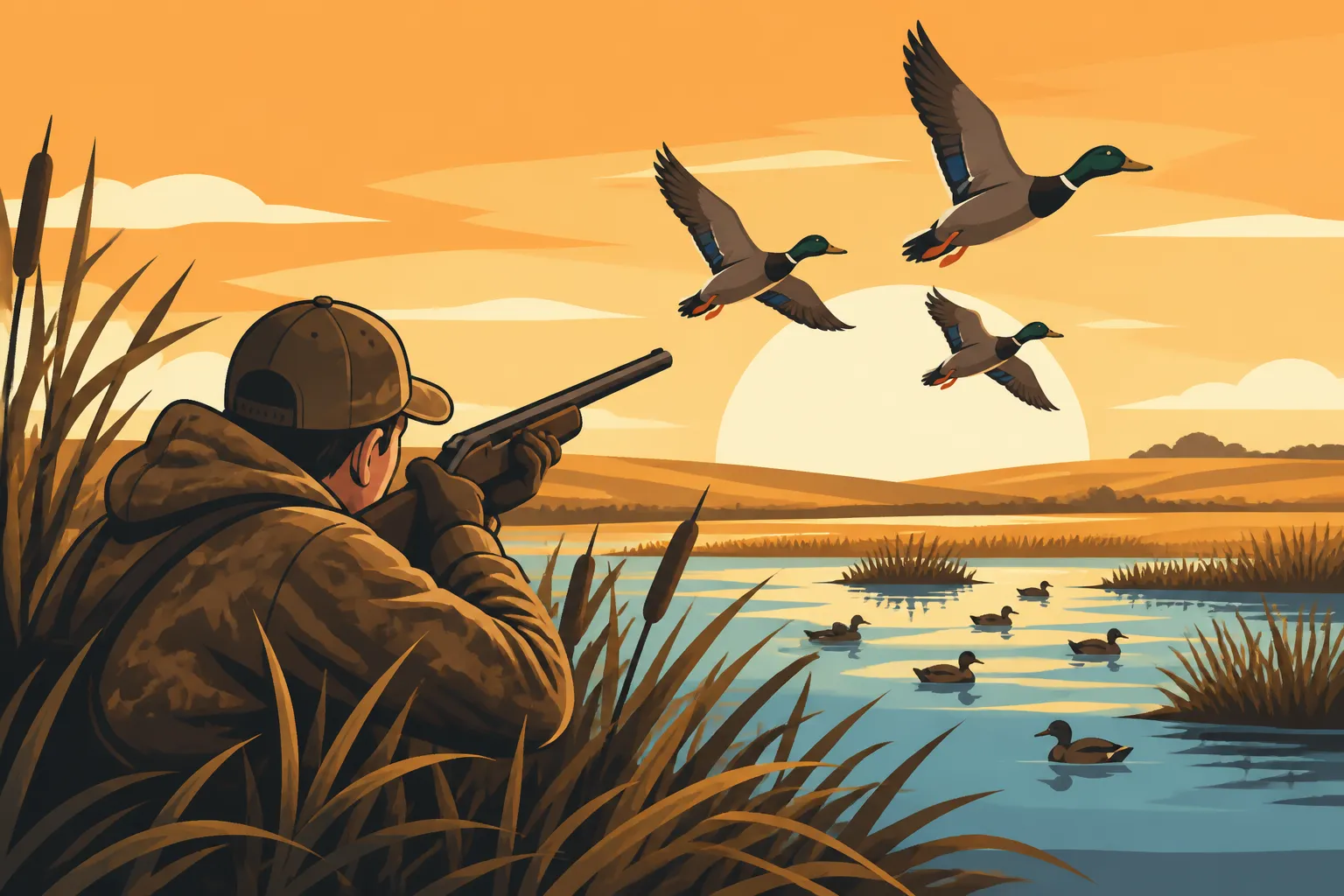
Concealment is perhaps even more important than the decoys themselves, especially on the heavily hunted public lands of the Basin. Birds here are educated and wary. Layout blinds are a staple for good reason, but they must be meticulously brushed in with natural vegetation from the immediate surroundings. Don't just throw a few weeds on top; make it disappear into the landscape. If you're hunting a cattail slough, use cattails. If it's a stubble field, use stubble. Pay attention to your face and hands – even a glint of light can flare birds. Many hunters wear face masks and gloves to ensure they blend in completely. The key is to break up your outline and make sure you're not visible against the sky.
Calling and Retriever Use
Calling is an art, and in the Rainwater Basin, less is often more. While aggressive calling can attract birds from a distance, over-calling or calling poorly will send educated birds packing. Start with subtle quacks and feed chuckles to imitate content birds on the water. As birds respond, you can increase your volume and repertoire, but always gauge their reaction. If they're cupped and committed, stop calling and let them work. A good cut-down call can be effective for finishing ducks, but it requires practice.
A well-trained retriever is an invaluable asset in the Rainwater Basin, not just for recovering birds quickly but also for minimizing disturbance. Many basins have soft, mucky bottoms, and trying to wade out for every bird can spook other working birds and exhaust you. A dog can retrieve birds silently and efficiently, often from areas too deep or thick for a hunter to reach comfortably. Plus, a good retriever significantly reduces the chance of losing downed birds, which is ethically important. Make sure your dog is conditioned for cold water and wears appropriate protection if needed, as Bird Dog Gear for Nebraska Heat can be quite different from what's needed for chilly morning retrieves.
Navigating Regulations and Access for Rainwater Basin Hunting
Hunting the Rainwater Basin requires a thorough understanding of state and federal regulations, as well as the nuances of public access. Without this knowledge, you can quickly find yourself on the wrong side of the law or trespassing.
Essential Permits and Federal Regulations
Before you even load a shell, you need the right permits. For waterfowl hunting in Nebraska, you'll need a valid Nebraska hunting permit, a Nebraska Habitat Stamp, and a Federal Migratory Bird Hunting and Conservation Stamp (Duck Stamp). Remember, Nebraska HIP Registration Requirement is also mandatory for all migratory bird hunters, even if you just plan to hunt doves. It's a quick, free registration that helps wildlife agencies track harvest data.
Beyond state permits, federal regulations play a significant role, especially concerning the type of shot you can use. Nontoxic shot is legally required for all waterfowl hunting throughout Nebraska, including on private lands. This means no lead shot for ducks and geese. You'll need to use steel, bismuth, or other approved nontoxic alternatives. This applies to Federal Refuge Nontoxic Shot Rules as well as state-managed lands and even most private lands when hunting waterfowl. Always double-check your ammunition to ensure it's compliant, as conservation officers take this very seriously. Additionally, be aware of shooting hours, which are generally from one-half hour before sunrise to sunset.
Public Access and Private Land Considerations
The majority of huntable Rainwater Basin wetlands are either owned by the state (Wildlife Management Areas or WMAs) or are part of the Nebraska Federal Waterfowl Production Areas. Many more are enrolled in the Nebraska's Open Fields and Waters Program, which provides public access to private land. The Nebraska Public Access Atlas is your bible for navigating these areas. It's updated annually and shows all public and publicly accessible private lands. I highly recommend downloading the digital version or using an app like GoHunt which often incorporates this data, as it allows you to see boundaries and your position in real-time.
It's absolutely critical to respect property boundaries. Many Rainwater Basin wetlands are a patchwork of public and private ground, with private agricultural fields often bordering or even surrounding public access points. Always ensure you are on legally accessible land. If you plan to hunt private land not enrolled in Open Fields and Waters, you must obtain permission from the landowner. Nebraska Trespass and Permission Law states that written permission is often required for hunting, so don't just assume verbal consent is enough or that an unposted field is fair game. A little proactive legwork, like asking farmers in advance, can open up a lot of opportunities, but always prioritize legality and landowner relations.
Gear and Preparation for Rainwater Basin Wetland Hunting
Hunting the Rainwater Basin means dealing with a wide range of weather conditions and water levels, so having the right gear is essential for comfort, safety, and success.
Essential Clothing and Footwear
Nebraska weather is famously unpredictable. A warm, calm morning can quickly turn into a frigid, windy afternoon, especially during late fall. Layering is key. Start with a good moisture-wicking base layer, add insulating layers like fleece or wool, and top it off with a waterproof, windproof outer shell in a camo pattern suitable for the local vegetation. Think earth tones, dead grass, or cattail patterns. Keep an extra set of dry clothes in your vehicle – getting soaked on a cold day is a miserable experience.
Waders are non-negotiable for Rainwater Basin hunting. Many of these wetlands have soft, mucky bottoms that can be surprisingly deep. Chest waders, preferably insulated, are a must. Make sure they fit well and allow for comfortable movement, as you'll be walking through mud and water. Good quality neoprene or breathable chest waders, like those from Rogers Sporting Goods or Mack's Prairie Wings, are a worthwhile investment. Boots with good traction are also crucial, whether they're integrated into your waders or separate for walking to and from the basin. Remember, you might be Waders for Rainwater Basin Wetlands for hours, so comfort is paramount.
Decoys, Blinds, and Calling Tools
Your decoy spread should be appropriate for the species you're targeting and the typical conditions of the Basin. As mentioned, 2-4 dozen duck decoys are a good starting point, primarily mallards, with a few pintails, wigeon, or gadwall mixed in. For geese, a spread of full-body Canada goose decoys or a mix of full-bodies and shells can be effective, especially Decoy Spreads for Rainwater Basin Geese when targeting white-fronts. Many hunters also carry a few "sleeper" shell decoys to add realism to a spread.
Blind choice will depend heavily on the specific basin and available cover. Layout blinds are incredibly versatile for open stubble fields or short-grass edges, but as stressed, brush them in meticulously. If you're fortunate enough to find a basin with significant emergent vegetation like cattails or phragmites, a simple brushed-in panel blind or even just hunkering down in the natural cover can work. Always bring something to sit on if using natural cover, like a small folding stool or bucket, to stay comfortable and conceal your movement.
When it comes to calls, carry a good quality duck call (a versatile single or double reed) and a short-reed goose call if you plan to target geese. A whistle can also be very effective for pintails and wigeon. Practice your calling before the season. There are plenty of resources online to learn, but nothing beats actual field experience and listening to real birds.
Essential Accessories and Safety
Beyond the core gear, a few accessories can make a world of difference. A headlamp with a red-light option is critical for navigating in the dark before shooting hours. Bring plenty of shells – you don't want to run out when the birds are working! A thermos of coffee or hot chocolate on a cold morning can boost morale, and snacks are always a good idea. A sturdy game strap or mesh bag for carrying out birds is also helpful.
Safety should always be your top priority. Always tell someone where you're going and when you expect to return. Be aware of other hunters, especially on crowded public lands. Wear blaze orange when walking to and from your hunting spot if there's any chance of firearm deer season overlap, though Orange Requirements for Archers in November primarily apply during the deer rifle season. Always unload your firearm when crossing fences or obstacles. Hypothermia and frostbite are real risks in cold, wet conditions, so dress appropriately and know the signs. A basic first-aid kit in your pack is also a wise precaution. Using mapping apps like those from GoHunt can enhance your safety by helping you track your location and avoid getting disoriented, especially on large, featureless wetlands.
Here's a quick reference for gear essentials:
| Category | Essential Items | Considerations |
|---|---|---|
| Clothing | Layered camo (base, insulation, shell), Blaze Orange (if needed) | Waterproof, windproof outer layer; breathable base; multiple layers for adaptability |
| Footwear | Insulated Chest Waders | Durable, good fit, deep mud traction |
| Decoys | 2-4 Dozen Duck Decoys, Goose Decoys (optional) | Species-specific, motion decoys (check regulations), sturdy bags |
| Blinds | Layout Blind or Natural Cover | Must be meticulously brushed in; comfortable for long sits |
| Calls | Duck Call (single/double reed), Goose Call (if needed), Whistle | Practice before season; quality calls for realistic sound |
| Firearm | 12 or 20 Gauge Shotgun, Nontoxic Shot | Reliable, familiar action; ample supply of appropriate shot |
| Navigation | GPS/Phone App (e.g., GoHunt, ONX Hunt), Public Access Atlas | Download offline maps; power bank for phone |
| Safety | Headlamp, First-Aid Kit, Knife, Water, Snacks | Communication plan; inform others of your location |
| Retrieval | Retriever Dog (optional), Game Strap/Bag | Trained dog, warm vest for dog, ethical retrieval of all downed birds |
Hunting the Rainwater Basin wetlands is a truly rewarding experience, offering some of the best waterfowl hunting in the Central Flyway. It demands effort and preparation, but the rewards of a successful hunt against the backdrop of Nebraska's unique prairie wetlands are well worth it.
Disclaimer
Please be aware that hunting regulations, season dates, and access programs can change. Always consult the most current Nebraska Game and Parks Commission regulations and federal migratory bird hunting regulations before planning any hunt. This guide is for informational purposes only and should not replace official legal documents.