Setting Decoys Around a Layout Blind
There’s nothing quite as frustrating as spending hours meticulously setting up your layout blinds and decoys in a promising Nebraska field, only to have flocks of geese or ducks flare wildly at the last minute, veering off just out of range. It’s a common scenario, leaving hunters wondering what went wrong. This guide aims to demystify the art and science of setting decoys around a layout blind, helping you create a spread that truly fools wary waterfowl and brings them right into your lap.
Understanding the Layout Blind's Role in Your Spread
A layout blind is your ultimate concealment tool in open country, but it also becomes an integral part of your decoy spread. You’re not just hiding; you’re becoming part of the landscape, part of the feeding flock. Ignoring this connection is often why birds give you the cold shoulder. It's about blending in, not just disappearing.
The Hunter's Perspective from Inside
Think about it: when you're tucked into a layout blind, you're looking up at the sky, often with a low profile that makes you feel almost invisible. But from a bird's perspective, especially high overhead, that blind can look like an anomaly if not surrounded and disguised correctly. You’re essentially lying in what looks like a small, flat lump in the field. If that lump is isolated or doesn't make sense within the context of other birds, it’s a red flag to incoming waterfowl. You need to consider how your blind looks from 500 feet up, not just from eye level. This means making sure its profile is broken up and integrated seamlessly with the decoy spread, which effectively extends your concealment.
The key here is understanding that your blind isn't just a place to hide; it's another "piece" of the puzzle for the birds to evaluate. If that piece doesn't fit the natural pattern of a feeding or resting flock, it's immediately suspicious. This is where many hunters go wrong, thinking simply being hidden is enough. Birds are smart; they've seen it all. Your blind needs to disappear into the spread, not just within the field.
Concealment is King for Layout Blinds
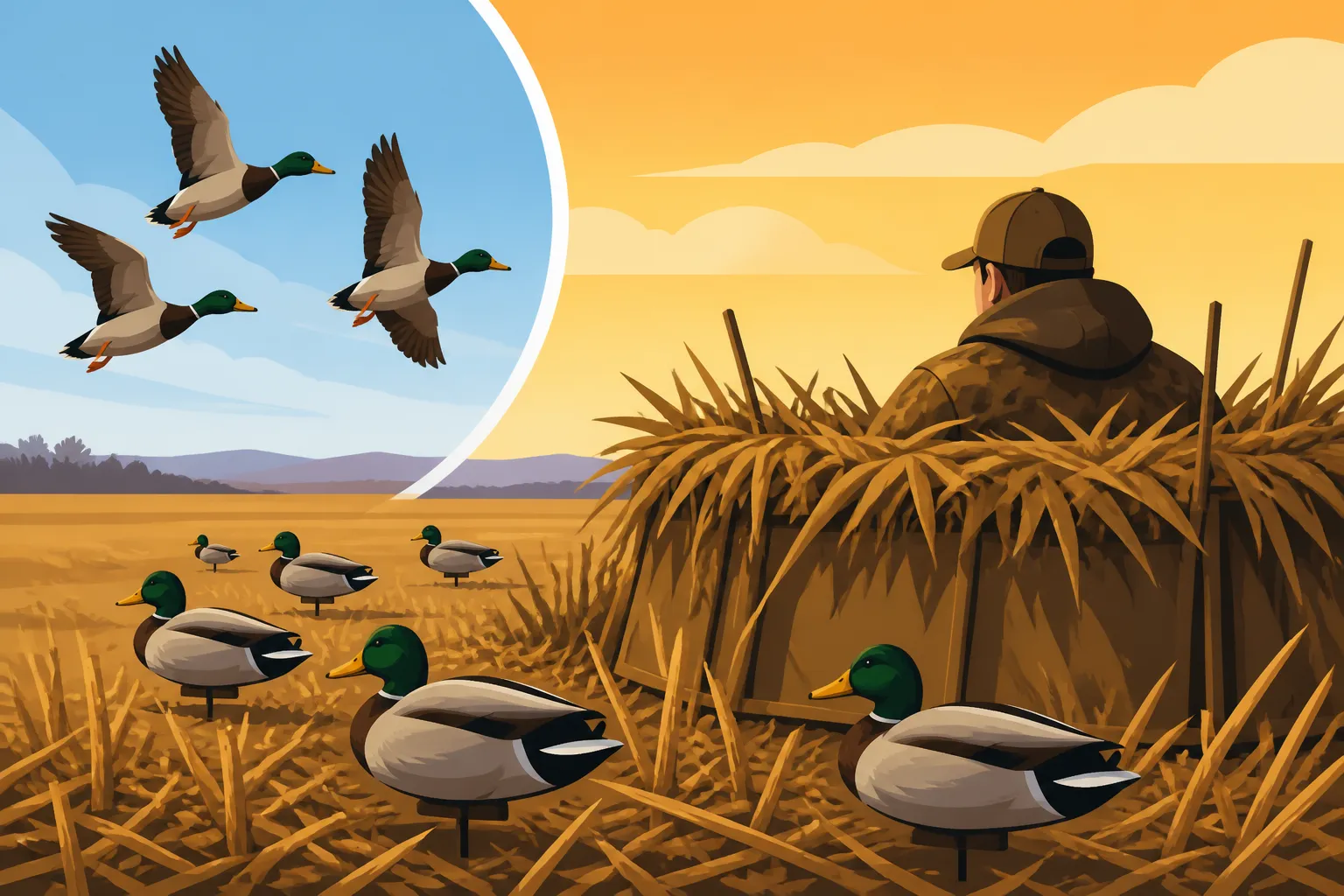
Effective concealment is paramount, and it starts with your layout blind itself. Most blinds come in camouflage patterns, but those patterns are only a starting point. The real magic happens when you “brush in” your blind with natural vegetation from the field you're hunting. Are you in a cut cornfield? Pile cornstalks on and around your blind. Hunting a winter wheat field? Use stubble and dirt clods. The goal is to break up the hard lines of the blind and make it look like just another piece of field debris.
This is especially true in places like the Rainwater Basin wetlands or the Platte River area, where open fields offer little natural cover. If your blind stands out like a sore thumb, no amount of perfect decoy placement will convince a mature Canada goose to commit. It's an ongoing process, too. The first time you set up, you might think it looks good, but after a few hours of wind or birds working, you might notice areas that need more brushing. Always have extra stubble or stalks on hand. Even subtle movements or reflections can give you away, so make sure to manage glare from faces, glasses, or gun barrels, and ensure any gear on your blind is fully covered. For more general advice on what gear to bring, check out our guide on Waterfowl Gear for Nebraska Fields and Wetlands.
Key Decoy Spread Concepts for Nebraska Fields
When you're out in a vast Nebraska cornfield or a sprawling stubble field, you're trying to replicate a scene that birds see every day: a relaxed, feeding flock. The magic isn't just in the number of decoys, but in their arrangement and how well they mimic natural behavior.
Mimicking Natural Feeding and Loafing Patterns
The most effective decoy spreads aren't just a random scattering of plastic birds. They tell a story. When geese and ducks land, they typically approach from downwind, landing short of the main flock, and then walk or swim towards the others. Within a flock, some birds are actively feeding with their heads down, some are loafing (resting) with their heads up, and others are alert. Your spread should reflect this.
Create clusters of "feeding" decoys with heads low, mixed with a few "sentry" decoys with heads up, especially on the fringes of your spread. This gives incoming birds confidence that the area is safe and others are already enjoying a meal. Think about how birds interact – they don't land on top of each other. Leave landing zones, often called "pockets" or "holes," where you want the birds to commit. These pockets should be within easy shooting range, typically 20-30 yards from your blinds. Understanding how to create these natural, inviting scenes is crucial, whether you're setting a large spread for geese in harvested corn or a smaller, intimate setup for ducks.
Considering Wind Direction and Flight Paths
The wind is arguably the most critical factor in decoy placement. Waterfowl, much like aircraft, always land and take off into the wind. This means your spread needs to be set up so that incoming birds will naturally approach and land facing into the breeze, putting them directly in front of your blinds. Your layout blinds should generally be positioned downwind of your main decoy spread, ideally with the wind at your back or quartering from a side. This allows birds to see your decoys, swing wide, and then set their wings to land right in the kill hole.
If the wind changes direction during your hunt, which often happens in Nebraska, especially on longer days, you might need to adjust your spread and even reposition your blinds. Ignoring a shift in wind will result in birds landing outside your kill zone or flaring prematurely. A successful hunter always has an eye on the windsock or a handheld anemometer, ready to adapt. The folks at GoHunt often emphasize scouting and understanding local wind patterns, which really pays off when setting your spread.
Decoy Numbers and Species Mix
The number of decoys you need largely depends on the species you're targeting and the conditions. For Canada geese, especially late in the season, larger spreads (dozens, even hundreds) tend to be more effective, mimicking the massive flocks that gather in Nebraska fields. For ducks, particularly mallards, a smaller spread of two to three dozen can be plenty, especially if you're focusing on a specific water source or feed area. When considering Decoy Numbers for a Cut Corn Field, remember that context matters more than sheer volume.
It’s also important to consider your species mix. If you’re hunting a field where both geese and ducks are known to feed, a mixed spread can be very effective. Place your goose decoys as the primary attraction, as ducks are often comfortable landing near geese. Then, incorporate a smaller group of duck decoys, perhaps near a temporary puddle or a slightly lower area in the field, to give the ducks their own inviting space. However, don't overdo it with too many different species if they don't naturally flock together in that particular area; realism is key. You might use Full-Body Versus Shell Decoys to vary the look and texture of your spread, adding to its authenticity.
Practical Setup Strategies for Different Conditions
No two hunts are exactly alike, and neither should your decoy spreads be. Adapting your strategy to the specific field, weather, and target species is what separates good hunters from great ones.
The "U" or "J" Shape for Geese
For large-bodied geese, the "U" or "J" shaped spread is a classic and highly effective setup in open fields. Imagine a large "U" or "J" laid out on the ground, with the open end of the shape facing into the wind. Your layout blinds are positioned at the bottom curve of the "U" or the hook of the "J," usually 20-30 yards downwind from the main body of decoys. The open space within the "U" or "J" is your designated landing zone or "kill hole."
Incoming geese will see the large group of decoys, fly past your blinds, turn into the wind, and then try to land in that inviting open pocket. This funneling effect draws them precisely where you want them. The "J" shape can be particularly useful if the wind is quartering from one side, allowing you to position your blinds slightly off-center to take advantage of the angle. For more specific tactics, delve into Setting a Goose Spread in Harvested Corn. Remember to brush in your blinds meticulously within this spread, making them disappear among the full-body decoys or corn stubble.
Fan or Spread Patterns for Ducks
Ducks, especially mallards, often prefer to land in tighter groups and can be more receptive to a "fan" or more scattered "spread" pattern, particularly if you're trying to replicate birds feeding near a small depression that might hold water. Instead of a large, distinct "U," you might have a more dispersed cluster of duck decoys, with a clear, open patch directly in front of your blind where you want them to land.
If there's even a hint of water—a shallow puddle, a wet spot—concentrate a few duck decoys right there. Ducks are incredibly drawn to water. You can still use the wind to your advantage, ensuring the open "fan" directs them into the shooting zone. These spreads are often smaller in scale compared to goose spreads, focusing on realism and the illusion of a cozy, safe spot. A few "resting" duck decoys with their heads tucked can really sell the picture of a secure location. This approach can be particularly effective when Jump Shooting Nebraska River Ducks, though the setup would vary.
Adapting to Crop Types (Corn vs. Stubble)
The type of crop you're hunting in dictates not only how you brush in your blinds but also how your decoys appear.
- Cut Corn Fields: These are often a favorite for geese. The corn stubble provides natural texture and cover. When setting decoys in cut corn, ensure they are stable and visible above the stubble. Full-body decoys are excellent here, giving a realistic profile. You can even use some shell decoys to fill out the spread, but mix them in so they don't look too flat. The key is to blend your blinds and decoys into the natural lines of the harvested rows. A good strategy for Layout Blinds for Nebraska Cut Corn involves using the natural rows to your advantage for concealment and placement.
- Soybean or Wheat Stubble: These fields offer less vertical cover than corn, so decoys might stand out more. Here, shell decoys can be very effective as they sit lower to the ground, mimicking birds that are truly hunkered down and feeding. Full-bodies are still great, but their visibility might be enhanced, making concealment of your blind even more critical. You might need to bring more natural stubble from outside the immediate area to properly brush your blinds. In these flatter environments, the contrast between your blinds and the field is more pronounced, so meticulous brushing is crucial.
Advanced Tips for Maximizing Your Spread
Beyond the basic shapes and numbers, there are nuanced tactics that can dramatically improve your success rate. These details often make the difference between a pass-by and a committed flock.
Motion Decoys and Flagging Techniques
Motion is a huge confidence booster for wary waterfowl. Nothing screams "real birds!" quite like movement within a static spread.
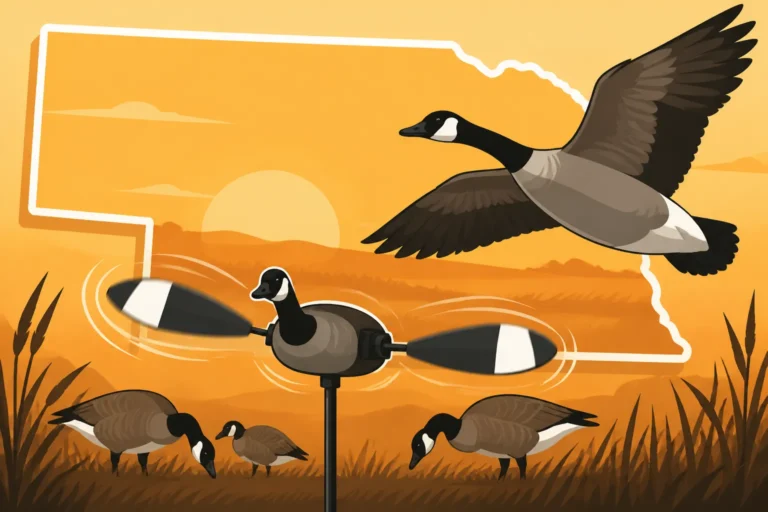
- Spinning Wing Decoys (SWDs): While rules vary by state and sometimes by specific hunting areas (always check the current Nebraska regulations!), an SWD strategically placed can be a magnet for ducks. They mimic a bird landing or flapping its wings, catching the eye from a distance. Place them on the downwind side of your kill hole, so incoming ducks fly past them into your pocket.
- Flapping Wing Decoys: These offer a more subtle, less aggressive motion than SWDs and can be highly effective, especially for geese.
- Goose Flags: Don't underestimate the power of a goose flag. A well-used flag can simulate landing or feeding birds from a long distance, drawing the attention of high-flying flocks. When you see birds in the distance, a few subtle flags can turn their heads. As they get closer, a more aggressive flagging motion can seal the deal, making them believe a party is happening. The key is realistic motion—don't just wave it wildly like a maniac. Mimic the slow, confident wing beats of a landing bird. Using a flag can be exhausting, but it's often the single most effective way to grab distant birds' attention.
Placement for Shooting Lanes
This is where the tactical aspect of decoy setting truly shines. You don't just want birds to land; you want them to land where you can shoot them effectively and safely. Your "kill hole" isn't just an open space; it's a carefully calculated zone.
- Distance: Most shotgun shells are effective out to about 40 yards. Aim for birds to land between 20-30 yards from your blinds. This provides a comfortable ethical shot range. If they're landing too close, you might get a lot of low, fast-flying shots that are hard to hit. Too far, and you're wounding birds.
- Clarity: Ensure there are no decoys directly within your prime shooting lanes. It's frustrating to hold fire because a $100 full-body decoy is sitting right in the path of your shot. Design your spread so that the path from your blind to the kill hole is clear of obstacles, both natural and artificial.
- Angles: Consider the angles from multiple blinds if you're hunting with a group. Everyone should have a clear, safe shot into the kill hole without swinging their gun over another hunter. Communication is vital when setting up a group spread. Knowing how to set up for this can make or break a group hunt.
Adjusting to Changing Weather and Pressure
Nebraska weather is notoriously fickle. A beautiful, calm morning can turn into a blustery, snowy mess by afternoon. Your spread needs to be adaptable.
- Wind Shifts: As mentioned, a shifting wind means shifting your spread. This might involve physically moving blinds and decoys, or at least re-orienting your kill hole by adding or removing decoys. Always carry extra decoys and stakes for quick adjustments.
- Light Conditions: On cloudy, dark days, contrast in your spread can be more important. Use a mix of dark and light phase decoys to make your spread pop. On bright, sunny days, be mindful of glare off decoys or blinds, and ensure your concealment is top-notch.
- Hunting Pressure: Heavily pressured birds become wary very quickly. If you're hunting public ground that sees a lot of traffic, smaller, more realistic spreads might be more effective than massive, flashy ones. Sometimes, being less conspicuous is the best approach. You might even consider hunting later in the season when the pressure has eased or targeting different areas, like those covered in Scouting Nebraska Public Ground Before Opening Day. Fresh, realistic decoy patterns are also often preferred by educated birds. The GoHunt community often shares tips on adapting to high-pressure situations, which can be invaluable.
- Decoy Maintenance: Keep your decoys clean. Mud, dust, and faded paint can make them look unrealistic. A quick wipe down can do wonders for their appeal.
| Decoy Spread Type | Target Species | Ideal Conditions | Key Characteristics |
|---|---|---|---|
| "U" or "J" Shape | Geese | Open fields, steady wind | Funnels birds into a central kill hole; blinds at downwind curve. |
| Fan or Dispersed | Ducks | Near water features, lighter winds | Mimics scattered feeding; clear landing patch near blinds. |
| X-Shape / Cross | Mixed Waterfowl | Variable winds, larger fields | Creates multiple approach lanes for different wind angles. |
| Feeding Blob | Any Waterfowl | Calm days, low pressure | Densely packed decoys, appearing as a large, contented flock; kill hole often just outside. |
Disclaimer
Please remember that hunting regulations, season dates, and specific rules regarding decoys (especially motion decoys) can change. Always consult the latest Nebraska Game and Parks Commission regulations before heading afield to ensure you are in compliance.