Covey Rise Shooting Discipline
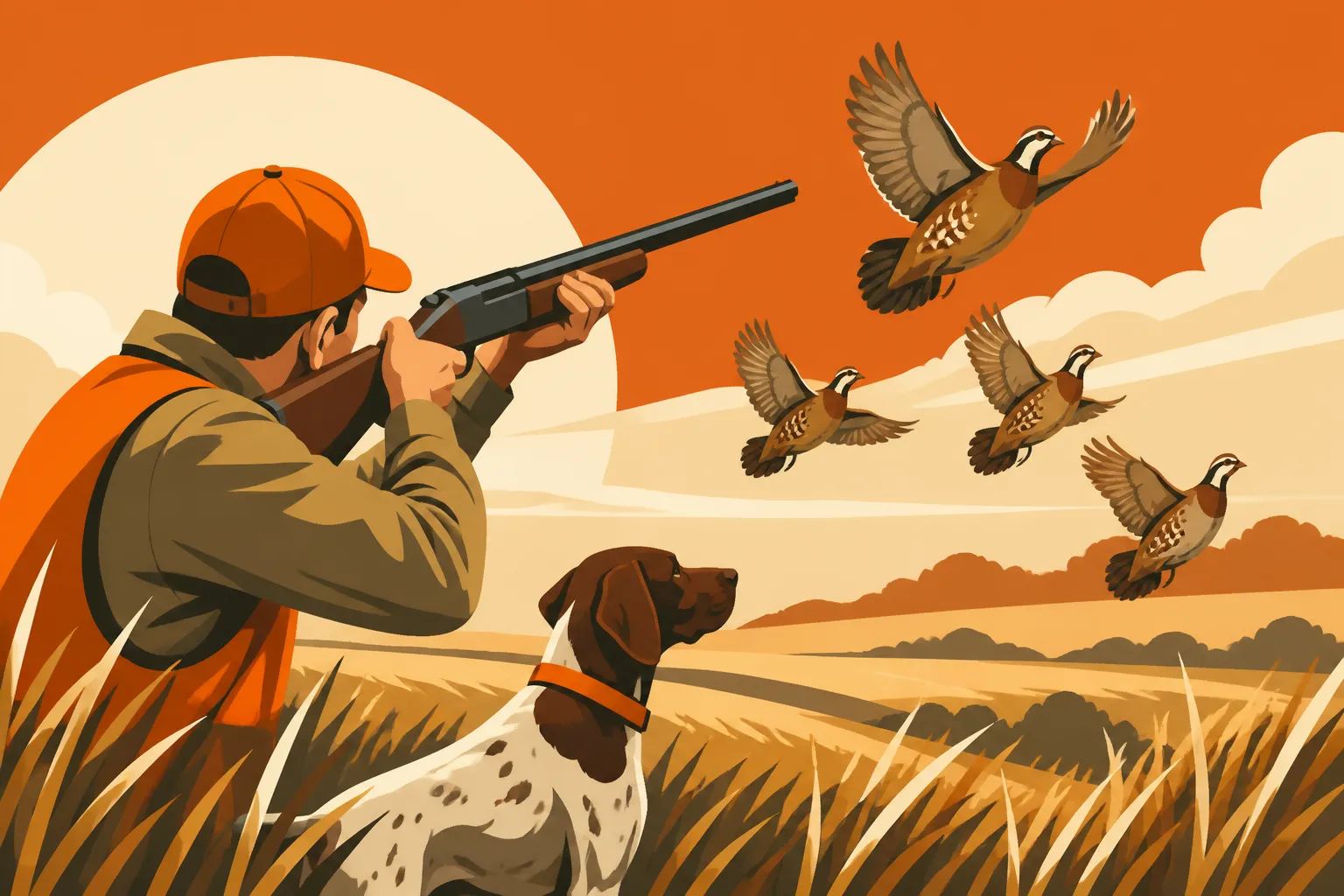
That explosive flush, the heart-stopping roar of wings erupting from underfoot – it’s a moment every upland hunter lives for. But let's be honest, it's also the moment where many of us feel our discipline fly out the window, leading to missed shots, wasted shells, and that nagging feeling of "what just happened?" Mastering the chaos of a covey rise, especially when a dozen or more birds take to the air at once, is one of the most challenging and rewarding aspects of hunting Nebraska's pheasants and quail. This guide will walk you through turning that overwhelming moment into a controlled, successful shot sequence.
Taming the Chaos of the Flush: Why Covey Rises Test Every Hunter
The covey rise is, by its very nature, a test of nerves, reflexes, and discipline. One moment, you're walking through a serene shelterbelt or a field of milo stubble, and the next, the world explodes with feathered projectiles heading in every direction. It’s enough to make even the most seasoned hunter revert to instinct, often leading to hurried, poorly aimed shots. The sheer volume of birds, the unpredictable flight paths, and the surge of adrenaline can create a mental fog that makes clear target acquisition incredibly difficult.
Many hunters experience what I like to call "target fixation overload." When a dozen quail or a half-dozen pheasants burst forth, it's natural to want to shoot at the entire flock, rather than picking a single bird. This is a recipe for disappointment. Instead of centering your focus on one, clear target, your eyes dart between birds, your swing becomes erratic, and you essentially shoot at air. The frustration of watching an entire covey escape unscathed, or worse, just knocking a few feathers off a bird without a clean kill, is a universal experience. It’s not just about pointing the gun; it's about having a plan for that split second of mayhem.
Compounding this is the speed at which these birds depart. A rooster pheasant can gain altitude and speed remarkably fast, while a covey of bobwhite quail can vanish into the horizon in seconds. The window of opportunity is incredibly brief, demanding swift, decisive action. And let's not forget the environment itself – dense cover, uneven ground, and even other hunters or dogs in the field can add layers of complexity, requiring not just shooting skill but also heightened situational awareness. It’s a lot to process in a heartbeat, and that’s precisely why a disciplined approach is so vital.
Mastering the Fundamentals: Stance, Mount, and Lead for Upland Success
Before you can even think about picking a bird out of a flush, you need to ensure your foundational shooting mechanics are rock-solid. This isn't just about looking good; it's about efficiency and consistency, which are paramount when microseconds count. A proper, athletic stance, a fluid gun mount, and a consistent lead are the trifecta that will set you up for success. Without these, you're essentially starting a foot race with one hand tied behind your back.
The Athletic Stance and Natural Point of Aim
Think of yourself as an athlete on the field, not a statue. Your stance should be balanced, with your weight slightly forward on the balls of your feet, ready to pivot and swing. If you're right-handed, your left foot should be slightly forward, pointing roughly towards where you expect birds to flush. For southpaws, it's the opposite. This allows for a natural, unhindered swing. Your knees should be slightly bent, ready to absorb recoil and move with the bird. Many hunters, myself included, often forget this crucial step in the excitement. We tense up, lock our knees, and suddenly our ability to fluidly track a bird is compromised. This athletic posture also helps establish your natural point of aim, meaning when you raise your gun, it should instinctively align with your target, requiring minimal adjustment. This is where hours of practicing your gun mount at home, without ever pulling the trigger, truly pays off.
The Consistent Gun Mount
A smooth, consistent gun mount is perhaps the most critical skill for upland shooting. It needs to be one fluid motion: gun to shoulder, cheek to stock, eye to rib. Any hitch in this process will cost you precious time and disrupt your aim. The gun should meet your shoulder and face simultaneously, becoming an extension of your body. Far too often, especially on a chaotic covey rise, hunters rush the mount, throwing the gun up awkwardly, leading to "head lifting" off the stock or the butt of the gun not settling firmly in the shoulder pocket. This results in inconsistent patterns and, more often than not, a clean miss. Practice your mount until it's second nature, so when those birds explode, your gun comes up instinctively and correctly. This is where a good shotgun fit is invaluable; if your gun doesn't fit, you'll constantly be fighting it. You can even check out advice on subjects like Shotgun Weight on a Long Prairie Walk to ensure your firearm is comfortable and manageable for sustained movement in the field.
Developing the Proper Lead
Lead, in simple terms, is aiming ahead of a moving target to account for the time it takes for your shot string to reach it. For upland birds, you're typically using a "swing-through" or "sustained lead" method. With swing-through, you start behind the bird, accelerate your swing past it, and pull the trigger as you pass the bird, continuing your swing. With sustained lead, you match the bird's speed and maintain a specific lead before pulling the trigger. The exact lead required depends on the bird's speed, distance, and angle. This is where countless rounds of trap, skeet, and sporting clays come into play, helping you build that muscle memory. It's not something you can think about in the moment; it has to be intuitive. Understanding different Choke Choice for Walking Birds can also influence how much lead you need, as tighter chokes require more precise aiming. You’ll want to be familiar with patterns and how they perform at various ranges.
The Art of Selective Shooting: Picking Your Bird on the Rise
When a covey bursts, the natural instinct is often to shoot into the mass of birds. This is almost always a mistake. True covey rise shooting discipline comes down to one critical skill: picking a single bird and committing to it. This takes conscious effort and practice, especially when your brain is screaming at you to just shoot something.
The One Bird Rule
As soon as the birds flush, force yourself to scan, identify a single bird, and focus exclusively on it. Don't look at the entire covey. Don't let your eyes dart between multiple targets. Pick one bird. Ideally, choose one that is separating slightly from the main group, offering a cleaner shot, or one that’s flying at a consistent angle. Often, hunters will pick the closest bird, which can be a good strategy, but sometimes that bird is also the most erratic. Look for a bird that presents a clear flight path that you can track with your swing. This singular focus helps eliminate the mental clutter and allows you to apply your fundamental shooting mechanics effectively.
Prioritizing Your Shot
Once you’ve identified your target, think about prioritizing your shots. If it's a covey of quail, you might have time for two shots, maybe even three if you’re quick and disciplined. For a pair of pheasants, perhaps two. Always aim for the first clean shot at your chosen bird, then immediately acquire a second target if the opportunity presents itself. Don't rush your second shot simply because you shot the first. There's no law saying you have to get two birds. A clean single kill is always better than two wounded birds or two misses. Many hunters find that focusing on the "farthest bird first" can sometimes allow closer birds to pass by, giving them more time for a follow-up shot. This strategy requires a calm head and a commitment to patience, even in the frenzy.
Situational Awareness and Safety
Beyond just shooting, selective shooting discipline also means being acutely aware of your surroundings. Where are your hunting partners? Where are the dogs? Never swing on a bird if it means pointing your muzzle, even for a split second, in the direction of another hunter or dog. This is non-negotiable. Often, the best shot available isn't the safest. A good way to prevent this is to communicate clearly with your hunting party before you even step into the field. Talk about zones of fire, where each person will be positioned, and what constitutes a safe shot. It’s also wise to wear appropriate blaze orange, not just for legal requirements, but for maximum visibility. You can learn more about Blaze Orange Caps and Vests in Nebraska to ensure you're safely visible in the field. This discipline ensures everyone goes home safely, which is always the ultimate goal.
Practice Makes Perfect: Drills to Sharpen Your Instincts
You can read all the articles in the world, but nothing will improve your covey rise discipline like dedicated practice. This isn't just about shooting more rounds; it's about shooting with purpose and simulating the chaos of the field. From the range to your backyard, there are numerous ways to hone your skills.
Clays and Field Simulations
The sporting clays course is your best friend when it comes to upland bird preparation. Unlike trap or skeet, sporting clays simulates varied bird presentations—crossing shots, flushing shots, incoming, outgoing, and even rabbit targets. Find a local course, like the one at Powder Creek Shooting Park near Bennington or Oak Creek Sporting Clays in Brainard, and work with an instructor. Ask for specific drills that mimic covey flushes, where multiple targets are thrown simultaneously. Don't just blast away; apply the "one bird rule" even on the clay field. Pick a specific clay pigeon, mount, swing, and break it, then immediately shift your focus to a second target. This helps train your eyes and brain to sort through the chaos. Many ranges offer specific upland bird simulations that are perfect for this.
Dry-Fire Practice at Home
You don’t need a shooting range to improve your gun mount and swing. Dry-fire practice at home, using an unloaded gun and focusing on your technique, is incredibly effective. Stand in front of a mirror to ensure your gun mount is smooth and consistent. Practice quickly acquiring a "target" (a light switch, a door frame, a spot on the wall) and swinging through it. You can even use a laser-sighting cartridge (like the one from LaserLyte or SureStrike) to get visual feedback on your point of impact and swing. This builds crucial muscle memory without the cost of ammunition. Imagine the birds flushing, visualize yourself picking one, mounting, swinging, and following through. The more you do this, the more automatic it becomes in the field.
Mental Preparation and Visualization
Hunting isn't just a physical game; it's a mental one. Before you even step into the field, visualize successful scenarios. Imagine walking through prime pheasant habitat, hearing the cackle of a flushing rooster, and calmly executing a perfect shot. See yourself picking that one bird from a covey of quail as it breaks from cover. Mental rehearsal helps build confidence and reinforces proper technique, so when the actual moment arrives, your brain has already "practiced" it. Many athletes use visualization, and hunters can benefit immensely from it too. It helps manage the adrenaline dump that often accompanies a surprise flush, allowing you to react with a calm, practiced response rather than a panicked flinch. Using scouting tools like GoHunt to understand terrain and likely flush points can also help in mentally preparing for where birds might appear. Knowing the type of cover, like a particular corner of a Quail Coveys in Nebraska Shelterbelts, can help you anticipate the angle of a flush.
Table: Upland Bird Shot & Choke Recommendations for Nebraska
| Bird Species | Typical Range (Yards) | Recommended Shot Size | Recommended Choke (First Shot) | Recommended Choke (Second Shot) | Common Shell Length |
|---|---|---|---|---|---|
| Pheasant | 20-40 | 4, 5, 6 | Modified | Full (or Improved Mod) | 2 ¾” or 3” |
| Quail | 15-30 | 7 ½, 8 | Skeet, Improved Cylinder | Modified | 2 ¾” |
| Partridge | 20-35 | 6, 7 ½ | Improved Cylinder | Modified | 2 ¾” |
| Dove | 20-45 | 7 ½, 8 | Improved Cylinder, Modified | Modified | 2 ¾” |
Note: These are general recommendations. Always check local regulations and consider individual shooting ability and conditions.
Learning to shoot effectively on a covey rise is a journey, not a destination. There will always be missed shots, and that’s perfectly normal. But by focusing on solid fundamentals, practicing disciplined target acquisition, and mentally preparing for the moment of truth, you’ll find yourself hitting more birds cleanly and enjoying the thrill of the hunt even more. And remember, the real joy isn't just in the harvest, but in the mastery of the skill and the time spent afield in Nebraska's beautiful landscapes. To find areas rich with game, it helps to use advanced mapping tools like GoHunt, which can highlight optimal habitats for the species you're pursuing. This planning, combined with sharp shooting discipline, elevates the entire hunting experience. For more information on finding prime bird hunting spots, consider looking into Hunting Open Fields and Waters Tracts for Pheasants.
Disclaimer
Hunting involves inherent risks, including but not limited to injury, wildlife encounters, and unforeseen environmental conditions. Always prioritize safety, adhere to all local, state, and federal hunting regulations, and ensure you have the necessary permits and licenses. The information provided in this guide is for informational purposes only and should not replace professional instruction or personalized advice. Always verify current regulations with the Nebraska Game and Parks Commission before your hunt.