Hunting Standing Corn Before Harvest
Hunting deer when the corn is still standing can feel like trying to find a needle in a haystack, or more accurately, a ghost in a fortress. That dense, towering cover offers whitetails an unparalleled sense of security, making them incredibly difficult to pattern and approach. This guide will walk you through the unique strategies and considerations for effectively hunting Nebraska's standing cornfields before the harvest, transforming a seemingly impossible challenge into a rewarding opportunity.
The Unique Challenges and Opportunities of Standing Corn
Hunting standing corn isn't just another walk in the woods; it's an entirely different ballgame. For many hunters, the thought of trying to outsmart a whitetail in acres of chest-high, rustling stalks is enough to make them pack up and wait for the combine. But for those willing to adapt, this dense habitat offers some of the most exciting and often overlooked opportunities of the early and mid-season. Understanding both the difficulties and the potential rewards is the first step toward success.
Understanding the Deer's Sanctuary
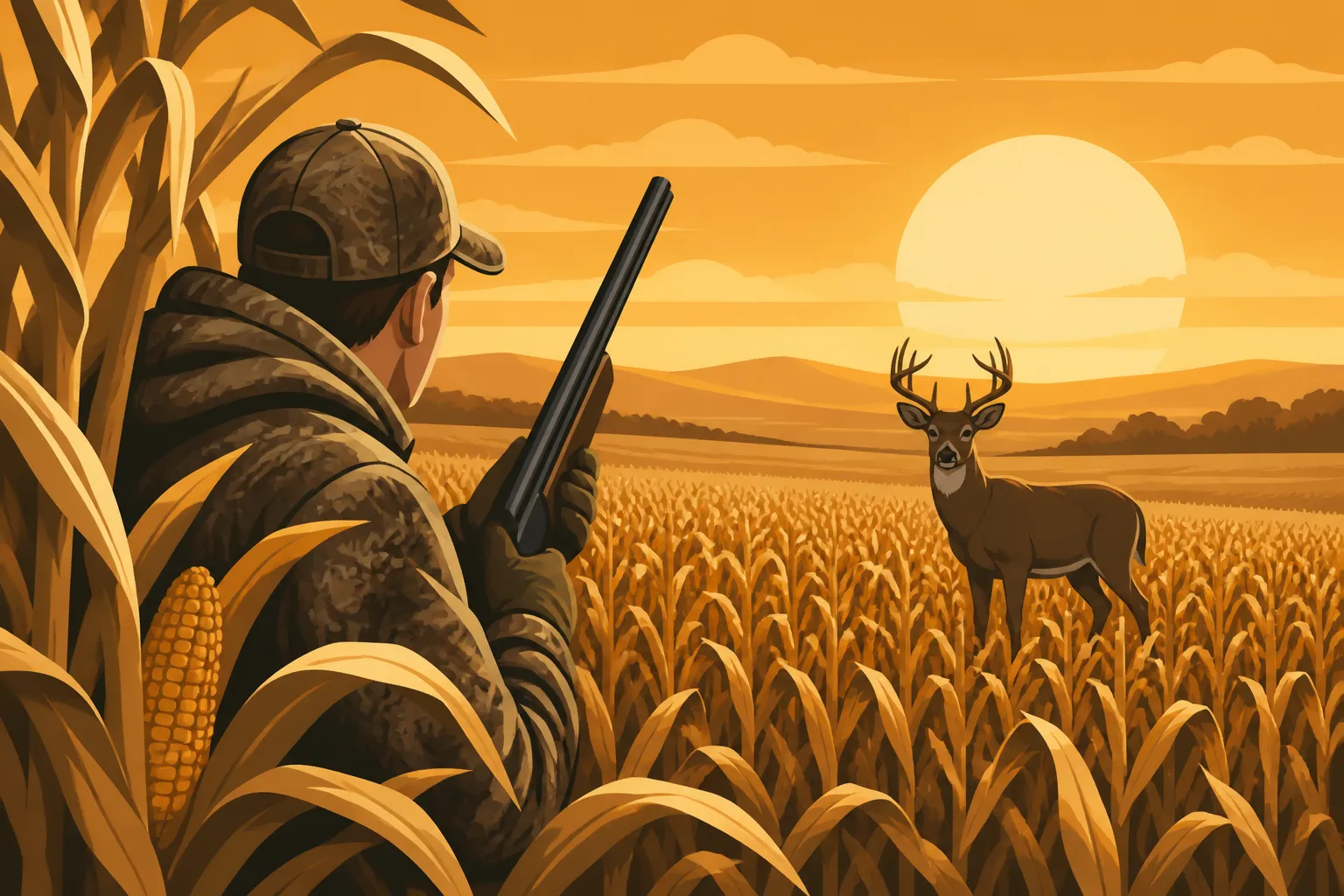
Imagine being a whitetail deer. You've got predators, human pressure, and the need for food and rest. A standing cornfield is literally a perfect blend of all your needs. It provides incredible cover, shielding you from predators and hunters alike, making you virtually invisible. This dense canopy also offers shade from the sun on warmer days and protection from the wind and elements when the weather turns. Deer will often bed deep within the corn, feeling incredibly secure, only moving out at dusk or under the cover of darkness to feed in nearby alfalfa fields, soybean plots, or even other parts of the cornfield itself. It's their fortress, and they know it.
This inherent security means deer in standing corn often behave differently than those in open timber or grassland. They might not move as far, and their travel patterns within the corn can be incredibly unpredictable. You can’t just assume they’ll stick to traditional trails; they'll create their own labyrinth of tunnels. This is especially true if you're hunting the pre-rut in late October when bucks are starting to cruise, but still value security. They know a cornfield offers protection while they’re on the move.
The sheer volume of cover means that even a mature buck can disappear into the rows with incredible stealth, making visual tracking nearly impossible from a distance. Their sense of hearing is amplified by the rustling stalks, and their scent is often trapped within the dense foliage. All these factors combine to make traditional hunting methods, such as sitting an open field edge for hours, far less productive until the corn comes down.
Weather and Timing Considerations
The success of hunting standing corn is heavily influenced by external factors, particularly weather and the timing of the harvest. Early season, when the corn is still green and lush, offers excellent cover but also very warm temperatures. Deer movement will likely be concentrated in the cooler hours of dawn and dusk, and possibly even in the middle of the night. As the season progresses and the corn begins to dry and turn golden, it becomes noisier to move through, and while still offering cover, it might be less appealing for bedding on exceptionally windy days.
The biggest factor, however, is the combine. Once a farmer starts harvesting, the deer are displaced. While this can create a flurry of activity in remaining cover, the primary strategy shifts dramatically. Therefore, striking while the corn is still up is critical. Pay close attention to local agricultural reports and weather forecasts. A string of dry days can accelerate harvest, while heavy rains can delay it. Knowing when the combine is likely to roll through your hunting area is paramount. A tool like GoHunt's mapping features can sometimes even show agricultural land types, helping you pinpoint those cornfields that are still standing.
It’s also important to consider the impact of recent precipitation. Heavy rains can make moving through cornfields incredibly muddy and loud, hindering a stealthy approach. Conversely, a light, steady rain can actually dampen the noise of the stalks, making still-hunting more feasible. Wind, of course, plays a massive role in scent control and can make or break your hunt, a topic we'll dive into more deeply later.
Scouting and Pre-Hunt Strategy
Hunting standing corn effectively requires meticulous preparation and a solid understanding of how deer utilize this unique habitat. You can't just wander in hoping for the best; you need a plan. Much of your success will be determined before you even step foot in the field, by carefully scouting and leveraging all available resources to gain an advantage. This phase is about gathering intelligence and formulating a strategy that maximizes your chances while minimizing disturbance.
Identifying Key Entry and Exit Points
Deer don't just magically appear in a cornfield; they have specific routes they use to get in and out, especially when moving between bedding and feeding areas. Your scouting efforts should focus on identifying these subtle indicators. Look for heavily used trails along the edges of the cornfield, particularly where it borders other types of cover like woodlots, CRP fields, or creek bottoms. Focus on corners, fence lines, and any natural funnels that restrict deer movement. Sometimes, deer will utilize a "superhighway" trail that runs parallel to a fenceline or treeline before veering off into the thick corn. These trails are often deeply worn, indicating consistent use.
Walk the field edges, looking for tracks, droppings, and even rub or scrape lines along a fenceline or the very first row of corn. These scrapes can be prime indicators of a buck's travel path. Remember to consider your own entry and exit routes on flat farm ground. You want to be able to get to your stand or blind without alerting deer already present or spooking them off their intended path. A quiet approach under the cover of darkness is non-negotiable. Look for ditches, creases in the terrain, or even unharvested strips of grass that can help conceal your approach.
Understanding where Nebraska whitetails bed in row-crop country is also critical. While some deer might bed in the corn itself, many will use the corn as a security blanket to travel to and from nearby timber, CRP, or brushy creek bottoms where they actually spend the daytime hours. Identifying these preferred bedding areas will help you choose the best intercept points along the cornfield edges.
Using Technology for Pre-Season Intel
In today's hunting world, technology can be a game-changer, especially when trying to decipher the mysteries of a standing cornfield. Satellite imagery available on mapping apps like GoHunt can provide an invaluable bird's-eye view. You can identify the precise boundaries of cornfields, locate adjacent timber or water sources, and even spot subtle terrain features like ditches or ravines that deer might use for travel. These apps often allow you to mark potential stand sites, bedding areas, and travel corridors digitally, saving you countless hours of boots-on-the-ground scouting. Many hunters swear by these digital tools for their ability to reveal hidden access points and escape routes.
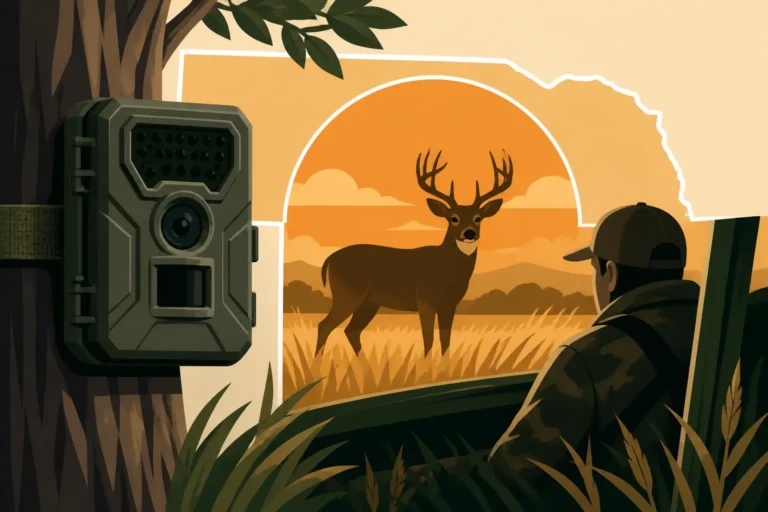
Trail cameras are another essential tool. Place them on the very edges of cornfields, facing into known travel corridors or near scrapes and rubs you've found. Don't be afraid to put a camera right on the edge of the corn, even if it feels exposed. The goal is to capture deer moving in and out of the corn, giving you a better understanding of their patterns, timing, and even identifying specific bucks. Cellular trail cameras can be especially useful here, as they allow you to monitor activity without repeatedly disturbing the area. However, always check rules regarding Trail Camera Rules on Nebraska Public Land if you're not on private ground, as regulations can vary.
Beyond satellite imagery and trail cameras, consider looking at historical harvest data if available for your area, or even reaching out to local farmers (with permission, of course) to inquire about typical harvest schedules. This intel can help you time your hunts precisely to maximize your chances before the corn is cut. Understanding the local deer unit boundary is also important, as regulations can differ from one area to the next.
In-Season Tactics for Standing Corn
Once you've done your homework, it's time to put your plan into action. Hunting standing corn requires a blend of stealth, patience, and a keen understanding of deer behavior. Whether you choose to still-hunt through the rows or set up on an edge, your tactics need to be precise and adaptable to the ever-changing conditions of the field.
Still-Hunting the Rows
Still-hunting through standing corn is perhaps the most challenging, yet potentially rewarding, tactic. It's a game of inches, demanding extreme patience and a methodical approach. The key is to move incredibly slowly, pausing frequently to scan and listen. The rustling of the dry stalks can work both for and against you – it can mask your own movement, but it can also make it impossible to hear an approaching deer. Your best bet is to move into the wind, utilizing your scent cone to your advantage. Look for subtle signs: a flicking ear, a patch of deer hair, the horizontal line of a deer's back against the vertical stalks.
When still-hunting, stick to the rows, using them like hallways. Avoid crashing through, as that will instantly give away your presence. Focus on areas where the corn might be thinner or where there are natural breaks, as these are spots deer might choose to cross. Remember that deer in standing corn are often bedded very tightly, and a sudden movement from you could cause an explosive flush. If you see a deer, freeze. Let it calm down, then try to make a slow, deliberate move for a shot. This method can be incredibly effective during cooler, calmer days. Wearing soft, quiet clothing is essential to minimize noise as you brush against the stalks.
This is a tactic that rewards absolute commitment. If you decide to still-hunt, commit to moving at a snail's pace, taking only a few steps every minute or two. Use every single row as potential cover, easing your head around corners before moving forward. It's not about covering ground quickly; it's about covering it silently and deliberately, constantly observing and listening for the subtle cues of deer presence.
Setting Up on Field Edges and Funnels
For many hunters, setting up on the edge of a standing cornfield is a more conventional and often productive approach. Deer will eventually leave the corn to feed or seek water, and these edges are your best bet for intercepting them. Choosing a treestand site on Nebraska farmland along a cornfield edge, or even using a ground blind on Nebraska public ground carefully brushed into the cover, can be highly effective. Look for pinch points, fence lines, or small timber blocks that force deer to consolidate their movement. These are the natural funnels that deer gravitate towards.
Consider placing your stand or blind where you have a clear view of multiple entry points into the corn. If there's a smaller patch of timber or a creek bottom adjacent to the corn, that’s often a high-traffic area. Deer love to follow the path of least resistance. You might also find scrape lines along a fenceline bordering the corn, indicating a buck’s regular patrol, making that a prime spot for a stand. Positioning yourself strategically based on wind direction on open Nebraska prairie stands is paramount here; your scent must be carried away from where you expect deer to approach or exit the corn.
During the rut, combining a stand on a cornfield edge with rattling and grunting in Nebraska's rut can be incredibly effective. Bucks will cruise these edges, scent-checking for does, and a well-placed call can draw them out of the dense cover. Remember that hunting standing corn requires different tactics than those you'd use after what changes in Nebraska after the corn comes off; the cover is a game-changer.
The Wind is Your Ultimate Guide
When hunting standing corn, especially on the edges or when still-hunting, the wind isn't just a factor; it's the factor. Deer rely heavily on their sense of smell, and the dense corn offers little forgiveness for a swirling or unfavorable wind. Always hunt with the wind in your favor, blowing your scent away from where you expect deer to be. This might mean only hunting certain stands on specific wind directions, which is why having multiple setups is crucial. GoHunt's app, for example, often has integrated wind direction tools that can help you plan your approach and select the optimal stand for the day.
If you're still-hunting, you must constantly monitor the wind. A subtle shift can ruin your hunt. Using a wind checker puff bottle regularly is a simple but critical habit. Remember, thermal currents can play tricks on your scent, especially early in the morning or late in the evening. As the sun rises, thermals tend to rise, and as it sets, they tend to fall. Understanding these micro-movements of air can give you a significant advantage in keeping your presence hidden from the incredibly sensitive noses of whitetails inhabiting those towering corn rows.
Even when sitting on an edge, a shifting wind can quickly put deer on alert. Pay close attention to the forecast, not just for the general wind direction, but also for any predicted changes throughout your hunting window. A slight quartering wind can sometimes be your friend, carrying your scent parallel to the edge rather than directly into the corn, but a direct crosswind or, worse, a swirling wind, should send you packing or to a different location.
Safety and Ethical Considerations
Hunting standing corn presents unique challenges that demand extra attention to safety and ethical conduct. The dense cover, limited visibility, and the presence of other hunters, agricultural equipment, and even non-hunters using adjacent roads mean you need to be acutely aware of your surroundings and actions at all times.
Visibility and Communication
Visibility is drastically reduced in standing corn. This isn't like hunting open timber where you can see for hundreds of yards. Inside the corn, your line of sight might be limited to mere feet. This creates a significant safety concern, especially if you're still-hunting or if multiple hunters are in the area. If you are hunting during Nebraska's Nine-Day November Firearm Deer Season, then orange requirements for archers in November, and indeed all firearm hunters, apply. Always wear sufficient blaze orange as required by Nebraska law, far beyond Nebraska's 400-square-inch orange rule, especially if firearm seasons are open. Make sure your hunting partners know your exact location and intended direction of travel. Two-way radios can be invaluable for maintaining communication, though be mindful of their range in dense cover.
Before taking any shot, be absolutely certain of your target and what lies beyond it. A deer could be just a few rows deep, and beyond that could be a road, a farm building, or another hunter. This is not the place for hurried, ill-advised shots. Patience is a virtue, and ensuring a safe shot is paramount. Even if you're bowhunting Nebraska's Four-Month Archery Season, where orange isn't always mandatory outside of the firearm season, wearing it can be a wise safety precaution in dense cover.
It’s also important to remember that farm equipment might be operating nearby. Even if a field isn't being harvested, other farm work could be happening. Always be aware of sounds of machinery and never assume you are the only one out there. Sound travels differently through dense corn, so what sounds far away might be closer than you think.
Respecting Private Land Boundaries
While Nebraska has ample public hunting land, many of the prime cornfields are on private ground. It goes without saying that you must have explicit permission to hunt any private land. Even if you have permission for one field, those towering stalks can disorient you, making it easy to inadvertently cross onto an adjacent property where you don't have permission. Always carry a reliable GPS unit or a mapping app like the one offered by GoHunt to clearly identify property lines. Regularly consult your device to ensure you're staying within the bounds of where you're legally allowed to hunt.
Retrieving game from private land where you don't have permission is also a critical issue. If a deer crosses a boundary after being shot, you absolutely must obtain permission from the landowner before pursuing it. Crossing without permission is trespassing and can lead to serious legal consequences, not to mention damaging the reputation of all hunters. Clear communication and respect for private property are essential for maintaining access and fostering positive relationships with landowners. Misunderstandings about property lines are a common issue, and being proactive about knowing exactly where you are at all times is the best way to prevent problems.
| Tactic Category | Best Conditions | Key Advantage | Primary Challenge | Optimal Wind Direction |
|---|---|---|---|---|
| Still-Hunting | Calm, cool days, light breeze | Direct engagement, covers more ground | Low visibility, high risk of spooking deer | Into the wind |
| Edge Sitting | Deer moving between corn & other cover | Intercepting predictable travel patterns | Wind variability, deer might not exit corn | Away from corn/travel |
| Ground Blinds | Windy days, early season | Concealment, stable shooting platform | Limited view, deer might avoid new objects | Away from corn/travel |
| Treestands | Overlooking funnels, trails | Elevated view, scent dissipation | Setup time, limited access points | Away from corn/travel |
Disclaimer
Hunting involves inherent risks. This guide provides general information and recommendations. Always consult the Nebraska Game and Parks Commission regulations for the most current and specific hunting laws, safety guidelines, and permit requirements before heading afield. It is your responsibility to hunt safely and ethically.