Hanging a Stand on a Cornfield Edge
Hunting deer along the edges of vast Nebraska cornfields can be incredibly rewarding, but it often feels like trying to crack a secret code. Deer know these edges offer safety and sustenance, yet accessing them without alerting every whitetail in a two-mile radius is a challenge. This guide will walk you through the nuances of scouting, choosing, and meticulously setting up a treestand on a cornfield edge to maximize your chances of success, from early season through the late hunts.
Why Cornfield Edges Are Prime Whitetail Real Estate
Anyone who's spent time hunting deer in agricultural country knows that cornfields are absolute magnets. These towering rows of green or golden stalks offer everything a whitetail needs: food, cover, and a sense of security. The edge, in particular, is where the magic happens, acting as a natural highway, a buffet line, and a hidden sanctuary all rolled into one. It’s where deer feel comfortable transitioning from heavy cover to open feeding areas, and understanding this behavior is key to your stand placement strategy.
The Allure of Standing Corn for Deer
Imagine being a whitetail in a sea of standing corn. It’s dense, it’s tall, and it offers incredible concealment from predators, including us hunters. Deer will often bed right within the corn, especially if it’s a larger field, feeling incredibly secure. Beyond just security, standing corn is a readily available food source, particularly as the kernels mature and dry down. Deer will browse on the leaves, stalks, and ears, often before the harvest even begins. This provides a consistent draw to the area, creating predictable movement patterns. They'll use the edges as travel corridors, walking just inside the corn or along the very fringe, knowing that a quick step takes them back into the dense labyrinth. If you’re trying to understand where Nebraska whitetails bed in row-crop country, standing corn is often at the top of the list for exactly these reasons.
How Harvest Changes the Game
The moment those combines roll into the field, everything shifts. What was once a fortress of green or gold becomes an open, stubbled expanse, completely altering deer movement. Suddenly, the deep security of the corn is gone, and deer are forced to find new places to bed. However, the cornfield edge doesn't necessarily lose its appeal entirely; it merely transforms. Post-harvest, the field still offers leftover kernels and shattered cobs, making it an irresistible feeding destination. Deer will continue to visit these fields, often concentrating their activity in the evening as they emerge from nearby woodlots, CRP fields, or draws. The edges become even more critical transition points. They’ll approach from the nearest cover, cautiously entering the open field, and often use the same historical entry points they’ve always used. This shift means your stand placement needs to be adaptable, as the deer’s priorities change from bedding in the corn to feeding on its remnants while seeking cover elsewhere. The key is to pay attention to what changes in Nebraska after the corn comes off, as this will dictate your updated hunting strategy.
Strategic Stand Placement on the Edge
Choosing the perfect tree and precise location for your treestand on a cornfield edge isn't just about finding the tallest oak. It's a calculated decision, heavily influenced by deer behavior, wind patterns, and your ability to get in and out undetected. Successful hunters understand that a great stand isn't just about where you can hang it, but where deer won't detect you.
Reading Deer Sign Along the Periphery
Deer leave calling cards everywhere, and nowhere is this truer than along a cornfield edge. Before you even think about climbing a tree, spend some serious time scouting. Look for obvious trails entering and exiting the corn, especially those that parallel the edge itself. These trails are often deeply worn, indicating consistent use. Pay close attention to crossings where deer might move from the corn into other cover, like a neighboring timber strip or a creek bottom.
Beyond trails, look for tracks, droppings, and fresh rubs or scrapes, particularly during the pre-rut and rut phases. A scrape line along a fenceline or the very edge of the cornfield is a hotbed of activity, telling you bucks are actively checking for does. Notice the size and freshness of tracks—larger, deeper tracks usually belong to mature deer. If you find a particularly heavily used trail leading to a specific corner of the field, or where a finger of timber meets the corn, you’ve likely found a primary travel route. This is where tools like GoHunt can be invaluable, allowing you to study aerial imagery to identify these natural funnels and pinch points before you even step foot on the ground. These observations will guide you to a tree that intercepts movement, rather than just offering a good view.
Considering Wind and Sun Angles
Wind direction on open Nebraska prairie stands is arguably the most critical factor in successful stand hunting, especially on a cornfield edge. Deer rely heavily on their sense of smell, and if your scent drifts into their travel corridor, your hunt is over before it begins. Always choose a stand location that allows you to hunt with a consistent wind direction that blows your scent away from where you expect deer to approach or travel. This often means having multiple stand options for different wind conditions or being willing to pack up and move.
The sun angle is another often-overlooked element. In the mornings, you want the sun at your back, illuminating the field for better visibility and keeping you out of direct glare. In the evenings, the reverse is true; you want the setting sun in the deer's eyes, not yours. This helps with concealment and makes it harder for them to spot your silhouette. Also, consider how the sun affects shadows on your entry and exit routes. A well-placed stand uses the natural elements to its advantage, keeping you hidden and your scent out of the game.
Access and Exit Routes for Minimal Impact
This is where many hunters make their biggest mistakes, spooking deer before they even settle into their stand. On flat farm ground, noise and scent carry far. Your entry and exit routes on flat farm ground must be meticulously planned to avoid detection. Ideally, you want to approach your stand from a direction that keeps you hidden from the deer's likely travel patterns and with the wind in your face.
This might mean walking a long way around the field edge, utilizing ditches, fencelines, or even a creek bottom for cover. During the walk, be as quiet as possible. Wear minimal clothing to reduce scent contamination until you reach your stand, then layer up. Never walk directly through areas you expect deer to be using. If you plan to hunt an evening stand, think about how you'll get out after dark without busting feeding deer in the field. Sometimes, it's better to wait an extra hour in the stand until deer have dispersed or moved off before making your exit, even if it means a longer wait. The goal is to be a ghost, leaving no trace of your presence. This meticulous planning is just as important as the stand itself.
Practical Tips for Hanging Your Stand Successfully
Once you've done your homework and identified the perfect spot along the cornfield edge, it's time to get that stand up. This isn't a task to be rushed; safety, stability, and effective concealment are paramount for a successful hunt. Remember, your stand needs to become an invisible extension of the natural environment, not a glaring intrusion.
Choosing the Right Tree
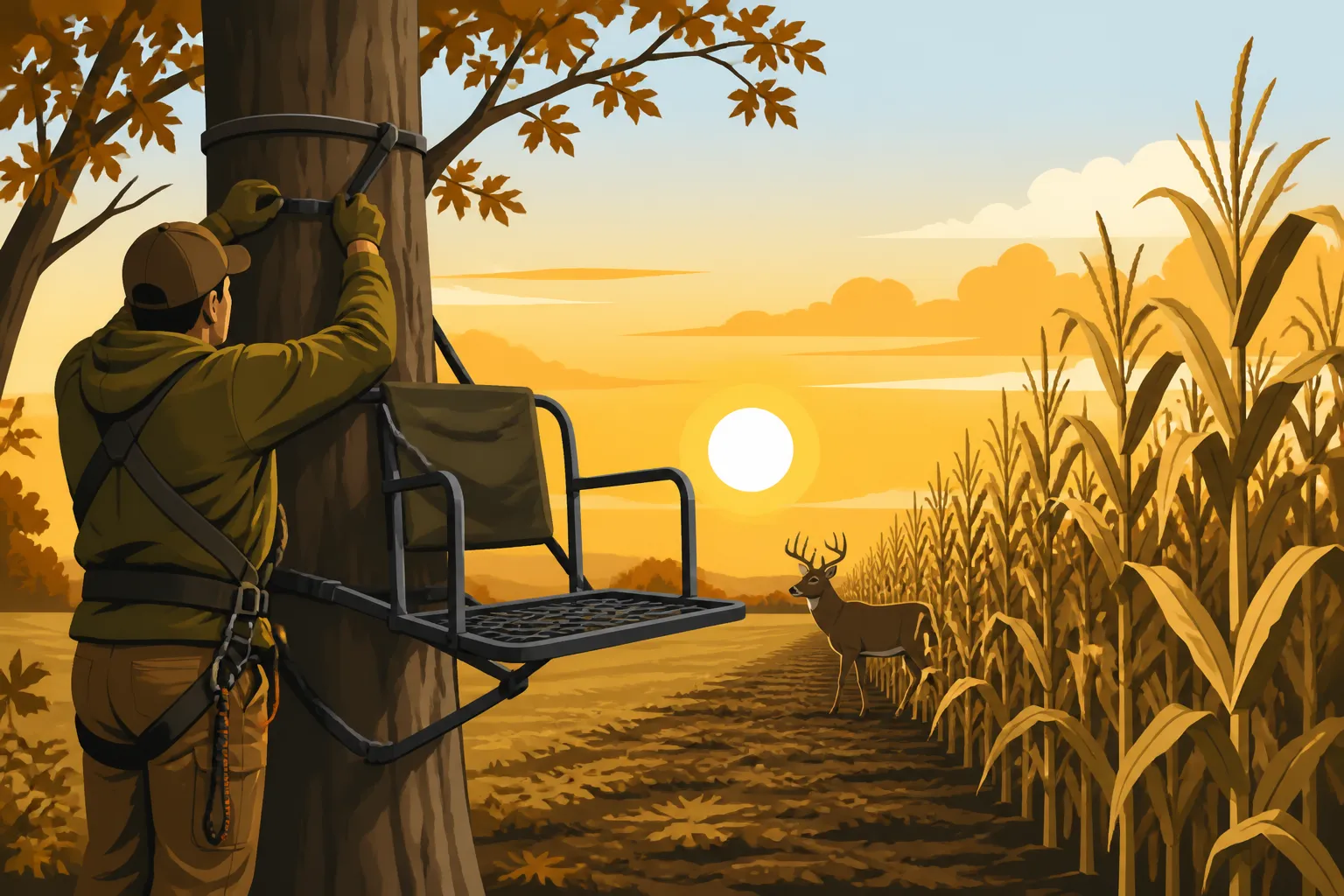
Not all trees are created equal for a treestand, especially on a cornfield edge where suitable timber might be sparse. Look for a tree that offers natural concealment, preferably one with a dense canopy or sturdy branches that break up your outline. A tall, straight tree that allows you to get 20-25 feet high is ideal for maximum visibility and scent dispersal, but not so high that you feel exposed or unsafe.
Consider the tree's location relative to the deer trails you’ve identified. You want to be close enough for a shot, but far enough not to be directly in their line of sight. Think about the background behind your stand; avoid silhouetting yourself against the sky. A tree with some brush or other trees directly behind it will help you blend in. Maple, oak, or even a sturdy cedar can work, depending on what's available. If you're in an area with cottonwood bottoms and deer density, these often provide excellent, tall trees perfect for stand placement. Ensure the tree is healthy and strong enough to support you and your gear safely. If natural cover is scarce, consider supplemental brushing in around your stand with local vegetation, taking care not to damage the tree.
Safety First: Gear and Techniques
Before you ever leave the ground, make sure your safety harness is on and properly adjusted. This isn't optional; it's non-negotiable. Always maintain three points of contact when climbing, and use a lifelineto remain tethered from the moment your feet leave the ground until they return. Invest in quality climbing sticks or a climbing system that's appropriate for your chosen tree. Ensure your stand is rated for your weight, including your gear.
When raising your stand, use a haul rope to pull up your bow or firearm after you're safely secured in the stand. Never climb with equipment in hand. Double-check all straps, bolts, and connections once the stand is installed. During the season, periodically inspect your stand for wear and tear, especially straps that might degrade from sun exposure. These safety precautions, while seemingly basic, are the foundation of every successful and long-term hunting career. For specific gear choices, understanding optimal bow draw weight for Nebraska whitetails or rifle set-ups is a good starting point, but personal safety gear remains universal.
Concealment and Scent Control
You've picked the perfect tree and safely installed your stand, but if deer can see or smell you, it's all for naught. Concealment isn't just about camo; it's about breaking up your human form. Choose a stand that blends with the tree, and, as mentioned, consider brushing it in with natural vegetation. Trim branches only if absolutely necessary to create shooting lanes, and do so well in advance of the season to minimize disturbance.
Scent control is a constant battle, but it's crucial. Shower with unscented soap, wash your hunting clothes in scent-free detergent, and store them in airtight containers. Use scent-eliminating sprays on your clothes, boots, and gear just before heading out. Be mindful of what you eat and drink, avoiding strong odors. When you climb into your stand, try to touch as little as possible. While complete scent elimination is impossible, minimizing your scent footprint vastly improves your odds. GoHunt and similar mapping tools can help you plan your approach to avoid crossing prevailing winds or known deer travel paths, reinforcing the importance of a comprehensive scent strategy.
Adapting to Changing Conditions
Nebraska's hunting seasons stretch for months, and the landscape around a cornfield edge is rarely static. From the moment the first kernels appear to the deep freeze of winter, the deer's patterns and your hunting strategies must evolve. Being able to adapt is the hallmark of a truly effective hunter.
Post-Harvest Strategies
Once the combines have done their work, the open stubble field presents a new challenge. The secure cover of standing corn is gone, but the promise of leftover sustenance remains. Deer will still be drawn to these fields to glean dropped kernels, especially if other food sources are scarce. Your stand on the edge might still be productive, but your timing and approach will need to change.
Deer are much more cautious in open fields. They'll often wait until the last possible light to emerge from thicker cover like adjacent woodlots, CRP fields, or even creek bottoms. This means your best bet is often an evening hunt, setting up on the edge closest to their new bedding areas. Consider setting up on a terrace bench or along a creek crossing where deer might funnel between new cover and the open field. They will be more alert, so impeccable scent control and a silent entry/exit are more critical than ever. Sometimes, a ground blind that is well-brushed in on open Nebraska country can be more effective post-harvest, offering better concealment in a changed landscape. This period can also be excellent for late-season antlerless hunting in Nebraska, as does and fawns will be focused on finding calories.
Hunting the Late Season
As winter deepens and temperatures drop, deer become entirely focused on survival, which means finding high-energy food sources. This is when a cornfield edge, even if it's just stubble, can become an absolute hotspot again, especially if there's significant snow cover. Any leftover corn becomes a lifeline, drawing deer in during daylight hours.
During the late season, deer movement patterns often become more predictable. They'll travel efficiently between bedding areas and food sources, conserving energy. Your treestand on the cornfield edge can be deadly during this time, particularly on sunny afternoons that encourage deer to feed. Be prepared for cold weather sitting strategy; layering is crucial for staying comfortable and focused. Consider adding a portable heater or hand warmers to your gear. Look for fields that still have some standing corn left, or where the harvest was particularly messy, leaving abundant dropped ears. This is a time when understanding deep snow and deer movement can give you a significant advantage, as deer will often take the path of least resistance, which might be right along your cornfield edge.
| Factor | Pre-Harvest Strategy | Post-Harvest Strategy | Late Season Strategy |
|---|---|---|---|
| Deer Focus | Bedding in/near corn, browsing | Gleaning dropped corn, new bedding | Calorie-rich food sources, energy |
| Stand Timing | Mornings/Evenings | Primarily Evenings | Mid-day/Evenings |
| Primary Challenge | Undetected entry into dense cover | Visible approach across open fields | Extreme cold, deer caution |
| Cover Type | Standing corn, adjacent timber | Timber, CRP, draws, creek bottoms | Thick thermal cover, protected draws |
| Key Sign | Tracks, rubs, scrapes, trails | Droppings, tracks on stubble, trails | Heavy trails to food, browsing on stalks |
| Wind Priority | Always paramount | Even more critical, carries farther | Crucial for warmth & scent control |
This table provides a quick reference for adapting your approach throughout the different phases of the hunting season when focusing on a cornfield edge.
Remember, every hunt is a lesson. Pay attention to how deer react to your presence, the wind, and the changing landscape. With careful planning, strategic placement, and a willingness to adapt, that Nebraska cornfield edge can become one of your most productive hunting spots.
Disclaimer
Hunting is an inherently dangerous activity. Always prioritize safety, adhere to all local, state, and federal hunting regulations, and ensure you have the necessary permits and licenses. The information provided in this guide is for informational purposes only and should not replace proper hunter education, professional guidance, or personal due diligence.