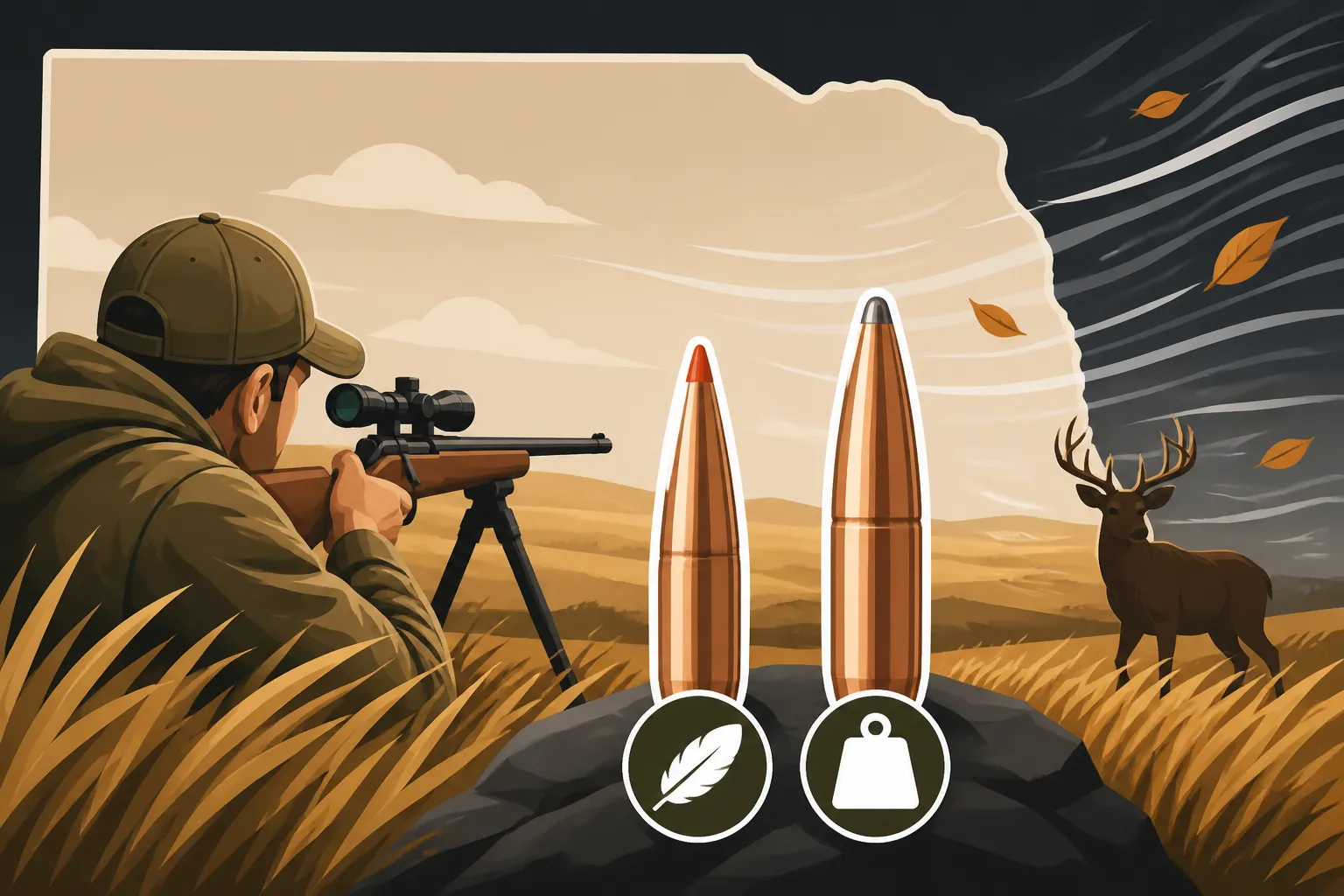
Bullet Weight for Windy Conditions
The relentless, often unforgiving wind in Nebraska is a constant companion for any hunter, and it has a frustrating habit of turning a perfectly aimed shot into a miss if you haven't accounted for its invisible push. There's nothing worse than watching a trophy buck or a wary antelope flinch from a bullet that drifted wide, all because you underestimated the prairie's breath. This guide is all about tackling that challenge head-on, delving into how bullet weight specifically impacts wind drift and arming you with the knowledge to make confident, ethical shots even when the air itself seems to conspire against you.
The Ever-Present Challenge of Nebraska's Wind
Ask any hunter who has spent time afield in Nebraska, and they'll tell you about the wind. It's not just a passing breeze; it's often a persistent, sometimes brutal force that shapes everything from animal behavior to shot placement. Ignoring it is simply not an option.
Why Nebraska is So Windy
Nebraska's geography plays a huge role in its notorious wind. We're situated right in the heart of the Great Plains, a vast expanse of relatively flat land that offers little in the way of natural barriers. There are no towering mountain ranges to break up prevailing air currents, allowing winds to sweep across the landscape unimpeded. Whether you're hunting the rolling Sandhills, the expansive farmlands of eastern Nebraska, or the open prairies of the Panhandle, you'll encounter this constant air movement. It's a fundamental aspect of hunting here, sometimes a blessing, sometimes a curse, but always something to contend with. The lack of significant topographical features means that once a wind system starts, it can build momentum and maintain strength for hundreds of miles, directly impacting our hunting efforts.
Impact on Hunting Beyond the Shot
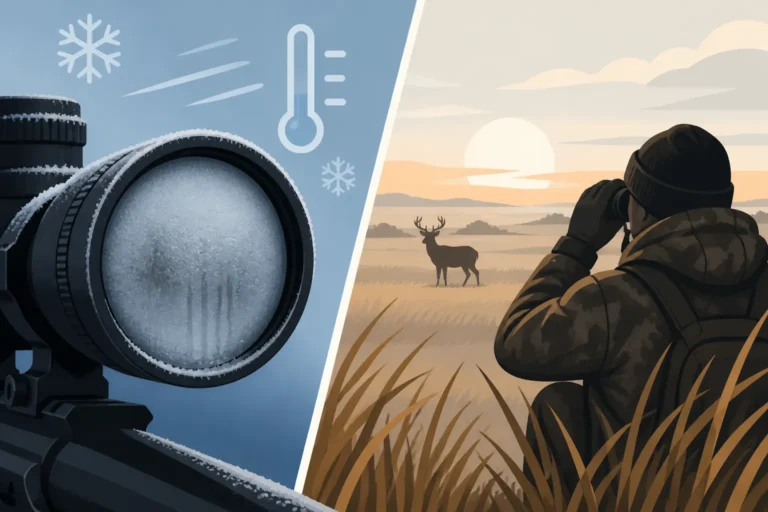
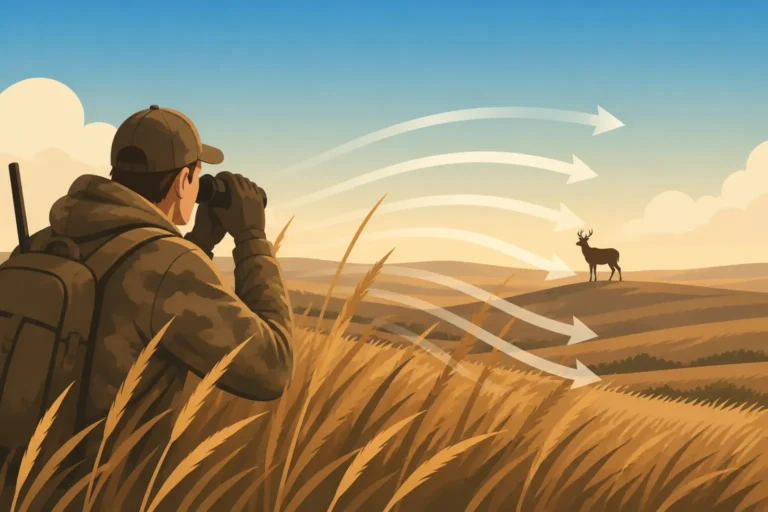
The wind does more than just push your bullet around; it dramatically influences the entire hunting experience. For the animals, strong winds often mean they seek shelter in draws, cedar thickets, or deep river bottoms, altering their movement patterns and making them harder to locate. It can also make them jumpier, as the rustling leaves and swaying grass obscure sounds and make them feel more exposed. For us hunters, the wind adds layers of difficulty. It can whip dust into your eyes in dry conditions, make it nearly impossible to hear approaching game, and even create a significant wind chill, making long sits in a treestand or ground blind miserable without proper layering. Walking into a stiff headwind on a pheasant hunt can be exhausting, and trying to steady your rifle for a shot on a windy ridge can feel like wrestling a wild mustang. It’s a full-sensory challenge, demanding heightened awareness of both your surroundings and your own body control. You might be perfectly comfortable and stable, but if the wind is roaring, you'll feel it affecting your stance and your ability to make a clean break on the trigger. Understanding Wind Direction on Open Nebraska Prairie Stands is critical, not just for scent control, but for anticipating how the wind will interact with your shot.
Deciphering Bullet Ballistics and Wind Drift
To effectively combat wind drift, we need to understand a bit about what makes a bullet fly straight (or not so straight) in the first place. It’s more than just simply "heavy equals good."
Ballistic Coefficient (BC) and its Role
At the heart of a bullet's wind-defying ability is its Ballistic Coefficient, or BC. In simple terms, BC is a numerical representation of how aerodynamically efficient a bullet is. A higher BC means the bullet is better at overcoming air resistance and, crucially for our discussion, resisting the sideways push of the wind. Think of it like this: a sleek, pointed, boat-tail bullet will typically have a higher BC than a short, blunt, flat-base bullet of the same weight. Why? Because its shape allows it to slice through the air with less drag. This means it maintains its velocity better over distance and, as a direct consequence, spends less time exposed to the crosswinds. When you’re selecting ammunition for hunting in Nebraska’s open country, prioritizing bullets with a high BC for your chosen caliber is one of the most impactful decisions you can make. It’s a key factor that differentiates one bullet from another, often more so than just its raw weight.
The Physics of Wind Drift: Time, Not Just Speed
Many hunters mistakenly believe that a faster bullet will automatically drift less. While a faster bullet does reach the target quicker, reducing its time of flight in the wind, the primary factor governing wind drift isn't just speed. It's the combination of the bullet's Ballistic Coefficient and its time of flight. A bullet with a high BC is simply less susceptible to being pushed sideways, regardless of its initial velocity. It's designed to maintain a straighter path.
Imagine two bullets of the same caliber. Bullet A is light and fast, but has a low BC. Bullet B is heavier and a bit slower, but has a high BC. Over longer distances, Bullet B will often experience less wind drift because its aerodynamic shape allows it to resist the wind's force more effectively, even if it takes a fraction of a second longer to reach the target. The physics are clear: a bullet is constantly being pushed by the wind throughout its entire flight path. The less resistance it offers to that push (low BC), the more it will drift. The better it cuts through the air (high BC), the less it will be affected. While drop is primarily managed by dialing elevation or holding over, wind drift requires understanding this nuanced interaction between BC, time of flight, and the constantly changing wind vector. For truly long shots, especially those Rifle Ranges Realistic in Open Country, understanding these dynamics is paramount.
Bullet Weight vs. Bullet Design
It's tempting to think that "heavier is always better" when it comes to bullet weight and wind. While heavier bullets for a given caliber often have higher BCs due to their length and inherent stability, it's not a universal rule. A meticulously designed, slightly lighter bullet from a premium manufacturer might actually have a better BC than a much heavier, but poorly shaped, budget bullet. Modern bullet technology focuses on optimizing aerodynamics, creating sleek profiles with long ogives (the curved part of the bullet nose) and boat-tails (tapered bullet bases).
For example, a modern 140-grain 6.5mm bullet with an exceptional BC might drift less than an older 180-grain .30-caliber bullet with a blunt profile, even though the .30-cal is significantly heavier. This means that when you’re choosing your hunting ammunition, you shouldn't just look at the grain weight. You need to investigate the specific bullet's design and its published ballistic coefficient. Manufacturers like Hornady, Berger, Sierra, and Nosler often provide this data for their hunting lines. The goal is to find the heaviest bullet within your chosen caliber that also boasts a high BC, as this combination provides the best resistance to the inevitable Nebraska crosswinds.
Choosing the Right Bullet Weight for Nebraska Conditions
Selecting the optimal bullet weight involves a careful balancing act, especially when considering the notorious winds of the Nebraska plains. It's about finding that sweet spot that gives you the best chance for an ethical shot.
The "Heavy for Caliber" Principle
When we talk about hunting in windy conditions, the "heavy for caliber" principle is your guiding star. This simply means choosing a bullet that is on the heavier end of the spectrum for a given cartridge. For example, if you're shooting a .308 Winchester, opting for a 165-grain or 180-grain bullet (with a good BC, of course) will generally offer significantly better wind resistance than a 150-grain bullet. Similarly, for a 6.5 Creedmoor, a 140-grain or 147-grain bullet is usually preferred over lighter options like 120-grain.
The reason this principle works is twofold: heavier bullets, by their nature, tend to be longer. This increased length often allows for a more streamlined, aerodynamic profile (a higher BC), helping them cut through the air more efficiently. Additionally, more mass means more momentum, making them less susceptible to being pushed off course by lateral forces like wind. While a lighter, faster bullet might seem appealing for a flatter trajectory, that flatter trajectory often comes at the cost of significantly increased wind drift, which is usually the harder variable to estimate accurately in the field. When hunting wide-open spaces for mule deer or pronghorn, where shots can easily stretch beyond a few hundred yards, this distinction becomes critical. For those pursuing Best Rifle Caliber for Nebraska Mule Deer specifically, this "heavy for caliber" approach becomes even more pronounced.
Balancing Wind Drift with Trajectory and Recoil
Here’s where the art of bullet selection really comes into play. While going "heavy for caliber" is great for mitigating wind drift, there are trade-offs. Heavier bullets, all else being equal, will typically have more bullet drop at longer ranges because their initial muzzle velocity might be lower, and gravity has more time to act on them. This means you’ll need to make greater elevation adjustments (either by dialing your scope or using holdovers).
Furthermore, a heavier bullet generally translates to more felt recoil. If the recoil is so stout that it causes you to flinch, anticipate the shot, or otherwise compromise your accuracy, then the benefits of reduced wind drift are negated. It's a delicate balance: you want a bullet that performs well in the wind, but also one that you can shoot consistently and accurately under pressure. Your rifle's twist rate also plays a role here; some rifles stabilize heavier, longer bullets better than others. It’s essential to test different bullet weights and designs in your rifle to see what it shoots most accurately and what you can handle comfortably. Remember, a well-placed shot with a slightly less wind-resistant bullet is always better than a missed shot with the "perfect" bullet you can't control.
Specific Caliber Considerations
Different calibers have different sweet spots when it comes to bullet weight and wind performance.
-
Light Calibers (e.g., .243 Winchester, 6mm ARC): If you're using these smaller calibers, it's absolutely crucial to find the heaviest, highest BC bullets available. For a .243, that means looking at 100-105 grain options. For a 6mm ARC, 103-108 grain bullets are excellent choices. These bullets will perform much better than standard 80-grain or 90-grain varmint bullets designed for lighter game and shorter distances. You need every advantage you can get to keep these lighter projectiles on target in a stiff crosswind.
-
Mid-Range Calibers (e.g., .270 Winchester, 6.5 Creedmoor, .308 Winchester): These are extremely popular and capable calibers for Nebraska hunting. For the .270, 140-150 grain bullets with good BC are solid performers. The 6.5 Creedmoor shines with 140-147 grain bullets, which often have exceptional BCs for their weight, making it a favorite for many prairie hunters, as discussed in 6.5 Creedmoor for Prairie Deer. For the versatile .308, 165-180 grain bullets are generally preferred for open country. These calibers offer a good blend of power, reasonable trajectory, and manageable recoil, making the choice of bullet weight within their range quite impactful for wind performance.
-
Heavy Calibers (e.g., .30-06 Springfield, .300 Winchester Magnum): These calibers already pack a punch, and they still benefit greatly from selecting high BC, heavier bullets. For a .30-06, 180-grain bullets are a classic choice and handle wind well. For magnum calibers like the .300 Win Mag, 190-210 grain bullets can be devastatingly effective with excellent wind resistance, especially when combined with a well-designed bullet. While these might have more recoil, their inherent power allows for heavier bullet choices without sacrificing too much velocity, making them ideal for pursuing Magnum Calibers for Antelope in extreme conditions.
This table provides a general overview. Always check specific bullet manufacturer data for actual BC values.
| Caliber | Common Hunting Weights (gr) | Recommended Wind-Resistant Weights (gr) | General BC Range (for hunting bullets) | Typical Wind Drift Improvement (vs. lighter) |
|---|---|---|---|---|
| .243 Winchester | 80, 90, 100 | 100-105 | 0.350 – 0.450 | Moderate to Significant |
| 6.5 Creedmoor | 120, 130, 140 | 140-147 | 0.450 – 0.600+ | Significant |
| .270 Winchester | 130, 140, 150 | 140-150 | 0.400 – 0.520 | Moderate |
| .308 Winchester | 150, 165, 180 | 165-180 | 0.400 – 0.550 | Moderate to Significant |
| .30-06 Springfield | 150, 165, 180 | 180-200 | 0.420 – 0.580 | Moderate |
| .300 Win Mag | 180, 190, 200 | 190-210 | 0.450 – 0.650+ | Significant |
Practical Tactics for Battling Nebraska's Crosswinds
Even with the perfect bullet, wind is still a formidable adversary. Success in windy Nebraska often comes down to preparation, practice, and smart field tactics.
The Importance of Knowing Your Dope
"Dope" is hunter's slang for "data on previous engagements" – essentially, knowing your bullet's trajectory. You absolutely must know how your chosen bullet, at your rifle's muzzle velocity, will perform in terms of both drop and wind drift at various distances and wind speeds. This isn't just a suggestion; it's a non-negotiable step for ethical hunting in open country.
This means using a reputable ballistic calculator. Many ammunition manufacturers offer them online, or you can find advanced apps for your smartphone. Input your specific bullet's BC, muzzle velocity (from chronographing your rifle, if possible, or using manufacturer data), sight height, and atmospheric conditions (temperature, humidity, altitude). These calculators will generate charts showing how many inches your bullet will drop and how much it will drift in a 10 mph crosswind at 100-yard increments. Once you have this baseline, you can adjust for stronger or weaker winds. Resources from companies like GoHunt often include comprehensive ballistic data or tools that can integrate with their mapping features, helping you plot shots over terrain with wind in mind. Knowing your dope for various scenarios is fundamental to Zeroing a Rifle for Open Country effectively.
Practice, Practice, Practice in the Wind
It's easy to become a great shot on a calm day at the range. But Nebraska hunting isn't often calm. The single best way to prepare for windy conditions is to practice in them. Take your rifle to the range on a blustery day. Set up targets at varying distances. Practice shooting from different positions (prone, kneeling, using shooting sticks) while the wind is blowing. This isn't just about seeing how your bullet drifts; it's about learning how to maintain your body stability, control your breathing, and make a clean trigger break when the wind is trying to push you around.
Pay attention to how different wind speeds feel and how they affect your perceived stability. Shoot at different angles relative to the wind (a direct crosswind, a quartering wind, a headwind, and a tailwind). This experience will build confidence and help you learn to interpret wind conditions more accurately in the field. Don't be afraid to experiment with your stance and support systems; the goal is to make consistent, repeatable shots even when Mother Nature is doing her best to distract you.
Assessing Wind in the Field
Estimating wind speed and direction in the field is a critical skill. You don't need a fancy anemometer (though some hunters carry one); you need to become a keen observer.
- Visual Cues: Look at grass, leaves on trees (if present), distant dust, and even mirage (heat waves) over the ground. How fast are they moving? Is the grass bent over, or just rustling? Small flags on your shooting setup or even a piece of flagging tape on your bipod can give you immediate, close-range feedback.
- Audio Cues: Listen to the wind. Is it howling or just whistling? The sound can help you gauge intensity.
- Terrain Interaction: Notice how the wind interacts with terrain features. A draw or a stand of trees might create a pocket of calm, or conversely, a funnel that accelerates the wind. A ridgeline will often have different wind than the valley floor.
- Constant Vigilance: Wind is rarely constant. It swirls, gusts, and changes direction. Continually reassess it before every shot. Toss a pinch of dust or a lightweight natural fiber into the air if you need a quick, close-range indicator. Tools that offer weather overlays, such as those found on GoHunt's mapping platform, can provide general regional wind patterns, which can be useful for pre-hunt scouting, but in-the-moment, localized observation is still king.
Gear for Stability and Precision
Beyond your bullet choice, the right gear can make a massive difference in your ability to shoot accurately in the wind.
- Shooting Sticks or Bipod: A good set of Shooting Sticks and Bipods on Grass is practically mandatory for open-country hunting in Nebraska. They provide a stable platform that dramatically reduces rifle movement caused by your own body sway and the wind's push. Bipods are excellent for prone shooting, while shooting sticks offer more versatility for standing or kneeling.
- Rangefinder: A reliable rangefinder is non-negotiable. Knowing the exact distance to your target is the first step in applying your ballistic data correctly. Some advanced rangefinders even have built-in ballistic calculators that can give you a wind hold suggestion based on your bullet's data and estimated wind speed. Consider investing in Rangefinders in Open Nebraska Country for the most accurate readings.
- Sturdy Rifle Sling: While primarily for carrying, a well-designed sling can also be used to stabilize your rifle in some shooting positions, especially if you're without sticks or a bipod. A tight sling can help reduce wobble and keep your rifle steady against your body.
- Comfortable Clothing and Pack: This might seem tangential, but being cold, uncomfortable, or trying to shoot around a bulky, ill-fitting pack will negatively impact your ability to remain stable and shoot accurately. Dress in layers to adapt to changing conditions and ensure your pack allows for unhindered shooting movements.
Disclaimer
This article is for general informational purposes only and does not constitute professional advice. Laws, prices and regulations vary by location and change over time. Consult a qualified professional for guidance on your specific situation.