Nebraska WMAs With Waterfowl Refuges
It can be incredibly frustrating to hit the road for a waterfowl hunt on public land, only to arrive and realize you're staring down a "No Hunting" sign because you've stumbled onto a refuge area. Or perhaps you're just unsure where the hunting ends and the sanctuary begins, leaving you hesitant to even set up. This guide is here to untangle that confusion, walking you through how Nebraska's Wildlife Management Areas (WMAs) often incorporate vital waterfowl refuges, how to pinpoint exactly where you can hunt, and the critical rules you need to know to ensure a successful and legal outing.
The Dual Role: Understanding Waterfowl Refuges Within Nebraska WMAs
Nebraska's landscape, particularly its wet and wild areas, plays an outsized role in the Central Flyway, acting as a crucial pit stop for millions of migrating ducks and geese each year. To protect these feathered travelers and ensure they have undisturbed places to rest and feed, many of our state's Wildlife Management Areas (WMAs) are intentionally designed with specific sections designated as waterfowl refuges.
Now, let's be clear about what we're talking about here. A WMA, managed by the Nebraska Game and Parks Commission, is generally a parcel of public land acquired and managed for wildlife production and public recreation, including hunting. A "waterfowl refuge," on the other hand, is a defined area where hunting is either strictly prohibited or heavily restricted, specifically to provide sanctuary for ducks and geese. The key here is that these refuges aren't always entirely separate entities; often, they are integrated within a larger WMA. This dual role creates a fantastic opportunity for hunters because these refuges become magnets, holding vast numbers of birds. If you can hunt adjacent to them, you're often in prime position for action.
The primary purpose of these refuge portions is conservation. Migratory waterfowl expend enormous amounts of energy during their long journeys, and having safe zones where they can feed, loaf, and roost without constant pressure is absolutely essential for their survival and for maintaining healthy populations. These undisturbed areas provide predictable spots where birds can regain strength, which in turn means more birds staging in Nebraska overall. Without these sanctuaries, waterfowl would be constantly on the move, burning calories, and scattering across wider areas, making it harder for them to thrive and ultimately, harder for hunters to find them consistently.
It’s also important to distinguish between state-managed WMA refuges and federal refuges, like those found within the National Wildlife Refuge (NWR) system. While both serve similar purposes, the specific regulations, access points, and signage can differ. Our focus here is on those refuge components within state WMAs, which are often smaller and more localized but equally vital to the local waterfowl picture. Understanding these distinctions is the first step to confidently planning your hunt.
Identifying Key WMAs with Waterfowl Refuge Components
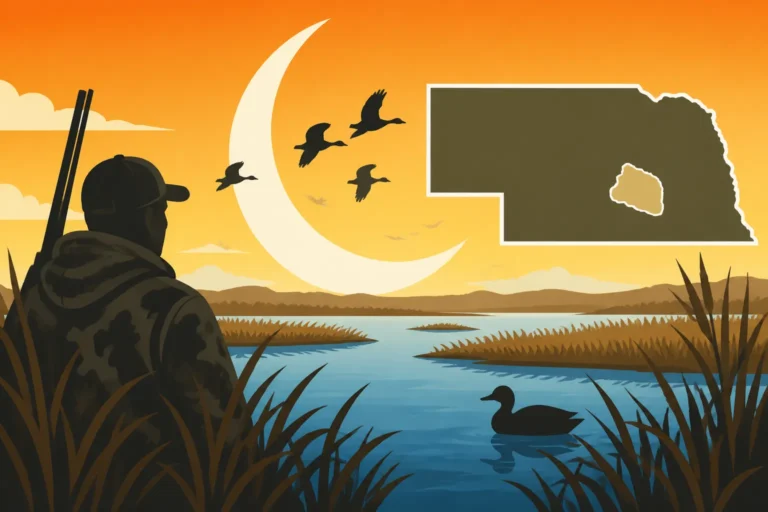
Nebraska is blessed with several regions that are absolute powerhouses for waterfowl, and it's no surprise that many of our WMAs with refuge components are found there. The two big players, of course, are the Rainwater Basin and the Platte River Valley. These areas, particularly the Rainwater Basin, are literally designed around wetlands that attract and hold incredible numbers of ducks and geese.
Let's look at some examples:
- Rainwater Basin WMAs: This region, stretching across south-central Nebraska, is a mosaic of shallow wetlands that are critical stopovers for millions of birds. WMAs like Sacramento-Wilcox WMA, Jensen Lagoon WMA, Chain Lakes WMA, and many others across counties like Phelps, Kearney, and Clay, frequently incorporate designated refuge units. These are often shallow, rain-fed basins that fill in spring and fall, creating ideal habitat for dabbling ducks, geese, and shorebirds. The refuge portions within these WMAs ensure that even when hunting pressure is high, a core population of birds has a safe haven. This means birds don't just "burn out" of the area after a few days of hunting; they cycle through, offering sustained opportunities for those hunting the adjacent, open areas.
- Platte River Valley WMAs: While often known for cranes, the Platte River also offers significant waterfowl opportunities. WMAs along the Platte, like Platte River State Park WMA (though often more limited access), or other smaller areas of public access, might have specific sections designated as waterfowl rest areas. These are often associated with riverine habitats, sandpits, or agricultural fields that draw large numbers of geese and diving ducks. The dynamic nature of the river system means that birds might use different areas depending on water levels and food availability, making the refuge components vital for stability.
The best way to pinpoint these specific locations is by using detailed mapping resources. The Nebraska Public Access Atlas is your absolute best friend here. It's published annually and clearly marks all public hunting lands, including WMAs, and importantly, highlights any refuge areas or "no hunting" zones within them. You can pick up a physical copy or download the map layers for your phone. Beyond that, digital mapping tools are indispensable. Apps like onX Hunt provide incredibly detailed satellite imagery and clearly delineate public vs. private land, as well as specific regulations for different parcels, including refuge boundaries. Similarly, platforms like GoHunt often integrate similar mapping functionalities and can provide updates on specific land statuses. Before you ever leave home, overlaying these maps with your scouting knowledge will save you countless headaches and ensure you're always on the right side of the rules.
Hunting the Edges: Navigating and Strategizing Near Refuge Boundaries
The real trick to hunting WMAs that contain waterfowl refuges isn't just knowing where the refuges are, but understanding how to effectively hunt the legal areas right next to them. This is where strategic thinking and thorough scouting really pay off. Birds using a refuge are looking for safety, food, and water. Your job is to intercept them as they leave or return to these safe havens.
First and foremost, scouting is non-negotiable. Driving past a WMA might give you a general idea, but you need to put in the time to see where the birds are actually feeding, flying, and resting. Watch their flight patterns in the mornings and evenings. Are they flying out to specific cornfields? Are they settling into a certain part of a wetland? Pay attention to prevailing winds, as birds will almost always land and take off into the wind. This information will guide your setup.
When using mapping tools like onX Hunt, zoom in closely. Many WMAs use visible markers—signs, fences, or even distinct habitat changes—to denote refuge boundaries. Your mapping app should confirm these lines. Never assume; if in doubt, err on the side of caution and give the refuge a wider berth. It's an absolute gut punch to get a ticket or, worse, jeopardize future public access because of a simple misunderstanding of a boundary line.
Your strategy should revolve around "edges." This could be the edge of the refuge itself, a field boundary adjacent to the refuge, or even a line of timber that birds use for concealment or as a travel corridor. Setting up on these edges gives you the best chance to intercept birds that are either leaving the refuge to feed or returning to roost. Consider the time of day: mornings might see birds leaving the refuge, while evenings will have them streaming back in.
For field hunting geese, this often means setting up a spread in a harvested cornfield that's on a known flight path between the refuge and other feeding grounds. For ducks, it might involve placing decoys in a slough or pothole just outside the refuge boundary, particularly if it mimics the type of water within the sanctuary. Remember, birds are often less wary when they are confident they are heading towards safety, so a well-placed spread on the "safe" side of the line can be deadly.
It’s also crucial to understand the ethical component. While you're perfectly within your rights to hunt legally on open ground, avoid any actions that intentionally harass or push birds out of the refuge. That's not only unsportsmanlike but can also lead to issues with game wardens and other hunters. The idea is to intercept them naturally as they move, not to create a disturbance that compromises the refuge's purpose. Patience and observation are your greatest allies here.
Rules and Regulations for Hunting Waterfowl on These Specific WMAs
Hunting WMAs with refuge components comes with a specific set of regulations that are absolutely critical to follow. Overlooking even one detail can lead to fines, permit revocation, or worse, closure of public hunting opportunities for everyone.
Perhaps the most universally important rule on these types of areas is the nontoxic shot requirement. Federal regulations, which often apply to state WMAs that receive federal funding or are managed for migratory birds, mandate the use of nontoxic shot for all waterfowl hunting. This isn't just for federal refuges; many state WMAs, particularly those in the Rainwater Basin Wetland Access areas, have this requirement. This means no lead shot. Steel, bismuth, tungsten-iron, or other approved alternatives are what you need to be loading into your shotgun. Always double-check the specific WMA rules in the Nebraska Public Access Atlas or on the Nebraska Game and Parks website, but assume nontoxic shot is required anytime you're hunting waterfowl on public land. It's simply the safest and most compliant approach. You can get more details by looking up Federal Refuge Nontoxic Shot Rules.
Beyond shot type, you'll need to be mindful of legal shooting hours. These are generally set by the state, but certain WMAs might have more restrictive hours, sometimes opening later or closing earlier than standard regulations to minimize disturbance to roosting birds. Always consult the current hunting guide for exact times. The Nebraska Duck Daily Bag Limit and possession limits also apply, and these are species-specific, so knowing your ducks and geese is crucial. Misidentifying a canvasback for a mallard could land you in hot water if you're over the limit for a restricted species.
Blinds and decoys are another area where rules can vary. Some WMAs allow only temporary blinds that must be removed daily, while others might permit semi-permanent structures or even offer designated blind sites (though these are less common on general WMAs than on specific waterfowl areas). Similarly, the number of decoys you can use might be capped in some areas, or there might be rules against leaving decoys out overnight. Always confirm what's permissible. When it comes to setting up, remember that you need to be well-hidden. Layout blinds in cut cornfields or well-brushed pit blinds are common, but ensure your setup doesn't violate any WMA-specific rules regarding vegetation alteration or construction.
Finally, don't forget the required permits and stamps. Every waterfowl hunter in Nebraska needs a valid Nebraska hunting permit, a Nebraska Habitat Stamp, and a Federal Duck Stamp. Additionally, you must be HIP (Harvest Information Program) registered. This program is essential for tracking harvest data, which directly informs conservation efforts and future season settings. You can find more information about this by looking at the Nebraska HIP Registration Requirement.
Hunting waterfowl on WMAs with refuge components offers some of the most exciting and rewarding experiences in Nebraska. With diligent scouting, careful attention to boundaries using tools like onX Hunt, and strict adherence to all regulations, you can enjoy incredible hunting opportunities while also contributing to the conservation of these magnificent birds.
Disclaimer
This article is for general informational purposes only and does not constitute professional advice. Laws, prices and regulations vary by location and change over time. Consult a qualified professional for guidance on your specific situation.