Nebraska WMA Shooting Hour Restrictions
Many hunters approach Nebraska's Wildlife Management Areas (WMAs) with a blend of anticipation and a nagging question: "Are the shooting hours here on public land different from the general statewide rules?" It's a completely understandable concern. Public lands, while offering incredible access, often come with their own set of nuances and regulations designed to balance multiple uses and wildlife management goals. This guide is here to untangle the specifics of Nebraska WMA shooting hour restrictions, ensuring you have the clarity you need to hunt confidently, legally, and without that constant worry about whether you're breaking a rule.
Understanding Nebraska's General Legal Shooting Hours
Before we dive into the specifics of WMAs, it’s crucial to establish the baseline: Nebraska’s general legal shooting hours for most game species. This is the foundation upon which any WMA-specific rules would be built, and honestly, for most situations, WMAs simply adhere to these statewide standards. Understanding these broad regulations is your first line of defense against accidental violations.
For the majority of big game, like deer, antelope, and elk, the legal shooting hours typically run from 30 minutes before official sunrise to 30 minutes after official sunset. This "30 minutes before/after" rule is pretty standard across many states and is designed to give hunters a bit of crucial low-light opportunity while still defining a clear boundary for safety and fair chase. On the other hand, for many upland game species such as pheasants, quail, and grouse, the legal shooting hours are usually defined as sunrise to sunset. There's no extra 30 minutes on either end. Migratory birds like ducks and geese also have their own specific federal and state regulations, generally allowing hunting from 30 minutes before sunrise until sunset. Turkeys usually follow a similar sunrise-to-sunset pattern.
The critical thing to remember is that "sunrise" and "sunset" aren't fixed times throughout the season. They shift daily, and even minute by minute, depending on your exact location in the state. This means what's legal in Omaha at the start of October might be different by several minutes in Scottsbluff on the same day, or even in Omaha a week later. It’s a dynamic window, and staying on top of it is paramount. Many hunters rely on weather apps, hunting-specific apps like onX Hunt, or the official Nebraska Game and Parks Commission website to get the precise sunrise/sunset times for their specific hunting unit or county. These tools are invaluable for planning your entry and exit from the hunting grounds. For a deep dive into these fundamental timeframes, check out Nebraska Legal Shooting Hours.
WMA-Specific Regulations: Are They Different?
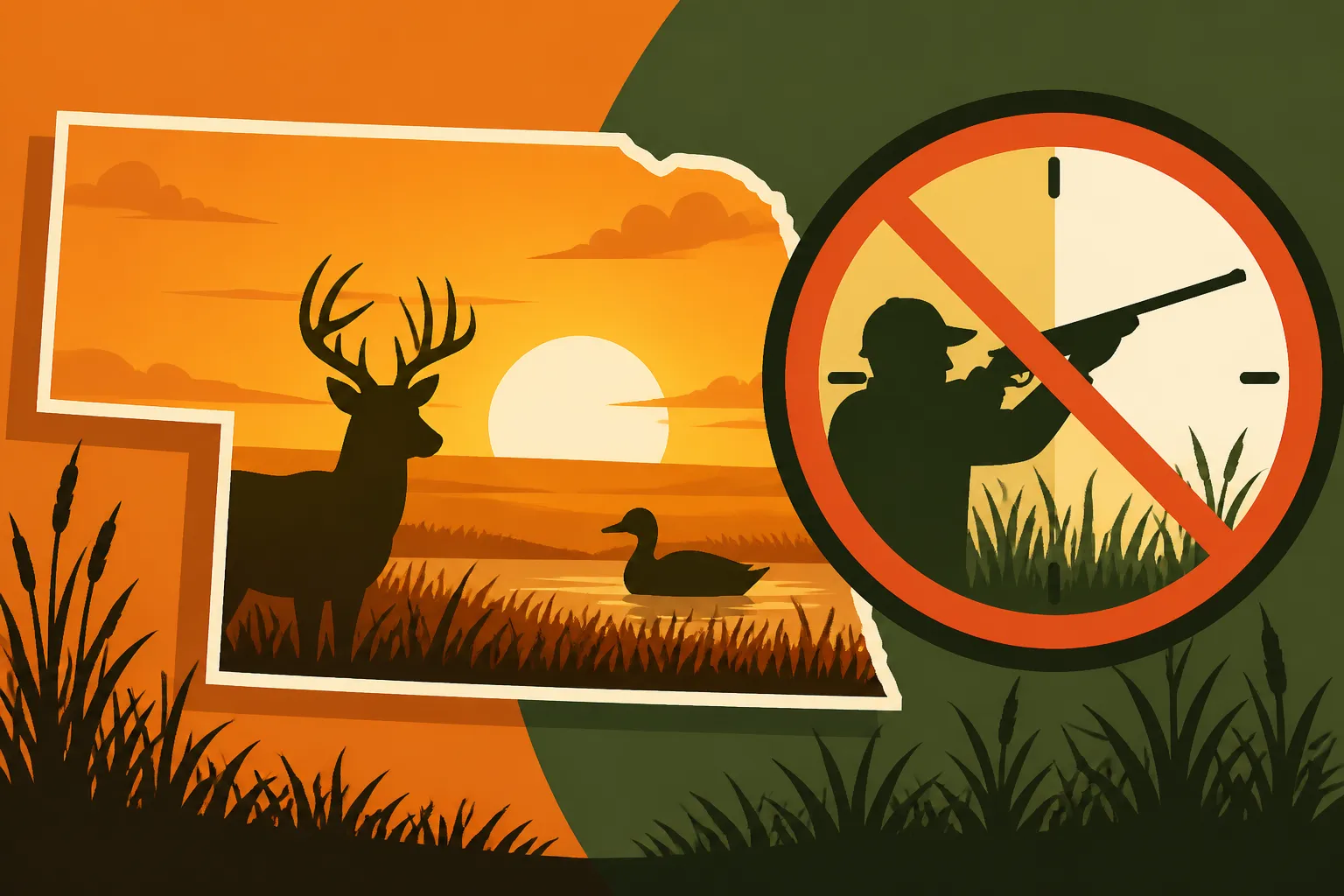
This is where the rubber meets the road for our primary question: Do Nebraska Wildlife Management Areas have different shooting hour restrictions than the statewide norm? The short answer, which might surprise some, is often no in terms of the actual shooting window for game. Most Nebraska WMAs will follow the same 30 minutes before sunrise to 30 minutes after sunset for big game, or sunrise to sunset for upland birds and migratory waterfowl, as defined by the general hunting regulations.
However, "restrictions" can mean more than just the time you can legally shoot an animal. What often does vary on WMAs are other rules that indirectly impact your hunting hours or overall access. For instance, some WMAs, especially those closer to urban areas or those with heavy recreational use beyond hunting, might have explicit rules about when the area itself is open to public access. While you might be able to shoot a deer until 30 minutes after sunset, the WMA might technically close its gates or general access to all users (hunters included) at sunset, or perhaps even an hour after, requiring you to be off the property. This distinction is subtle but incredibly important. You might be within the shooting regulations, but in violation of access regulations.
These specific access restrictions, or any other unique rules, are typically well-marked at WMA entry points on signs, and are always detailed in the Nebraska Public Access Atlas or on the Nebraska Game and Parks Commission website. It's not uncommon to find areas within a WMA that are designated as non-shooting zones for safety reasons, or specific waterfowl refuges where hunting hours might be further restricted or entirely prohibited to give birds a sanctuary. For example, a WMA might have an interior portion that's designated as a waterfowl rest area, where hunting is never permitted, even during legal hours. Similarly, you might find that certain WMAs have vehicle access hours that differ from the overall hunting hours, meaning you might need to walk in or out during low light if you stay for the entire legal shooting period. To understand the broader operational guidelines for these crucial public areas, review Nebraska Wildlife Management Area Rules.
Always, always consult the most current Public Access Atlas, either the physical booklet or, even better, the Nebraska Public Access Atlas Mobile App. This app is a lifesaver for identifying not just the boundaries of public land, but also any special regulations, closures, or time restrictions specific to that particular tract. Brands like onX Hunt also integrate public land boundaries and can often provide context for specific rules, acting as a great complement to the official sources. Never assume that just because it's public land, it's open 24/7 or adheres strictly to general statewide shooting hours for all activities. Taking the time to read the fine print for each WMA you plan to hunt can prevent a citation and ensure a smoother hunting experience.
The Rationale Behind Shooting Hour Rules on Public Land
Understanding why these shooting hour rules exist, both generally and with any WMA-specific nuances, can give you a deeper appreciation for their importance. These aren't arbitrary rules; they're thoughtfully implemented with several key objectives in mind, encompassing safety, wildlife management, and balancing public enjoyment.
First and foremost, safety is a colossal factor. Limiting shooting hours, especially in the fading and growing light, helps prevent misidentification of targets. In the dim twilight, distinguishing between a legal buck and a doe, or even another hunter, becomes exponentially harder. The 30-minute buffer on either side of sunrise/sunset for big game acknowledges that animals are often most active during these crepuscular periods but still draws a clear line for visibility. For upland birds, which are typically flushed or decoying, sunrise to sunset provides ample visibility for positive identification of species and safe shot placement. On WMAs, where multiple users (hikers, birdwatchers, photographers, other hunters) may be present, clear shooting hours minimize the potential for conflicts and accidents during periods of low visibility.
Secondly, wildlife management plays a significant role. These hours are often set to align with wildlife behavior patterns while also providing periods of respite. Animals, particularly deer, often move most actively at dawn and dusk. Allowing hunting during these peak movement times increases success rates, which can be a valuable tool for population control in areas where herd numbers need to be managed. However, restricting hunting to specific windows also ensures that animals have uninterrupted periods of foraging and resting, reducing stress and allowing for more natural patterns of movement outside of hunting pressure. This can be especially important on smaller WMAs or in areas with high hunting pressure.
Finally, balancing multiple public uses is a constant challenge for land managers. WMAs are not solely for hunting. They are often enjoyed by hikers, dog walkers, birdwatchers, photographers, and nature enthusiasts. Having defined shooting hours helps segment the activities. For instance, if an area is popular with hikers in the early morning, clear shooting hours ensure that hunters are active during predictable windows, and non-hunters know when to be extra vigilant or choose different areas. Some WMAs might even have specific quiet hours or non-hunting days to cater to these other user groups, though this is less common for shooting hours specifically. These regulations are an attempt to allow everyone to enjoy these precious public resources safely and respectfully. You can often find additional regulations on vehicle access or camping on WMAs that aim to strike this balance.
Practical Strategies for Hunting Within WMA Hours
Adhering to WMA shooting hours might seem straightforward, but in the heat of the moment or the dim light of dawn, it can be easy to lose track. Developing practical strategies and habits will ensure you stay legal and enjoy your hunt without worry.
1. Know Your Numbers: This is step one. Before you even leave the house, know the precise legal shooting hours for your specific hunting area and the species you're pursuing. Don't just rely on a general idea; look up the official sunrise and sunset times for that day and location. As mentioned earlier, apps like onX Hunt are incredibly helpful for this, as they often automatically adjust for your GPS location. You can literally see the hunting hour overlay on the map. The GoHunt platform also provides valuable tools and information for planning hunts, including season dates and specific regulations that might hint at access times.
2. Set Alarms (and a Backup): Treat legal shooting hours like appointments. Set an alarm on your phone for 30 minutes before your legal shooting time begins and another for when it ends. If you're hunting upland birds with sunrise-to-sunset rules, set alarms for those exact times. It’s easy to get absorbed in the hunt, and a gentle reminder is invaluable. A backup, like a watch alarm, is also a good idea. For those early mornings or late evenings, getting to your stand or blind well before shooting light is critical for minimizing disturbance and being ready when the window opens. Similarly, packing up your gear or tracking a game animal needs to happen within the legal limits after shooting time, unless you are actively blood trailing a wounded animal, which has its own specific rules.
3. Scout with Time in Mind: When you're Scouting Nebraska Public Ground Before Opening Day, pay attention to how long it takes you to get from your vehicle to your chosen hunting spot. If it’s a 20-minute walk, and legal shooting time starts at 6:30 AM, you need to be walking into the woods by at least 6:00 AM, if not earlier, to be settled and ready. This is particularly important on large WMAs where access points might be limited or require significant hiking. Being prepared to walk in the dark is part of the game.
4. Check WMA Signage and Atlas Notes: Always, always check the physical signage at the entrance to a WMA. These signs will often have the most up-to-date information on any unique local restrictions, special closures, or specific hours for that particular WMA. While apps like onX Hunt are fantastic, physical signs are the official word on the ground. Also, carefully review the Reading the Nebraska Public Access Atlas section for your specific WMA to catch any fine print about general access hours or other limitations that might not be immediately obvious. Some WMAs might have gates that are locked at certain times, which can really throw a wrench in your plans if you’re not expecting it.
5. When in Doubt, Don't Shoot: This is the golden rule. If you are even slightly unsure about the legal shooting time, or if you can properly identify your target in the low light, err on the side of caution. A missed opportunity is far better than a violation, a misidentified shot, or a safety incident. This conservative approach will serve you well, especially during those marginal light conditions.
By understanding the general statewide rules, being aware of potential WMA-specific access regulations, appreciating the reasons behind these rules, and implementing sound practical strategies, you can navigate Nebraska's public hunting lands with confidence, ensuring a safe, legal, and ultimately more enjoyable hunting experience.
Disclaimer
This article is for general informational purposes only and does not constitute professional advice. Laws, prices and regulations vary by location and change over time. Consult a qualified professional for guidance on your specific situation.