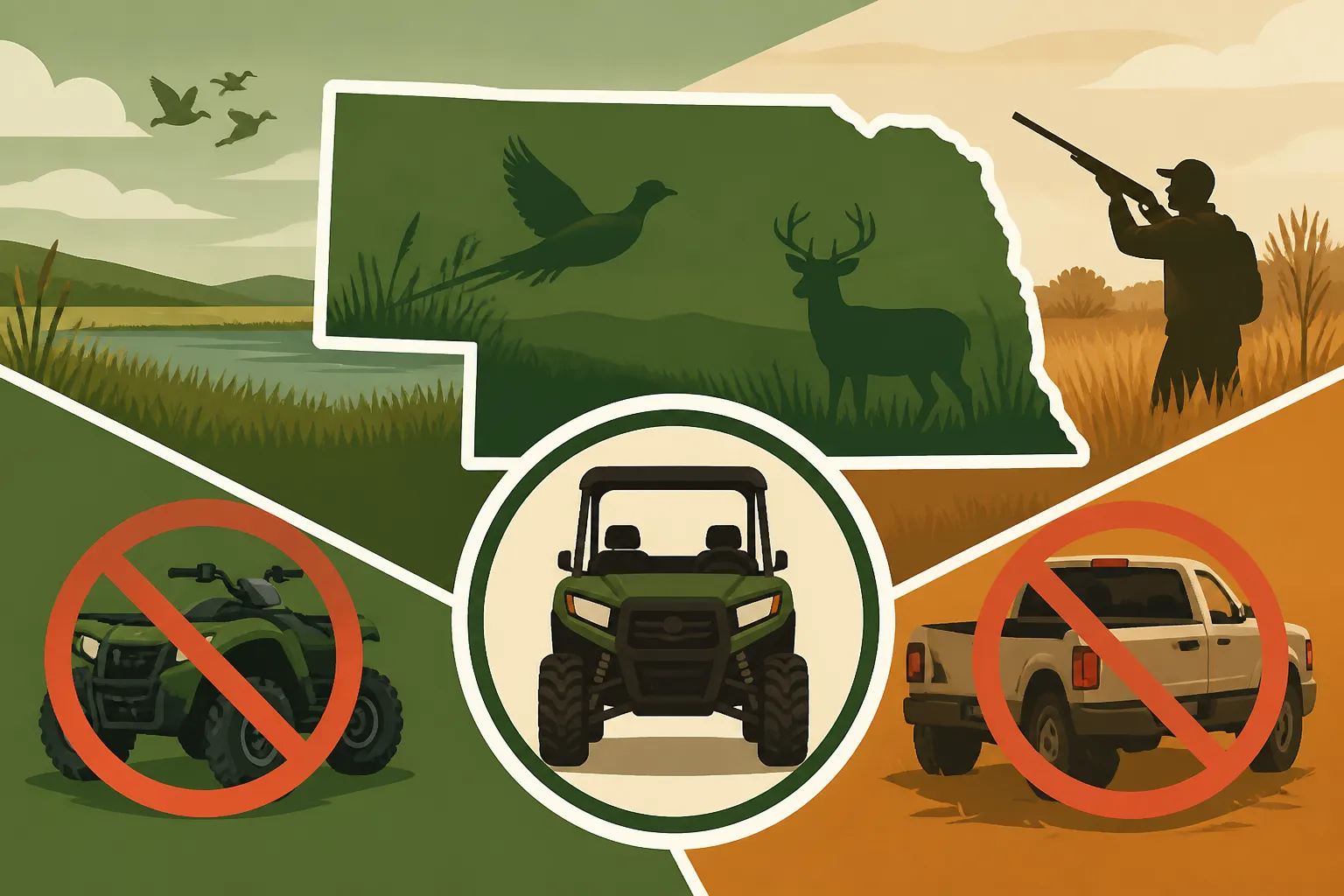
Vehicle Rules on Nebraska WMAs
It's incredibly frustrating to arrive at a promising public hunting area, full of anticipation, only to be met with confusing signs and a maze of two-tracks, leaving you wondering where you can legally drive or park your vehicle. Nobody wants to accidentally trespass or, worse yet, damage a sensitive habitat and incur a fine before their hunt even begins. This guide is here to clear up that confusion, diving deep into the vehicle rules and regulations you need to know when accessing Nebraska's Wildlife Management Areas (WMAs), ensuring you stay on the right side of the law and protect these vital resources.
Understanding Wildlife Management Areas (WMAs) in Nebraska
Nebraska's Wildlife Management Areas are truly special places. They represent some of the state's most valuable wildlife habitats, managed specifically for the benefit of game and non-game species alike. For hunters, they offer crucial access to diverse landscapes, from river bottoms to sandhills, providing opportunities to pursue everything from deer and turkeys to pheasants and waterfowl. But with that privilege comes a significant responsibility, and understanding the rules is the first step in being a good steward of these lands.
What Exactly Is a WMA?
Think of a WMA not just as a piece of public land, but as a dedicated conservation effort. These areas are purchased and managed by the Nebraska Game and Parks Commission, often with funds generated directly from hunting and fishing license sales and federal excise taxes on hunting equipment. Their primary purpose is habitat enhancement and wildlife production. This means active management: controlled burns, planting native grasses, creating water sources, and sometimes even intentionally limiting human disturbance in certain areas. Unlike a state park, where recreation might be the sole focus, WMAs are squarely aimed at wildlife, with hunting and other low-impact activities like hiking and birdwatching allowed as compatible uses. Because their core mission is wildlife, the rules governing activities like vehicle use are designed to minimize stress on animals and protect the delicate ecosystems they depend on.
Why Vehicle Rules Are So Important on WMAs
The regulations around vehicle use on WMAs aren't arbitrary bureaucratic hurdles; they're critical for several ecological and practical reasons. First and foremost, unrestricted vehicle access can cause severe habitat degradation. Tires tear up fragile grasslands, disrupt nesting birds, compact soil, and create erosion, especially on sandy or wet terrain. This damage can take years, even decades, to recover. Secondly, excessive vehicle traffic can disturb wildlife, pushing animals further into cover or off the WMA entirely, diminishing the quality of the hunting experience for everyone. Imagine scouting a pristine corner of a WMA, only to find it torn up by trucks that drove off designated paths. It's disheartening.
Beyond the environmental impact, vehicle rules are also about safety and fair chase. They help manage hunter density and prevent situations where hunters might drive directly to a game animal, reducing the challenge and ethics of the hunt. Finally, these rules are about preserving the peace and quiet that many hunters seek in the outdoors. The sound of an ATV or truck rumbling through an otherwise tranquil area can quickly spoil the experience for others. Adhering to these rules isn't just about avoiding a ticket; it's about respecting the land, the wildlife, and your fellow hunters.
The Nitty-Gritty of Vehicle Rules on Nebraska WMAs
Navigating the specifics of vehicle access on Nebraska WMAs can feel a bit like reading fine print, but it's essential. The general principle is that vehicles are allowed only on designated roads and in designated parking areas. If you're ever in doubt, err on the side of caution.
Designated Roads and Parking Areas
When you pull up to a Nebraska WMA, you'll often see signs indicating the rules, or you might find a gate. The most important thing to remember is that if a road isn't clearly marked as an open vehicle route, or if there's a sign restricting access, assume it's closed to vehicular traffic. These designated roads are typically gravel or well-maintained dirt paths, meant to provide access to various parts of the WMA without causing undue disturbance. Parking areas are usually clearly defined pull-offs or small lots, sometimes indicated by signage or simply by an area that is obviously meant for vehicles to congregate.
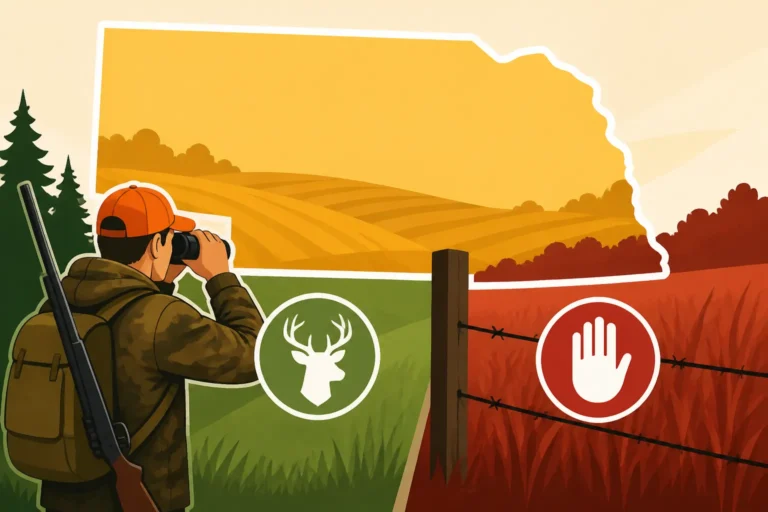
It can be tempting, especially when you spot a promising patch of cover just off a seemingly innocuous two-track, to think "just a little further." Resist that urge. These two-tracks might look like roads, but unless they are officially designated, they are often game trails or old farm paths that are not meant for public vehicular use. Driving on them can result in habitat damage and, more importantly, a citation. Always look for official signage. If a gate is closed and locked, that's a clear signal that vehicular access beyond that point is prohibited, even if the road looks perfectly passable. Sometimes, WMAs will have specific seasons for vehicle access, particularly during wet periods when roads are most vulnerable to damage. Always check the Nebraska Public Access Atlas for current information and maps before heading out.
Off-Road Travel: A Strict No-Go
This can't be stressed enough: off-road travel is almost universally prohibited on Nebraska WMAs. This means driving directly across fields, cutting through timber, or forging new paths where none exist. The land management philosophy behind WMAs prioritizes the integrity of the habitat. Every tire rut in an undesignated area is a scar on the landscape, a potential pathway for erosion, and a disturbance to wildlife. Imagine an early spring day, and a nesting pheasant is flushed by an unexpected vehicle in tall grass; that nest could be abandoned or destroyed.
The penalties for off-road travel can be significant, ranging from substantial fines to reimbursement for habitat restoration. Conservation officers patrol these areas, and they are well-versed in spotting the tell-tale signs of off-road vehicle use. It's not just about avoiding punishment; it's about understanding that these lands are fragile and are maintained for everyone's enjoyment, including the wildlife that calls them home. If you want to access an area that isn't reached by a designated road, it's time to put on your boots and walk, embracing the quiet solitude of Still-Hunting Nebraska Cedar Draws or Walking Nebraska Sandhills Meadows for Sharptails.
Special Considerations for ATVs and UTVs
ATVs and UTVs present a unique challenge on WMAs because their very design encourages off-road use. In Nebraska, the rules for these vehicles on WMAs are often stricter than for traditional cars and trucks. While some WMAs might allow ATVs/UTVs for specific purposes, such as retrieving game by permit or on designated trails, the general rule is that they are treated like any other motor vehicle: restricted to designated public roads and parking areas only. Many WMAs, in fact, prohibit them entirely beyond the main entrance or parking lot, regardless of whether they are licensed for road use.
The thinking here is straightforward: these machines, while incredibly useful for accessing remote areas, can be incredibly destructive if used improperly and are notorious for disturbing wildlife. They also create a higher level of noise pollution than a quiet walk, which can detract from the experience for other hunters and wildlife viewers. If you're planning to use an ATV or UTV, you absolutely must verify the specific rules for the WMA you intend to visit. Do not assume that because it's public land, your side-by-side is welcome everywhere. Check the Public Access Atlas or contact the local Game and Parks office for clarity. It's often safer to plan on using them only for transport to the WMA, then switching to foot access for the actual hunt.
Gates, Chains, and Barricades: Heed the Signs
This might seem obvious, but it's surprising how often hunters "interpret" closed gates. If you encounter a gate, chain, or barricade across a road or access point on a WMA, it means the area beyond it is closed to vehicular traffic. Period. These barriers are put in place for a reason: to protect sensitive areas, prevent vehicle damage during wet conditions, or manage hunter access.
Sometimes, a gate might be open during certain times of the year and closed during others. This isn't an invitation to open a closed gate. Always respect the current status of the access point. Driving around a gate, breaking a chain, or removing a barricade is not only illegal but also shows a profound disregard for the management efforts of the Game and Parks Commission and the privilege of public access. It reflects poorly on all hunters and can lead to increased restrictions for everyone. These signs and barriers are your clear instructions, so always follow them to the letter.
Planning Your WMA Hunt: Vehicle Access and Navigation
Smart planning is your best friend when it comes to hunting Nebraska WMAs, especially concerning vehicle access. A little bit of homework before you leave home can save you a lot of headache and potential trouble in the field.
Using Technology for Smart Access
In today's world, technology has made navigating public lands infinitely easier. Tools like onX Hunt and GoHunt are indispensable resources for any hunter planning to explore Nebraska's WMAs. These apps provide detailed mapping with public and private land ownership boundaries, often showing designated roads, parking areas, and even walk-in access points. You can overlay different layers to see aerial imagery, topographic lines, and even potential habitat features like Cottonwood Bottoms and Deer Density or Hunting a Shelterbelt Between Nebraska Fields.
Before you ever leave your driveway, you can use these apps to scout your target WMA from above. Look for clearly marked roads leading into the area, identify potential parking locations, and trace your intended route. You'll quickly see where the vehicle access ends and where you'll need to transition to foot travel. This is incredibly powerful for understanding the lay of the land and avoiding accidentally driving onto a restricted area. onX Layers for Nebraska Land Status can be a game-changer for avoiding trespass and knowing exactly where you stand. Even without cell service in remote areas, many of these apps allow you to download maps for offline use, ensuring you always know where you are and what the vehicle rules are for that specific piece of ground.
Respecting the Resource: Minimizing Your Impact
Beyond simply following the rules, a true conservation-minded hunter always strives to minimize their impact on the land. This means not just sticking to designated roads, but also being mindful of where you pull over or park. Avoid parking in tall grass where your hot exhaust could spark a fire, especially in dry conditions. If you're in a muddy area, try to find a solid spot to pull off the road rather than creating deep ruts that will persist for months.
Consider carpooling when hunting with friends to reduce the number of vehicles on the WMA. If you're using a vehicle to access a remote part of a WMA and then walking in, be conscious of how much you're driving. The less you drive on these delicate areas, the less impact you'll have. This kind of mindful approach is what ensures these WMAs remain productive and beautiful for future generations of wildlife and hunters.
The Importance of Scouting and Preparedness
Don't wait until opening morning to figure out the vehicle rules for a new WMA. Take the time to scout the area beforehand, either in person or virtually with mapping apps. Drive the access roads, identify the parking areas, and note where vehicle travel is restricted. This pre-season scouting will not only help you understand the rules but also give you a better feel for the hunting opportunities.
If you plan to hunt an area that requires significant walking from the designated parking, make sure you're prepared with the right gear. Good boots for Walking Nebraska Grass and Sand, a comfortable pack, and adequate water are crucial. Having a GPS or a mapping app like GoHunt on your phone is also vital to keep you oriented, especially when you venture deep into a WMA on foot. Remember that sometimes the best hunting spots are the ones that require a little extra effort to reach because they see less pressure from hunters who stick close to the road. This diligence and preparedness are key to a successful and rule-abiding hunt.
Consequences of Violating WMA Vehicle Rules
Ignoring or bending the vehicle rules on Nebraska WMAs can lead to some significant and unwelcome consequences, far beyond just a slap on the wrist. These rules are in place to protect valuable resources, and the authorities take their enforcement seriously.
Potential Penalties and Fines
The immediate and most direct consequence of violating WMA vehicle rules is a citation. Fines for driving off-road or in restricted areas can be substantial, often running into hundreds of dollars. In addition to the monetary fine, you might also face court costs. Depending on the severity of the offense and the damage caused, you could be required to pay for habitat restoration, which can be an even larger sum. It's not uncommon for serious damage to lead to misdemeanor charges, which can come with higher fines and even potential jail time, especially for repeat offenders or those who cause extensive destruction.
Imagine you're trying to save a 15-minute walk by driving through a wet field, and you get stuck. A conservation officer finds you, and suddenly your shortcut has cost you a tow bill, a hefty fine, and the time spent dealing with court appearances. It's a heavy price to pay for what might have seemed like a minor infraction. It certainly outweighs the convenience you might have thought you were gaining. Always remember that conservation officers are there to protect the resource and ensure fair and legal hunting for everyone, and they have the authority to issue these penalties.
Impact on Future Access and Reputation
Beyond the immediate legal and financial repercussions, violating WMA vehicle rules can have longer-lasting negative impacts. A conviction for a wildlife violation can stay on your record, potentially affecting your ability to obtain future hunting permits or even reciprocal privileges in other states. In extreme cases, repeated violations could even lead to the suspension of your hunting privileges.
Furthermore, these actions impact the broader hunting community. When a few individuals disregard rules, it often leads to increased restrictions for all hunters. Agencies might be forced to close more areas to vehicular traffic or implement stricter regulations, making it harder for law-abiding hunters to enjoy their sport. Each instance of rule-breaking erodes public trust and creates a negative perception of hunters in general. As stewards of the land and advocates for hunting, it's crucial that we all uphold the highest standards of conduct to ensure that public hunting access continues for generations to come. Your actions reflect on every hunter, so let's make sure that reflection is a positive one.
Here’s a quick summary of vehicle rules on Nebraska WMAs:
| Category | Do's | Don'ts |
|---|---|---|
| Designated Roads | Stay on clearly marked and open roads. | Drive on unmarked two-tracks or old farm paths. |
| Parking | Park in designated pull-offs or lots. | Park in tall grass or obstruct access points. |
| Off-Road Travel | Stick to foot travel beyond designated roads. | Drive across fields, timber, or create new paths. |
| ATVs/UTVs | Check WMA-specific rules; often restricted. | Assume all-terrain vehicles are allowed anywhere. |
| Barriers | Respect all gates, chains, and barricades. | Drive around, remove, or break barriers. |
| Scouting | Use mapping apps (onX Hunt, GoHunt) to plan routes and access points. | Rely on guesswork or last-minute decisions. |
| Impact | Minimize disturbance; carpool when possible. | Cause erosion or damage to sensitive habitats. |
Disclaimer
This article is for general informational purposes only and does not constitute professional advice. Laws, prices and regulations vary by location and change over time. Consult a qualified professional for guidance on your specific situation.