Blinds and Stands on Open Fields Ground
Finding that perfect new spot on a Nebraska Open Fields and Waters (OFW) tract can fill you with excitement, but then the questions start bubbling up: "Can I even put a blind here?" or "What are the rules for a treestand on public access land?" It’s a common frustration, trying to balance an effective hunting setup with the specific regulations and the etiquette of shared public ground. This guide is all about navigating those very questions, helping you understand the ins and outs of using blinds and stands responsibly and effectively on Open Fields ground across our great state.
Understanding Open Fields and Waters Rules for Blinds and Stands
When you're out scouting a promising Open Fields and Waters (OFW) tract, it’s easy to get carried away imagining your perfect setup. But before you haul in that new pop-up blind or bolt-on treestand, you absolutely need to understand the rules. Unlike private land where you set your own terms (within state law, of course), OFW sites come with specific regulations designed to ensure fair access, prevent damage, and maintain the integrity of the program.
The golden rule for most public access lands, including OFW, is temporary use. This means anything you bring in, you generally must take out with you at the end of your hunting day or hunt. Leaving permanent structures, like treestands that are bolted to trees for weeks on end or ground blinds left out for the entire season, is almost universally prohibited. The idea is to keep these areas open and natural for everyone, preventing any one hunter from "claiming" a spot or damaging the habitat. Imagine if everyone left a blind out – the landscape would be cluttered, and it would be incredibly unfair for others trying to hunt the same ground. It also prevents theft and vandalism, which, unfortunately, can be a reality on public land.
This "pack it in, pack it out" philosophy extends to anything that could be considered a fixture. Even screw-in steps for climbing a tree are often a no-go, as they can damage the tree. The integrity of the habitat is paramount, and these regulations protect both the natural resources and the hunting experience for all. Always check the specific rules outlined in the Nebraska Public Access Atlas for the site you intend to hunt, as sometimes there can be slight variations, although the general "temporary" principle holds strong.
Legalities of Leaving Gear Overnight
The thought of setting up your blind once and having it ready for the next morning is certainly appealing, especially when you've got a favorite spot dialled in. However, the vast majority of Open Fields and Waters (OFW) tracts, and indeed most public hunting lands in Nebraska, do not allow you to leave blinds or stands out overnight, let alone for the entire season. This isn't just a suggestion; it's a rule that can lead to citations if ignored.
The reasoning behind this rule is multi-faceted. First, it ensures that every hunter has an equal opportunity to use a particular location. If one hunter leaves a blind, it can feel like that spot is "taken," even if no one is actively hunting it. Second, it minimizes visual clutter and maintains the natural aesthetics of the landscape. Nobody wants to walk through a beautiful piece of Nebraska hunting ground only to find it littered with abandoned hunting gear. Third, it reduces the risk of property damage or theft. Sadly, unattended gear can be an easy target. Finally, it prevents potential damage to vegetation or soil from long-term placement of structures.
There are some exceptions, but they are rare and specific. Some larger, more remote federal lands might have different rules for specific types of non-damaging, temporary stands, but you must verify this directly with the managing agency for that specific tract. For standard OFW properties, assume you need to remove your blind or stand at the end of each day's hunt. This includes pop-up ground blinds, ladder stands, climbing stands, and hang-on stands. It's a bit more work, yes, but it ensures you're hunting ethically and legally, respecting the resource and your fellow hunters. Think of it as part of the preparation and post-hunt routine, just like Field Dressing and Cooling Game in Warm Weather after a successful harvest.
Damage to Trees and Habitat
Using a blind or stand should never come at the expense of the habitat you're hunting. This is a crucial point, particularly when considering treestands. Any method that damages trees, such as screw-in steps, nailing platforms, or using chains/cables that girdle a tree, is typically forbidden on public land. These actions can severely harm or even kill trees, which are vital components of wildlife habitat, offering food, cover, and travel corridors.
Even seemingly minor actions can have long-term consequences. Bark damage from ill-fitting straps or prolonged pressure can create entry points for disease and insects, weakening the tree over time. On OFW properties, which are often private lands leased for public access, landowners want their property protected, and damage to trees could jeopardize future access agreements for all hunters.
Therefore, if you're using a treestand, focus on methods that are non-invasive and easily removable. Straps that don't dig into the bark, stand designs that rely on compression rather than piercing, and climbing methods that don't harm the tree are essential. If a tree looks like it will be damaged by your setup, or if you're unsure, it's always best to err on the side of caution and find another suitable tree or consider a ground blind instead. Respecting the habitat ensures these valuable hunting opportunities continue for generations to come.
Practical Considerations for Setting Up Blinds and Stands on OFW
Setting up on Open Fields and Waters (OFW) isn't just about legality; it's about practicality. Nebraska weather, terrain, and the nature of public access all play a huge role in what kind of blind or stand will actually work for you. It's not uncommon to see hunters struggle with a setup that would be perfect in timbered private ground but completely fails on a windswept Sandhills tract.
Consider the landscape first. Many OFW areas are open grassland, crop fields, or small pockets of timber. A full-size ladder stand might be great in a mature river bottom, but utterly useless if you're hunting a small cedar draw or a fenceline with only small trees. The vastness of some Nebraska landscapes means visibility is key, but so is concealment. You also need to think about how you're going to get your gear in and out daily. A heavy, bulky blind that's a struggle to carry a quarter-mile might be regretted by day two of your hunt.
The challenge is finding a balance: a setup that provides effective concealment and vantage without being overly cumbersome or violating the "temporary" rule. Your gear should complement the environment and your hunting style, not fight against it.
Concealment and Visibility on Open Ground
Hunting open country, which much of Nebraska's OFW consists of, presents a unique challenge for concealment. Unlike dense timber where you can melt into the shadows, prairie, stubble fields, or even sparse shelterbelts require a different approach. Your blind or stand needs to offer effective camouflage without creating a glaring silhouette.
For ground blinds, this often means brushing it in extensively. A pop-up blind, fresh out of the bag, can stick out like a sore thumb against a backdrop of harvested corn or prairie grass. Take the time to gather natural vegetation – corn stalks, cedar branches, tall grass – and weave it into the blind's fabric loops. This breaks up its outline and helps it blend seamlessly. Remember, deer and other game are incredibly keen-eyed, especially in open areas. Placing the blind against a natural backdrop, like a brush pile, a fenceline, or the edge of a small tree line, can further enhance its effectiveness. When it comes to finding those subtle terrain features that offer natural breaks, an app like onX Hunt can be invaluable, showing you subtle changes in elevation, creek beds, or property boundaries that might offer a perfect hidden pocket.
If you're using a treestand in open country, your primary goal is to minimize your profile against the sky. Choose a tree with dense foliage, ideally a conifer like a cedar, or one with a gnarly, broken top that helps break up your outline. Avoid straight, bare trees where you'll be silhouetted. The height of your stand is also critical; too low, and you're easily spotted; too high, and you might stand out. Consider the sun's angle throughout the day – you don't want to be backlit during prime hunting hours. Sometimes, a lower stand in a well-camouflaged tree is far more effective than a high stand in a sparse tree.
Dealing with Nebraska Wind and Weather
Nebraska is famous for its wind, and anyone who's spent time hunting here knows it can be a relentless force. This isn't just an annoyance; it's a major factor in blind and stand placement. A poorly secured ground blind can become a sail, flapping loudly or even blowing away. A treestand that sways too much in the wind can be uncomfortable, noisy, and even unsafe.
For ground blinds, strong anchoring is non-negotiable. The thin stakes that come with most pop-up blinds are often insufficient for Nebraska's gusts. Invest in heavy-duty stakes or even sandbags if you're hunting a sandy area. Consider guy lines to provide extra stability, pulling out from multiple points on the blind. Positioning your blind with its smallest profile facing the prevailing wind can also help reduce the impact. A quality blind designed for rugged use, like those often reviewed on hunting strategy sites, can make a huge difference, standing up to the elements far better than a flimsy, budget option.
Treestands in windy conditions require even more careful thought. Stability is paramount. Choose a tree that's sturdy and doesn't sway excessively. Make sure all straps and chains are cinched down tightly, eliminating any potential for creaks or groans as the wind buffets the stand. If you're using a climbing stand, ensure it's securely locked into the tree, and always use a safety harness tethered to the tree. The wind can also amplify scent, so even if you're elevated, maintaining a clean scent profile is crucial, especially when Wind Direction on Open Nebraska Prairie Stands can change quickly. Don't forget how quickly Nebraska weather can shift from calm to a blizzard or a torrential downpour; your setup needs to be able to handle it, or you need to be prepared to pack up.
Mobility and Accessibility
OFW tracts can range from easily accessible fields right off a county road to more remote parcels that require a decent hike. Your blind or stand choice needs to align with the access challenges and your willingness to pack gear.
If you're hunting a small parcel near a road, a slightly heavier ground blind might be manageable. However, if you're trekking a mile or more into an isolated corner of an OFW unit, every pound counts. This is where lightweight, compact ground blinds or highly portable treestands (like saddle hunting setups or lightweight hang-ons with minimalist climbing sticks) really shine. The ability to quickly set up, hunt, and then dismantle and pack out is invaluable. Imagine walking a long distance only to realize your blind is too heavy to get back out after a successful hunt, especially if you're also dragging a deer!
Consider the type of terrain you'll be crossing. Open sand in the Sandhills or muddy agricultural fields after a rain can turn a short walk into a grueling slog. Wheels on a game cart might help for packing out a harvest, but they won't help you carry a heavy treestand through thick cover or across a deep drainage. An accurate mapping tool like onX Hunt can help you identify optimal entry and exit routes, spotting subtle trails or terrain features that make your hike easier, and helping you understand the exact boundaries of the OFW tract to avoid trespassing. Being able to adapt on the fly, moving your setup to where the deer are, is often the key to success on pressured public ground.
Types of Blinds and Stands Suitable for Nebraska OFW
Given the unique characteristics of Open Fields and Waters (OFW) in Nebraska – varying terrain, exposure to weather, and the strict "temporary" rule – not every blind or stand will be a good fit. Hunters often need versatile, portable, and easily concealable options. We're talking about gear that you can literally carry on your back, deploy quickly, and pack up just as efficiently at the end of the day.
The best choices are those that embrace mobility and minimize impact. You won't typically see permanent enclosed blinds or large, heavy ladder stands that are left out for weeks on OFW land. Instead, think about flexible solutions that adapt to the moment and the specific spot you've chosen for that particular hunt.
| Blind/Stand Type | Pros | Cons | Ideal Nebraska OFW Use |
|---|---|---|---|
| Pop-Up Ground Blind | Portable, good concealment, protection from elements, relatively quick setup. | Can be bulky to carry, requires brushing in, vulnerable to strong wind. | Open fields, edges of tree lines, Hunting a Shelterbelt Between Nebraska Fields. |
| Natural Blind | Zero cost, ultimate concealment (if done well), no pack-in/out. | Requires suitable natural cover, limited visibility, no weather protection. | Anywhere with natural contours, thick grass, or downed trees. |
| Climbing Treestand | Good elevation, portable, no tree damage (if used correctly), versatile. | Requires a straight, limbless tree, can be noisy, heavy to carry. | Mature timber along river bottoms or larger tree belts. |
| Hang-On Treestand | Versatile placement, can be left for the day, often lightweight. | Requires climbing sticks (extra gear), needs solid tree, difficult to move midday. | Smaller, isolated pockets of timber, Choosing a Treestand Site on Nebraska Farmland. |
| Saddle Hunting | Extremely lightweight, highly mobile, 360-degree shooting, good concealment. | Steep learning curve, not for everyone, still needs a suitable tree. | When ultimate mobility and adaptability are critical in varied timber. |
Portable Ground Blinds
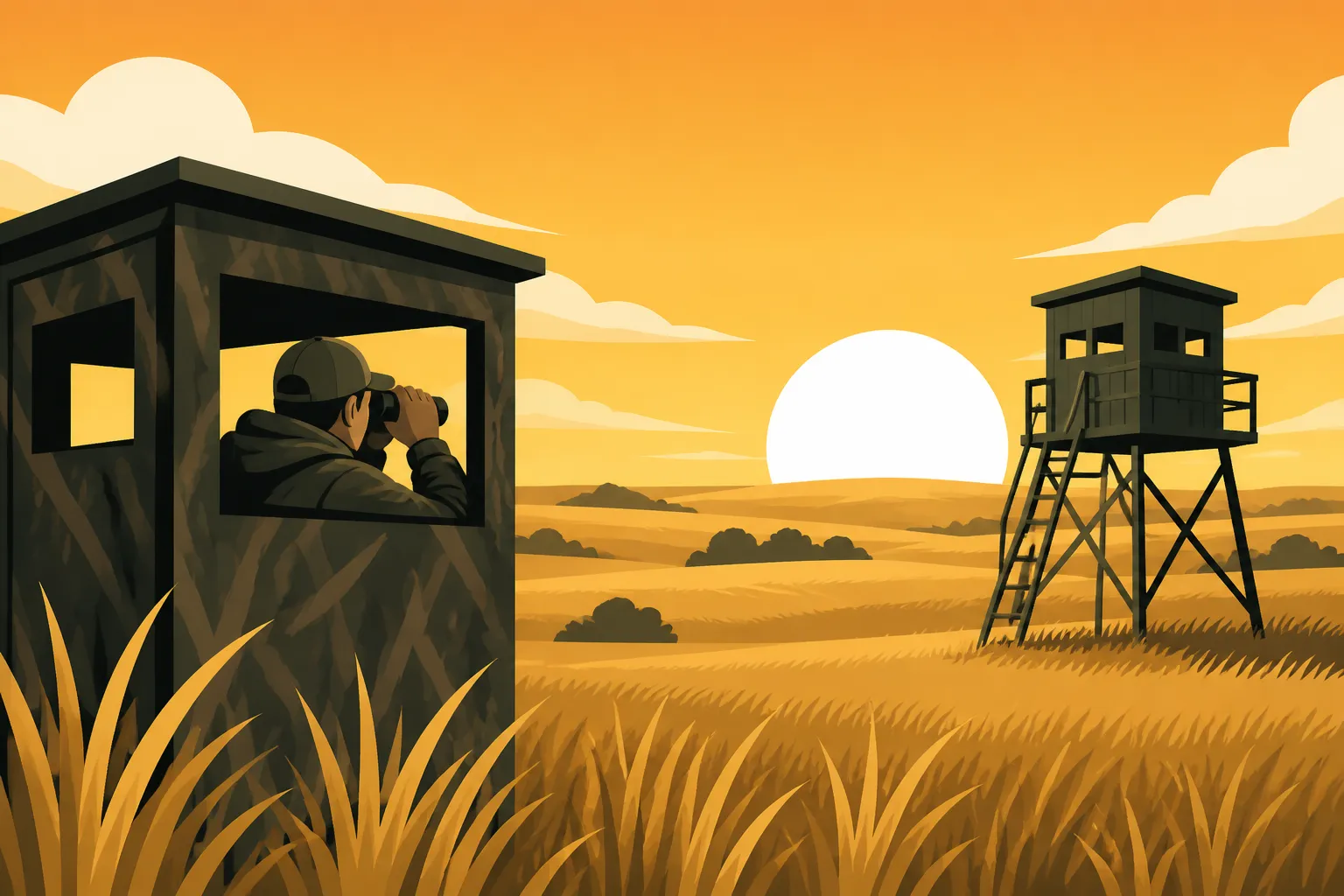
Portable ground blinds are arguably the most versatile and commonly used option for hunting Open Fields and Waters. Their ease of setup and ability to provide immediate concealment makes them a go-to for many Nebraska hunters. From a legal standpoint, they fit perfectly with the "temporary" rule, as they are designed to be popped up and taken down with relative ease.
When choosing a ground blind for OFW, prioritize portability and durability. Look for models that are genuinely lightweight and pack down into a manageable size for carrying, especially if you anticipate longer walks. The fabric should be sturdy enough to withstand Nebraska's winds and potentially sharp cornstalks or thorny brush. Some blinds feature a hub system that makes setup incredibly fast, which is a huge bonus when you're trying to get into position quietly before first light.
Concealment is key. While many blinds come in effective camouflage patterns, they often need additional natural material to truly disappear. Take the time to brush in your blind with local vegetation like cornstalks, prairie grass, or cedar branches. This breaks up its outline and helps it melt into the surroundings. Think about your backdrop: placing a blind against a darker wooded edge or a tall bank can help it disappear better than placing it in the middle of a wide-open field. Using a Ground Blind on Nebraska Public Ground provides more specific tactics for this. Finally, be mindful of windows and shooting lanes; you want clear shots without being silhouetted inside.
Mobile Treestands and Saddles
For those OFW tracts that offer suitable trees, mobile treestands or saddle hunting setups can provide an invaluable elevated advantage. The key word here is "mobile" – remember, permanent stands are generally not allowed. This means anything you use needs to be capable of being put up and taken down each day, or at the very least, removed from the tree at the end of your hunt.
Climbing Stands: These are great for straight, limbless trees, often found in mature river bottoms or some larger shelterbelts. They allow you to scale the tree and set up your platform quickly, then descend and pack out with relative ease. The challenge is finding the right tree type on OFW, as many areas may lack suitable timber. They can also be a bit bulky and heavy for longer walks, but they do offer good concealment by getting you off the ground and better visibility over certain types of terrain.
Hang-On Stands with Climbing Sticks: This setup offers more flexibility in tree choice, as you're not limited to perfectly straight, limbless trunks. You attach climbing sticks to the tree, ascend, and then hang your stand. The sticks are then removed, and the stand itself can often be quickly detached. Again, weight and portability are crucial here, as you're carrying multiple pieces of gear. Many hunters who use this system will invest in ultralight sticks and stands.
Saddle Hunting: This is perhaps the ultimate in mobile, lightweight, and low-impact elevated hunting. A saddle is a minimalist harness that you wear, allowing you to "lean" into the tree rather than sit on a platform. Combined with lightweight climbing sticks or ropes, it offers 360-degree shooting opportunities, excellent concealment (as your profile is minimal against the tree), and incredible portability. The learning curve is steeper than traditional treestands, but for dedicated public land hunters who need to move quietly and efficiently, it's an exceptional choice. Regardless of your treestand choice, remember the blaze orange requirements, especially during the firearm season; Orange Rules That Apply During Archery Season can often surprise archers during overlap periods.
Utilizing Natural Cover for Blinds
Sometimes, the best blind isn't something you buy, but something you build from what the land already provides. Utilizing natural cover is the oldest hunting trick in the book, and it's perfectly suited for Open Fields and Waters, especially if you’re trying to remain low-impact and truly temporary. It’s also completely free and requires no packing in or out of bulky equipment, beyond maybe a pair of pruning shears.
Look for natural depressions in the terrain, deep ditches, brush piles, fallen trees, large rock formations, or even just areas of taller, thicker grass. These can all provide enough concealment to break up your outline and allow you to blend in. The key is to find something that naturally obscures you from a game animal's line of sight while still offering you a clear shooting lane.
Building a natural blind involves enhancing existing cover. You might gently pile up some loose brush, weave some tall grass together, or position yourself behind a fallen log. The goal isn't to create a fortress, but to subtly integrate yourself into the landscape. Always be mindful not to cut down live vegetation or permanently alter the habitat. Use only deadfall or loose materials. This method is particularly effective when Still-Hunting Nebraska Cedar Draws or along creek beds where natural cover is more abundant. The beauty of a natural blind is its adaptability; if the wind shifts or deer movement changes, you can often just pick up and move to another suitable piece of cover with minimal fuss, which is a massive advantage on public ground.
Ethical Hunting and Shared Access on Open Fields Ground
Hunting on Open Fields and Waters (OFW) is a privilege, not a right. These areas exist because private landowners have generously allowed public access, often facilitated by the Nebraska Game and Parks Commission. Because of this, practicing ethical hunting and demonstrating respect for both the land and your fellow hunters is paramount. It helps ensure these programs continue to thrive and provides a positive image for all hunters.
The "temporary" rule for blinds and stands isn't just about avoiding citations; it's about respecting the resource and the next person who might hunt that same spot. Imagine showing up to a prime area you've scouted, only to find someone's blind has been left there for weeks, effectively claiming the spot without even being present. That's a surefire way to breed resentment and friction among hunters.
Beyond the formal rules, there's an unwritten code of conduct that really defines the experience on shared public access. It's about leaving the place better than you found it, minimizing your footprint, and being considerate of others' pursuits.
Minimizing Your Footprint and Leaving No Trace
The principle of "Leave No Trace" is absolutely vital when hunting Open Fields and Waters. This means that when you pack out your blind or stand, you should leave nothing behind – no trash, no broken gear, and certainly no permanent alterations to the landscape. Every piece of plastic wrap from a snack bar, every empty shell casing, every discarded hand warmer needs to come back out with you.
This also extends to the physical impact of your presence. Avoid driving vehicles off designated trails or parking areas, even if it seems like a shortcut. Off-road driving can damage fragile ecosystems, create ruts, and annoy landowners. If an OFW tract is marked "walk-in only," respect that designation, no matter how far the walk.
When setting up a treestand, use non-damaging straps and avoid methods that pierce or girdle the tree. For ground blinds, avoid digging trenches or making large, permanent clearings for your setup. The goal is that when you leave, a casual observer wouldn't even know you were there, preserving the natural state of the land for wildlife and other outdoor enthusiasts. Your efforts to minimize impact contribute directly to the long-term viability of public hunting opportunities in Nebraska.
Respecting Property Boundaries and Other Hunters
On OFW tracts, you are often hunting on private land that has been opened for public access. This makes understanding and respecting property boundaries incredibly important. Many OFW units are adjacent to, or even interspersed with, private land that is not open to hunting. Accidentally trespassing, whether by stepping over a fenceline or shooting onto private property, can have serious legal consequences and, more broadly, jeopardize the entire OFW program.
This is where digital mapping tools become indispensable. Apps like onX Hunt allow you to clearly see property lines, land ownership, and the specific boundaries of public access areas, including OFW tracts, right on your phone. Before you even head into the field, you can study the boundaries and plan your hunt, ensuring you stay within the designated public areas. This is especially helpful when Finding Nebraska Property Lines in complex areas. Even the free Public Access Atlas map from Nebraska Game and Parks is essential for initial planning.
Beyond property lines, respecting other hunters means being aware of their presence and giving them space. If you arrive at an OFW tract and see another vehicle or hunter already in a spot you intended to hunt, find another area. Don't crowd them, and certainly don't try to sneak in on their setup. Public land is for everyone, and a little courtesy goes a long way. This includes being mindful of noise, especially early in the morning or late in the evening. If you're walking into a spot in the dark, use a red light to avoid disturbing animals and signal your presence to other hunters without blinding them. Leaving hunting pressure in your wake is something to avoid, as it can negatively impact everyone's hunt. Finding Ground That Sees Fewer Hunters can often mean going a bit further off the beaten path or hunting during less popular times.
Disclaimer
This article is for general informational purposes only and does not constitute professional advice. Laws, prices and regulations vary by location and change over time. Consult a qualified professional for guidance on your specific situation.