How Many Coyotes Nebraska Has
One of the most common questions I get from fellow hunters, especially those new to predator hunting or just concerned about deer and bird populations, is about coyotes. It feels like sometimes you see them everywhere, and other times they're ghosts, leading to a lot of speculation about just how many are out there roaming the Nebraska landscape. This guide aims to shed some light on the challenges of counting these incredibly adaptable canids and give you a better understanding of their presence across our state.
The Elusive Nature of Coyote Population Estimates
It's a really common frustration for hunters and wildlife enthusiasts alike: we want to know exact numbers for game animals, and coyotes are no exception. But when it comes to a critter as wily and widespread as the coyote, pinning down a precise population figure is less like counting deer in a field and more like trying to count raindrops in a thunderstorm. They are simply everywhere, and they're masters of staying out of sight.
Why Exact Numbers Are So Hard to Pin Down
Coyotes are not like deer or elk, which tend to congregate in observable herds, especially at certain times of the year. They are largely solitary or live in small family groups, and they cover vast territories. Their cryptic nature means they're excellent at avoiding human detection. Think about it: how many times have you been out hunting and suddenly a coyote appears out of nowhere, only to vanish just as quickly? They're often there long before you know it, and gone before you can even react.
Their highly adaptable nature further complicates things. Coyotes thrive in a huge variety of habitats, from the open Sandhills to dense river bottoms, suburban greenbelts, and even urban fringes. They're primarily nocturnal, especially in areas with human activity, making direct observation incredibly difficult. Plus, their breeding cycles and survival rates can fluctuate significantly year to year based on food availability, disease, and hunting pressure. All of these factors combine to make an accurate, statewide "number" a moving target that wildlife biologists simply can't capture with a simple census. It's not just you feeling like you can't get a handle on their numbers; it's a genuine challenge for even the experts.
How Nebraska Game and Parks Monitors Coyote Trends
Given the impossibility of an exact head count, the Nebraska Game and Parks Commission, like other wildlife agencies, relies on a combination of indirect methods to estimate coyote trends rather than absolute numbers. These methods help them understand if populations are increasing, decreasing, or remaining stable in various regions.
One primary method involves various surveys. Roadside surveys, for instance, can provide an index of abundance. While not directly counting every coyote, these surveys involve driving set routes and recording observations of various species, including coyotes, which can then be compared year after year to detect changes in perceived density. Hunter surveys also contribute valuable data; when hunters report their harvests, it gives insight into effort, success rates, and general observations in the field. Fur harvest data is another key component. Since coyotes are a popular furbearer, the number of pelts reported by trappers and hunters each season offers a glimpse into regional populations and the intensity of harvest pressure. Think of these as indicators, like a thermometer showing if it's getting warmer or colder, rather than a precise count of every molecule in the air. For a broader look at how the state monitors its wildlife, you might be interested in How Game and Parks Counts Wildlife. While these methods don't give us a definitive "Nebraska has X number of coyotes," they provide critical information for understanding population dynamics and making management decisions.
Understanding Nebraska's Coyote Distribution and Density
You know how it feels when you're out hunting and you just know there's a coyote nearby? That gut feeling often comes from their sheer presence across virtually every square mile of Nebraska. They're not picky about where they live, which is a testament to their incredible survival skills.
Where Coyotes Thrive Across the State
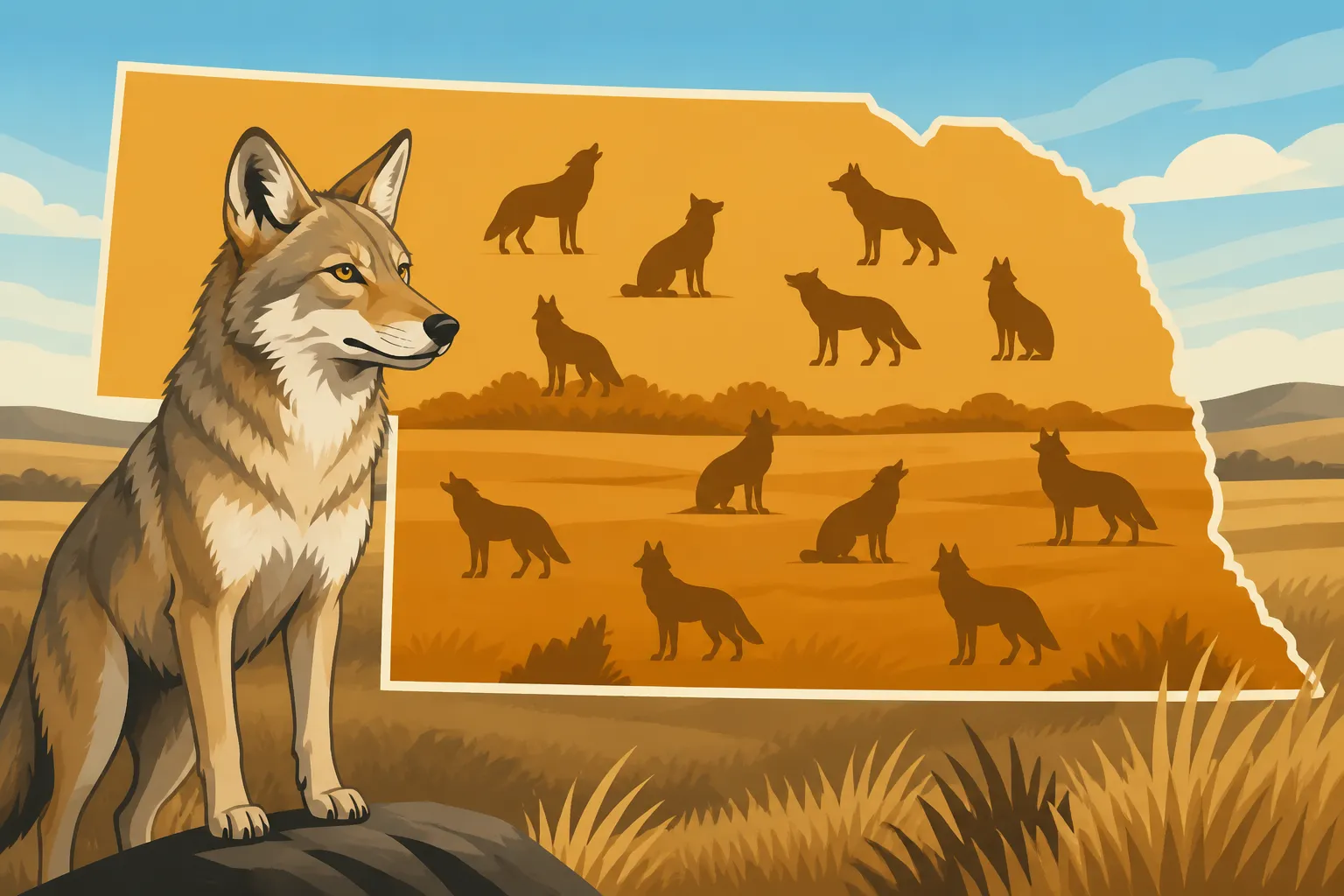
If you've spent any time hunting in Nebraska, you've probably encountered coyotes, or at least their sign, no matter where you were. From the vast, undulating grasslands of the Sandhills to the dense timber and agricultural fields of Eastern Nebraska's river bottoms, coyotes are ubiquitous. They are truly a statewide species here.
They absolutely love edge habitat – those places where one type of cover transitions to another. Think about the transition from a cornfield to a cedar draw, or a pasture meeting a creek bed lined with brush. These edges provide excellent hunting opportunities, as they can ambush prey moving between cover and food sources. Agricultural landscapes, with their abundant rodent populations, deer fawns, and even carrion after harvest or winter die-offs, are prime coyote territory. The broken timber and dense plum thickets along our many rivers and creeks, like the Platte, Niobrara, or Elkhorn, offer fantastic cover for denning and daytime bedding. Even near towns and cities, coyotes have learned to adapt, taking advantage of green spaces, parks, and suburban deer populations. Basically, if there's food, water, and a bit of cover, you can bet there are coyotes calling it home. This wide distribution means that while exact numbers are a mystery, their presence is definitely not.
Factors Influencing Local Coyote Density
While coyotes are everywhere, their numbers aren't uniform. You'll find higher densities in some areas than others, and these local fluctuations are often driven by a few key ecological factors. Understanding these can help you predict where you might encounter more coyotes on your next hunt.
First and foremost is food availability. Coyotes are opportunistic predators and scavengers. Areas with abundant prey like rabbits, voles, mice, and even deer fawns will naturally support more coyotes. If there's a strong Nebraska Whitetail Population Estimate in a certain area, or good numbers of Nebraska Pheasant Numbers Today and Nebraska Turkey Population Estimate, there's a good chance coyotes are thriving there too, as they will readily prey on young or vulnerable individuals of these species. Secondly, pressure from hunters and trappers plays a significant role. In areas with high predator hunting and trapping activity, local coyote numbers may be kept lower. Conversely, areas with less human intervention can see higher densities. Thirdly, habitat suitability is crucial. Dense cover for denning and escape, proximity to water, and varied terrain that allows for stealthy hunting are all factors that contribute to a healthy coyote population. For example, a vast, unbroken prairie might have fewer coyotes per square mile than a mosaic of pasture, cropland, and small timber blocks that offers a more diverse pantry and better hiding spots. These interconnected factors create a constantly shifting landscape of coyote density across Nebraska.
| Factor | Impact on Coyote Numbers | Examples in Nebraska |
|---|---|---|
| Food Availability | High food abundance = higher density | Strong rabbit/rodent populations in grasslands; deer fawns in timber |
| Hunting/Trapping Pressure | High pressure = lower local density | Areas with active predator hunters/trappers |
| Habitat Suitability | Diverse cover (edge, brush, timber) = higher density | River bottoms, shelterbelts, broken farm country |
| Disease/Weather | Outbreaks or severe winters can reduce numbers | Localized mange outbreaks; harsh blizzards |
| Human Tolerance | Areas with less disturbance can support more coyotes | Remote public lands, large private ranches |
Coyote Impacts on Other Game Species and Ecosystems
It's a hot topic among hunters: what effect do coyotes really have on our deer, pheasant, and turkey numbers? It's easy to point fingers when you see a lot of coyotes, and sometimes that concern is absolutely justified.
Coyotes as Predators of Deer and Upland Birds
Let's be real, many of us worry about coyotes' impact on our cherished game species. They are indeed opportunistic predators, and young animals are particularly vulnerable. When it comes to deer, coyotes are known to prey on fawns, especially in the first few weeks of their lives. A healthy deer population can typically absorb some fawn predation, but in areas where deer numbers are already struggling or where coyote populations are particularly high, this predation can be a significant factor. It’s a complex dance between predator and prey, and while coyotes aren't usually the sole reason for a deer decline, they certainly play a part, particularly on fawns during the critical birthing season.
The same goes for upland birds like pheasants and turkeys. Coyote predation on nests, poults, and even adult birds, particularly during nesting season or when birds are vulnerable due to harsh winter conditions, is a known occurrence. Imagine a pheasant hen trying to hatch a clutch in marginal cover, or young turkey poults trying to navigate dense weeds; they're all potential targets. While habitat loss is often the biggest driver of pheasant and turkey declines, coyotes are an ever-present pressure. It's not a simple one-to-one relationship where "more coyotes equals no deer or birds," but rather a dynamic interaction where coyotes are a natural part of the predation cycle, sometimes tipping the scales locally. For a deeper dive into some of our key game populations, check out Nebraska Whitetail Population Estimate, Nebraska Turkey Population Estimate, and Nebraska Pheasant Numbers Today.
The Role of Coyotes in the Nebraska Ecosystem
Beyond their impact on game animals, coyotes actually play a vital and often underappreciated role in the broader Nebraska ecosystem. They're not just "vermin" (a term I really dislike for any native wildlife); they are a critical part of the natural balance.
One of their most important roles is as a scavenger. Coyotes will readily clean up carrion, whether it's an animal killed by a car, a deer that succumbed to EHD, or a leftover gut pile from a hunter. This helps prevent the spread of disease and keeps the landscape cleaner. They are also incredibly effective at controlling rodent populations. Think about all the mice, voles, gophers, and rabbits that can quickly multiply in agricultural areas; coyotes are a natural check on these populations, preventing them from overwhelming crops or competing excessively with other wildlife. Their presence also influences the behavior of other medium-sized predators and scavengers, maintaining a healthy predator-prey dynamic. They help ensure that only the fittest prey animals survive to reproduce, which ultimately strengthens the genetic stock of those species. In short, Nebraska Predators and Furbearers like the coyote are not just a nuisance; they're an integral part of the intricate web of life on the Nebraska plains. You can learn more about some of their fellow predators in Coyotes and Bobcats in Nebraska.
Hunting and Managing Coyotes in Nebraska
For many of us, coyote hunting isn't just about recreation; it feels like a way to help manage populations and potentially give deer and upland birds a better chance. The good news is, Nebraska offers ample opportunity to do just that, with seasons that are open year-round for most methods.
Coyote Hunting as a Management Tool and Recreation
Coyote hunting is a fantastic pursuit on its own, offering thrilling challenges whether you're calling them in or spot-and-stalking. But beyond the pure enjoyment, it can indeed serve as a localized management tool. While individual coyotes are quickly replaced, consistent hunting and trapping pressure in a specific area can influence local coyote behavior and reduce their numbers, at least temporarily. Many landowners and deer hunters swear by aggressive predator control to boost fawn survival or protect nesting pheasants.
Predator calling is one of the most popular and effective methods. Using distress calls, prey in distress sounds, or even howls can draw these curious and territorial animals within shooting range. Coyote Calling on Winter Grassland is a great way to spend those cold winter days when other seasons are closed. Nebraska has very liberal rules for coyote hunting, including no bag limits and a year-round season. This means you can pursue them whenever you have the time and opportunity. It's also one of the few species you can hunt at night in certain circumstances, though it's crucial to be aware of Night Hunting Rules for Predators in Nebraska to ensure you're hunting legally and safely. Whether you're trying to help out local game or just looking for an exciting hunt, coyotes offer a challenging and rewarding experience.
Finding Productive Coyote Hunting Ground
So, you're ready to hit the field and put some of that theory into practice. But where do you go? Nebraska offers a lot of options, from vast public lands to private ground, if you can get permission. Finding the right spot often comes down to scouting, understanding habitat, and utilizing modern tools.
Many public lands across Nebraska can be excellent for coyote hunting, especially those larger tracts where coyotes have ample room to roam and might be less pressured. Areas like the Oglala National Grassland in the Panhandle, or the vast expanses of the Sandhills, offer incredible opportunities for those willing to put in the miles. You can learn more about hunting in that particular area in Oglala National Grassland Hunting. River corridors with their mix of timber, brush, and open fields are also prime spots, as are areas of mixed agriculture and pasture. The key is to look for varied terrain, good cover, and signs of prey animals like rabbits or deer. A great starting point is the Nebraska Public Access Atlas, which details all public hunting lands and Open Fields and Waters tracts. Getting a physical copy or using the digital version on your phone is essential.
For those looking for an extra edge, digital mapping applications are truly invaluable. Tools like the GoHunt app can be a game-changer for pinpointing potential spots, especially when you're looking for larger tracts of public or Open Fields and Waters land where coyotes can roam relatively unpressured. These apps allow you to layer different maps, view satellite imagery, and identify key habitat features like timbered draws, fence lines, and elevation changes that coyotes use. You can mark potential stand locations, plan your approach based on wind direction, and even track your movements. Using features within GoHunt that display different habitat types or even recent harvest data can give you an edge in understanding where coyotes might concentrate. Don't underestimate the value of Scouting Nebraska Public Ground Before Opening Day for coyotes, even if that's not what you're initially scouting for! Of course, nothing beats getting boots on the ground, and looking for tracks, scat, and other signs, which you can learn about in Reading Sign on a Nebraska Sandhills Two-Track. If you're fortunate enough to gain Getting Private Land Permission in Nebraska, these tools become even more powerful for understanding the lay of the land before you even step foot on it.
Disclaimer
This article is for general informational purposes only and does not constitute professional advice. Laws, prices and regulations vary by location and change over time. Consult a qualified professional for guidance on your specific situation.