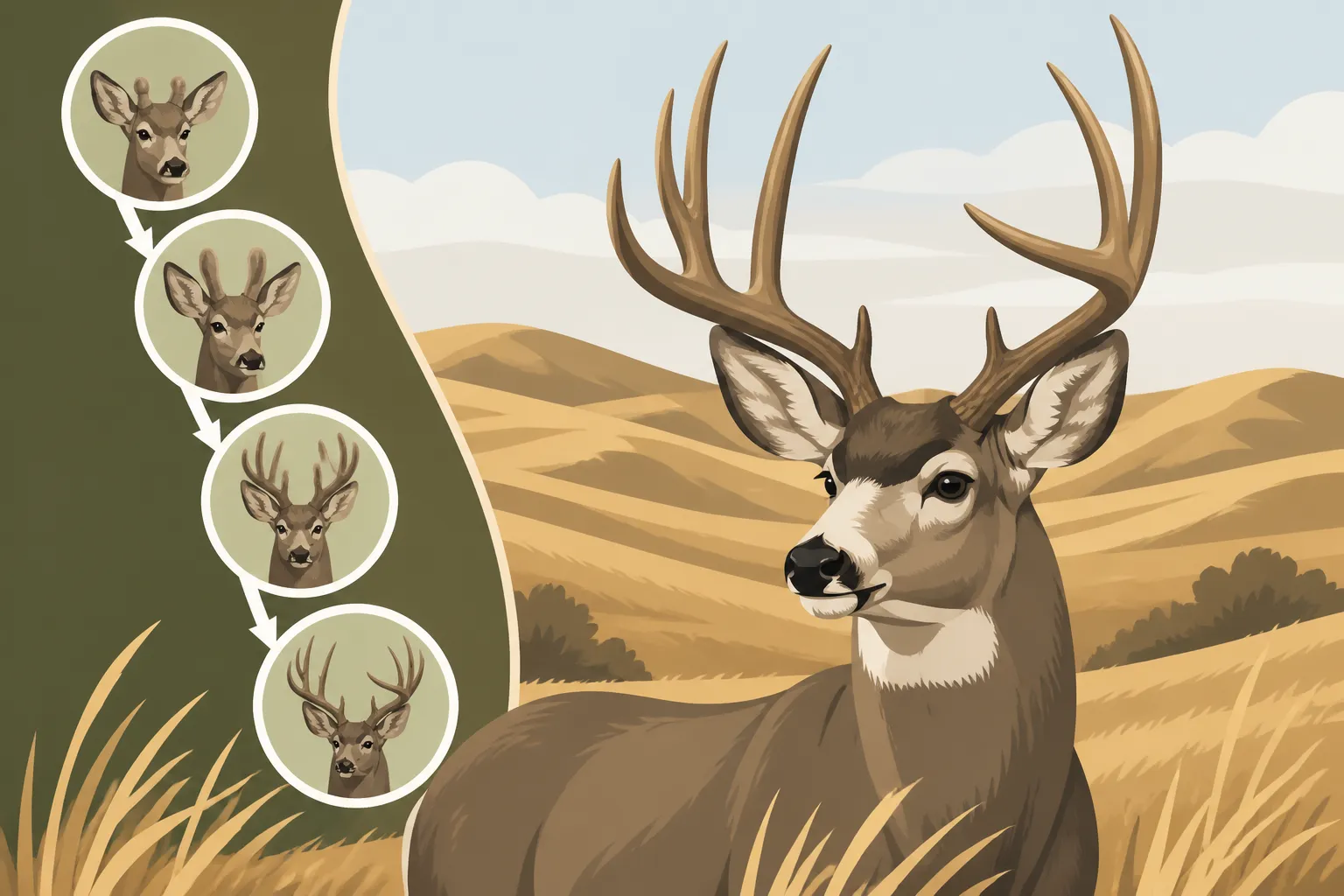
Mule Deer Antler Growth on the Sandhills
It's truly a marvel, isn't it? The sheer variety and impressive size of mule deer antlers, especially when you consider the sometimes harsh conditions they thrive in. Hunters often find themselves staring across a Sandhills vista, wondering what combination of luck, genetics, and environment contributes to the majestic racks they sometimes glimpse. This guide will take a deep dive into the fascinating world of mule deer antler growth in the Nebraska Sandhills, exploring the intricate factors that shape these bony structures and how you can better understand what you're seeing in the field.
The Sandhills Environment and Its Influence on Deer Health
The Nebraska Sandhills are a truly unique landscape, a vast sea of grass-covered dunes unlike almost anywhere else. It’s this very distinct environment that plays a foundational role in the overall health and, consequently, the antler growth of the mule deer that call it home. Understanding this backdrop is crucial to appreciating why a buck might grow a certain size of antlers.
Unique Habitat and Forage Availability
Unlike the thick timber and river bottoms found in other parts of the state, the Sandhills are characterized by rolling grasslands, interspersed with subirrigated meadows, small wetlands, and occasional stands of scattered trees, often cottonwoods along drainages or eastern red cedars encroaching on the rangeland. This open, native rangeland primarily offers a diet of forbs, grasses, and browse. Mule deer are naturally more adapted to browsing on shrubs and forbs than whitetails, and the Sandhills provide a diverse array of these plants throughout the seasons. The quality and abundance of these forage options directly impact the deer's nutritional intake, which is absolutely vital for developing impressive antlers. A poor growing season for forage due to drought, for instance, can lead to less robust antler growth in the bucks for that year, a frustration many hunters have observed firsthand.
Water Sources and Nutritional Richness
Water is life, especially in an open, sometimes arid environment like the Sandhills. While Nebraska generally isn't considered dry, the Sandhills' sandy soils don't retain moisture like heavier loams. However, the region is underlain by the immense Ogallala Aquifer, leading to numerous springs, seeps, and sub-irrigated meadows where the water table is close to the surface. These wet areas are critical hotspots, often producing lush, nutrient-rich forage that remains green longer into dry spells. Deer will gravitate to these areas, consuming plants packed with essential minerals and proteins. A buck that consistently has access to these prime feeding zones will have a distinct advantage in antler development compared to one forced to subsist on drier, less nutritious browse. You might notice bucks feeding heavily around the edges of these meadows, particularly in the spring and summer.
Environmental Challenges for Mule Deer
Life in the Sandhills isn't always easy. Mule deer here face a range of environmental challenges that can divert energy away from antler growth. Extreme winter weather, with deep snow and brutal cold, can force deer to burn critical fat reserves, impacting their ability to start spring antler growth strong. Conversely, hot, dry summers can reduce the palatability and nutritional value of forage. Additionally, the open nature of the Sandhills can expose deer to greater predatory pressure, primarily from coyotes, and the need to evade these threats also expends valuable energy. When you're constantly on alert or fighting to survive tough conditions, resources that might otherwise go into growing a massive rack are instead allocated to basic survival. This is why a consistent, moderate environment generally supports better antler growth.
Key Factors Driving Antler Development
While the Sandhills provide the stage, several critical factors dictate the individual antler growth of each mule deer buck. It's a complex interplay of biology and environment, but understanding these elements can help you better "read" the bucks you encounter.
Age — The Foremost Predictor
Hands down, age is the single most important factor influencing antler size and overall development. A young buck, say a 1.5-year-old, will often sport spikes or small forks. At 2.5 years, he might have a respectable 3×3 or small 4×4 rack. But it's typically between 4.5 and 7.5 years old that a mule deer buck reaches his prime antler potential. During these years, his body has matured, and he's efficiently utilizing nutrients for growth rather than simply growing in body size. After 7.5 or 8.5 years, some bucks might begin to regress, with antler mass or spread decreasing. This natural progression means that to see truly massive racks, bucks need to survive multiple hunting seasons and natural challenges. When you are out glassing the Nebraska Sandhills for Mule Deer, paying close attention to body characteristics in addition to antler size can give you clues about a buck's age.
Nutrition — Fueling the Rack
Antler growth is an incredibly energy-intensive process, demanding a huge amount of protein, calcium, phosphorus, and other trace minerals. Think of antlers as bone growing at an accelerated rate. The quality and quantity of forage available to a buck directly correlate with the resources his body has to build that rack. A buck with access to lush, high-protein forbs and browse throughout the spring and summer will simply have more raw materials to work with than one on a marginal diet. This is why consistent rainfall and healthy habitat are so vital. If a buck experienced a severe winter or a drought during the previous summer, you might see the effects in a smaller rack the following year. Tools like those offered by GoHunt can sometimes provide insights into habitat quality or trends, helping you understand where bucks might find better nutrition.
Genetics and Herd Health
While genetics are harder for a hunter to observe directly in the wild, they certainly play a role. Just like in humans, some deer are predisposed to growing larger, more impressive antlers due to their inherited traits. A buck with "good genetics" might grow a bigger rack on less-than-ideal nutrition compared to a genetically inferior buck on the same diet. However, genetics alone aren't enough; they need to be paired with adequate nutrition and age.
Herd health is also a factor. A herd suffering from high parasite loads, widespread disease (like EHD outbreaks along Nebraska rivers), or overpopulation that leads to depleted forage will likely produce smaller-antlered bucks across the board. Healthy, well-managed herds with a balanced buck-to-doe ratio tend to have better overall antler quality.
Hormonal Influence and Seasonal Cycles
The entire process of antler growth is meticulously regulated by hormones, primarily testosterone. In late winter or early spring, as daylight hours increase, a buck's testosterone levels begin to rise, triggering the growth of new antlers from pedicles on his skull. As summer progresses, testosterone continues to fuel rapid growth. By late summer, as daylight begins to shorten, testosterone levels peak, causing the blood supply to the velvet to constrict and dry up. This leads to the velvet shedding process, revealing the hardened, bony antlers underneath. The subsequent decline in testosterone after the rut then signals the antlers to loosen and eventually drop, starting the cycle anew.
The Annual Antler Development Cycle in the Sandhills
Understanding the yearly cycle of antler growth helps put into perspective what you're seeing in the field at different times of the year. It's a continuous, fascinating process.
Shedding and Early Growth (Winter to Early Spring)
After the intensity of the rut subsides and testosterone levels drop, mule deer bucks in the Sandhills typically begin to shed their antlers. This usually occurs from late December through March, with the majority dropping them in January and February. Finding a shed antler in the vastness of the Sandhills can feel like finding a needle in a haystack, but it's a treasure for shed hunters. Almost immediately after shedding, a new set of antlers begins to grow from the pedicles. This initial growth is often slow but steady, fueled by the buck's winter reserves and any emerging early spring forage. Many deer are looking for those vital nutrients, which is why Late-Season Food Sources in Nebraska are so important.
Velvet Growth and Mineralization (Late Spring to Summer)
By late spring and throughout the summer, antlers are in their rapid growth phase, covered in a soft, vascular tissue known as velvet. This velvet is rich in blood vessels and nerves, supplying the growing bone with all the nutrients it needs. During this period, antlers can grow at an astonishing rate, sometimes an inch or more per day in prime conditions. The Sandhills' sub-irrigated meadows and healthy browse are critical during this time, providing the calcium, phosphorus, and protein necessary for the antler's bony structure to mineralize and harden. This is a very vulnerable time for bucks, as the velvet is sensitive and easily damaged.
Hardening and Polishing (Late Summer to Early Fall)
As the summer days shorten and fall approaches, typically in late August or early September in Nebraska, the buck's testosterone levels peak. This surge in hormones causes the blood flow to the velvet to cease. The velvet then dries, cracks, and begins to peel off. Bucks will often rub their antlers on small trees, shrubs, or even prairie dog mounds to help remove the itchy, dead velvet, a process known as "polishing." After the velvet is completely rubbed off, the antlers are fully hardened and ready for the challenges of the upcoming rut. The transition from velvet to hard horn is a dramatic visual change that signals the imminent arrival of the breeding season.
The Rut and Antler Retention (Late Fall to Early Winter)
With hardened antlers, bucks are now ready for the rut. Their antlers serve as both weapons for sparring with rival bucks and as visual displays of dominance to attract does. The primary rut for mule deer in the Sandhills generally occurs from mid-November through early December, often aligning with Nebraska's Nine-Day November Firearm Deer Season. While antlers are robust, they can be broken during fights, which is a common sight among older, more aggressive bucks. After the rut, as testosterone levels recede, the connection between the antler and the pedicle weakens. The duration a buck carries his antlers post-rut can vary based on individual health, nutrition, and environmental stress. A healthy buck might hold his antlers longer into the winter than a stressed or malnourished one. You might even still see some bucks with antlers as you are Hunting Antlerless Deer in Nebraska in January.
Field Judging Antler Growth and Potential
For many hunters, the ultimate goal is to harvest a mature buck. Learning to field judge antlers, especially in the vast, open spaces of the Sandhills, is a skill that takes practice and patience.
Estimating Age by Antler Characteristics
While definitive age can only be determined by examining teeth, experienced hunters can make reasonable estimates based on antler characteristics combined with body size. Younger bucks (1.5-3.5 years old) typically have thinner antlers, often with a narrower spread relative to their ear width. Their points might be sharp, but the mass (circumference) at the bases will be noticeably less. Their bodies, particularly their neck and chest, will also appear less developed. As bucks mature (4.5-6.5 years), their antlers gain significant mass, the spread often widens, and points become longer and more robust. Their bodies will appear blockier, with a thick, muscular neck, especially during the rut. Observing deer over multiple seasons, possibly with trail cameras, can help you learn to discern these subtle differences. Tools available through platforms like GoHunt can sometimes feature user-submitted photos or discussions that help hone this skill. For hunters looking to refine their skills, our guide on Judging a Mule Deer Buck in the Field offers further insights.
Sandhills-Specific Antler Traits
Mule deer across their range exhibit variations in antler growth, and Sandhills bucks are no exception. While it's not a hard-and-fast rule, many hunters observe that Sandhills mule deer often develop wide spreads, sometimes beyond their ear tips, which contrasts with the tighter racks sometimes seen in timbered environments. They tend to grow classic forked antlers, with fewer "trash" points or abnormal growth, although exceptions always exist. The density and nutritional value of the Sandhills' native forage contribute to good bone density, which translates to thick, heavy antlers on mature bucks. These unique characteristics are part of the allure of Mule Deer in the Nebraska Sandhills and Panhandle.
Ethical Considerations and Management
The pursuit of large antlers is a driving force for many hunters, but it's important to balance this with ethical hunting practices and sound wildlife management. Passing on younger bucks and allowing them to reach their prime age class contributes to a healthier, more robust deer population with better genetics. Many units within Nebraska have mule deer restrictions in place, requiring a certain number of points on one side before a mule deer buck can be legally harvested. These regulations are designed to protect younger bucks and allow them to mature, benefiting both the herd and the hunting experience in the long run. By making informed decisions, hunters play a vital role in ensuring that the Sandhills continue to produce magnificent mule deer for generations to come.
| Antler Growth Phase | Typical Timing (Nebraska Sandhills) | Key Characteristics | Nutritional Needs |
|---|---|---|---|
| Shedding | Late Dec – Early Mar (Peak Jan-Feb) | Antlers detach from pedicles | Moderate, maintaining body condition |
| Early Growth | Feb – Apr | Initial growth from pedicles, small knobs/spikes appear | High protein & minerals for rapid bone growth |
| Velvet Growth | May – Aug | Rapid growth, antlers covered in soft, vascular velvet | VERY high protein, calcium, phosphorus |
| Hardening & Polishing | Late Aug – Mid Sep | Velvet dries, peels; antlers are rubbed clean & harden | High, but shifting to energy for rut |
| Rut & Retention | Oct – Dec | Antlers used for sparring & display, then held post-rut | Very high energy, maintains condition for breeding |
Disclaimer
This article is for general informational purposes only and does not constitute professional advice. Laws, prices and regulations vary by location and change over time. Consult a qualified professional for guidance on your specific situation.