Can Nonresidents Hunt Nebraska Elk?
If you're a nonresident hunter dreaming of chasing elk across the wide-open spaces of Nebraska, you've likely spent countless hours researching, only to hit a frustrating wall of confusion and conflicting information. It can be incredibly disheartening to set your sights on a challenging hunt like elk, only to find the rules for out-of-state hunters are murky or seem to outright exclude you. This guide is here to clear up that confusion once and for all, providing a straightforward, empathetic look at whether nonresidents can realistically hunt elk in the Cornhusker State.
The Clear Answer for Nonresidents Regarding Nebraska Elk
Let's cut right to the chase, because the honest truth can save you a lot of time and heartache: No, nonresident hunters cannot obtain an elk permit in Nebraska. Nebraska's elk hunting permits are exclusively available to residents of the state. It's a tough pill to swallow if you've been eyeing Nebraska's surprisingly robust, though geographically limited, elk herds. Many hunters from outside the state are often surprised to learn that Nebraska even has elk, let alone a hunting season for them. However, due to the relatively small and carefully managed population, the Nebraska Game and Parks Commission (NGPC) has made the decision to allocate these highly coveted permits solely to its residents. This policy reflects a common approach in states with limited big game opportunities, ensuring that local hunters have priority for a resource that takes significant state effort to manage and conserve.
Why Nebraska's Elk Permits Are Resident-Only
Understanding why these permits are residents-only can help put the policy into perspective, even if it doesn't change the outcome for nonresident hopefuls. Nebraska's elk population, while thriving in certain areas, is not widespread across the entire state like deer or turkeys. Elk were historically native to Nebraska but were extirpated by the late 1800s due to habitat loss and unregulated hunting. Their return to the state is a conservation success story that began with natural migrations from neighboring states and targeted reintroductions. You can read more about this fascinating journey in Nebraska Elk Herd History.
A History of Conservation and Limited Resources
When elk numbers began to rebound, especially in the rugged Pine Ridge region and along certain river drainages, the NGPC faced the challenge of managing a burgeoning but still fragile population. They needed to balance conservation goals with agricultural concerns (elk can cause significant crop damage) and hunter demand. Given the limited number of elk and the intensive management efforts required, prioritizing Nebraska residents for hunting opportunities was deemed the most equitable approach. This ensures that those who contribute directly through their resident hunting licenses and taxes, and who live with the impacts of elk populations year-round, receive the primary benefit of hunting this unique big game animal.
Managing a Sensitive Population
Unlike more populous big game species, elk in Nebraska are managed very carefully, often on a unit-by-unit basis with specific herd objectives. This meticulous management is vital to maintaining healthy herds and minimizing conflicts with landowners. The number of permits issued each year is relatively small, often in the low hundreds across the entire state. For context, you can explore information about Nebraska Elk Permit Numbers to see just how limited these opportunities are, even for residents. If these permits were opened to nonresidents, the demand would skyrocket, making the draw odds incredibly slim for everyone and potentially overwhelming the administrative and biological capacity to manage the hunt effectively.
The Reality of Drawing an Elk Permit in Nebraska (Even for Residents)
Just because you're a Nebraska resident doesn't mean an elk permit is a given. Far from it! The draw for Nebraska elk permits is one of the most competitive in the state, making it a true once-in-a-lifetime opportunity for many. This high demand underscores why opening it to nonresidents would be impractical.
Understanding the Application Process
Nebraska residents wishing to hunt elk must apply through the state's big game lottery system, typically in June. This is the same system used for other high-demand permits like certain deer and antelope tags. Prospective hunters can purchase preference points to increase their odds in future years, but even with points, success is never guaranteed. This process, detailed further in Nebraska's June Big Game Draw Explained, is designed to distribute a limited resource fairly among a large pool of interested hunters. For perspective, the odds of drawing some of the prime bull elk tags can be in the single digits, even for residents with multiple preference points. This is where tools like GoHunt can be incredibly valuable for residents tracking their point totals and understanding draw trends. They provide detailed insights into permit success rates across various western states, allowing hunters to make informed decisions, though in Nebraska's case, it would only be for residents.
Permit Types and Seasons
Nebraska offers several types of resident-only elk permits, primarily divided into "bull" and "antlerless" categories, with specific seasons (archery and firearm) and unit restrictions. These units correspond to the areas where elk herds are established, such as the Pine Ridge, Hat Creek, and Box Butte areas in the Panhandle, and smaller, localized herds along river systems like the Niobrara. Information on Nebraska Elk Permit Eligibility provides a deep dive into the specific requirements residents must meet. The limited seasons and permit numbers reflect the NGPC's commitment to maintaining a sustainable harvest and managing herd health. It's a far cry from the vast elk hunting opportunities found in states like Colorado, Wyoming, or Montana.
| Permit Type | Availability | Target Areas | Primary Season | Notes |
|---|---|---|---|---|
| Bull Elk Permit | Residents Only | Pine Ridge, Hat Creek, Niobrara, Box Butte, etc. | Firearm/Archery | Highly competitive, very few permits issued |
| Antlerless Elk Permit | Residents Only | Various designated units | Firearm/Archery | More available, often to manage herd size |
| Landowner Elk Permit | Residents Only | Specific criteria for landowners in elk zones | Firearm/Archery | Aids in crop damage control, residents only |
Note: All Nebraska elk permits are exclusively for residents. Nonresidents are not eligible to apply for or obtain any of these permits.
Where Nebraska's Elk Herds Roam
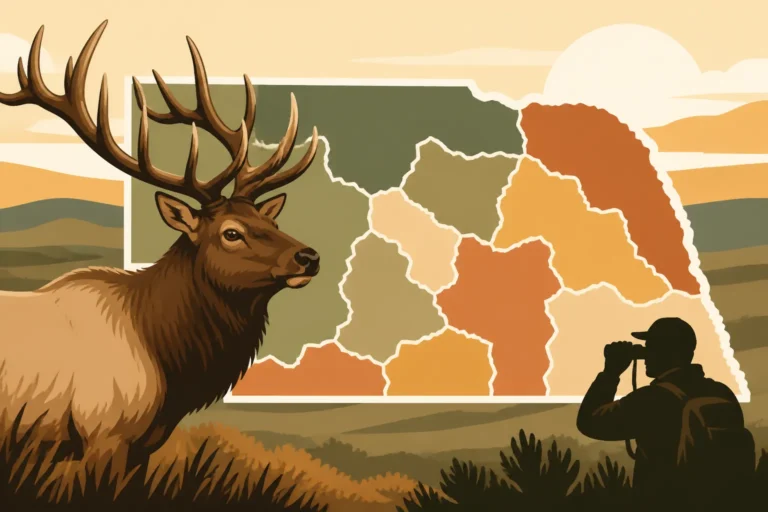
While nonresidents can't hunt them, knowing where Nebraska's elk live can satisfy some curiosity and illustrate why their management is so localized. The majority of Nebraska's elk population is concentrated in the rugged, forested badlands and canyons of the Pine Ridge region in the northwestern Panhandle. This unique landscape, with its Ponderosa pine forests, steep draws, and broken terrain, provides ideal habitat for elk. These are areas you might explore for other hunting opportunities like mule deer or even mountain lions. You can learn more about these specific habitats and their inhabitants by looking at Nebraska National Forest and Grasslands Hunting or Hunting the Nebraska Pine Ridge Escarpment.
Smaller, more isolated herds are also found along the Niobrara River valley, particularly in the northern reaches of the Sandhills. These river corridors provide essential timbered cover, water, and food sources that elk rely on. These herds are often more transient and can create management challenges when they wander onto agricultural lands. Information on Nebraska Elk Herd Locations offers a more detailed breakdown of their distribution across the state. The NGPC works closely with landowners in these areas to manage herd numbers and address issues of Elk Damage and Depredation in Nebraska, which can be a serious concern for farmers and ranchers.
What Nonresidents Can Hunt in Nebraska Instead
While the door to Nebraska elk hunting is firmly closed for nonresidents, don't despair! Nebraska offers a wealth of other fantastic hunting opportunities that are accessible to out-of-state hunters. It's a state renowned for its diverse landscapes and abundant game.
Prime Whitetail and Mule Deer Hunting
Nebraska offers excellent deer hunting, with opportunities for both whitetails and mule deer. Nonresidents can purchase permits for archery, firearm, and muzzleloader seasons. The state's diverse habitats, from the eastern river bottoms for whitetails to the western Sandhills for mule deer, provide varied and exciting hunts. You'll find a wide range of permit types and draw odds, and many permits are available over-the-counter or with reasonable draw success, especially if you're flexible with unit choices or opt for antlerless tags. When considering a deer hunt in Nebraska, tools like GoHunt are excellent for researching specific units and understanding draw success for nonresidents in other big game states, which can help inform your approach to Nebraska's more accessible deer draws.
Upland Bird Paradise
If you're an upland bird hunter, Nebraska is an absolute must-visit. The state is famous for its pheasant hunting, particularly in the central and western regions. Nonresidents can purchase an annual hunt permit and a Nebraska Habitat Stamp, and they're good to go. Beyond pheasants, there are fantastic opportunities for quail in the southeastern shelterbelts and prairie grouse (sharp-tailed grouse and greater prairie-chickens) in the Sandhills. These bird hunts offer a completely different experience, often involving long walks across beautiful, expansive landscapes with a good bird dog. For detailed information on where to pursue these birds, checking resources like Public Hunting Land in Nebraska or Hunting the Nebraska Sandhills would be a great start.
Waterfowl and Turkey Hunting
Nebraska is also a major flyway state, offering incredible waterfowl hunting for ducks and geese, especially in the Rainwater Basin region and along the Platte River. Nonresident waterfowl permits are available, requiring federal and state stamps in addition to a hunt permit. Furthermore, Nebraska boasts robust turkey populations, and nonresident turkey permits, though they can sell out quickly due to a nonresident cap, are available. This provides a fantastic spring or fall hunting opportunity. For details on how many nonresident turkey hunters Nebraska can accommodate, you can check out information on How Nebraska Limits Nonresident Turkey Hunters.
Future Outlook and Managing Expectations
It's highly unlikely that Nebraska will open its elk permits to nonresidents in the foreseeable future. The current management strategy is well-established, and the demand from residents far outstrips the available permits. The state prioritizes maintaining healthy, sustainable elk populations and managing landowner relations, and this approach is best served by keeping the resource within resident hunter access.
For nonresidents passionate about elk hunting, your best bet is to focus on states where nonresident elk tags are available, either through over-the-counter sales or a draw system designed for out-of-state hunters. States like Colorado, Idaho, Montana, and Wyoming all offer various nonresident elk hunting options, albeit with varying degrees of difficulty and cost. Websites like GoHunt are invaluable for navigating the complex draw systems and application strategies in these states. They offer detailed data and insights that can significantly improve your chances of drawing an elk tag as a nonresident, just not in Nebraska.
While Nebraska won't fulfill your elk hunting dreams as a nonresident, it remains a fantastic destination for many other incredible hunting experiences. Embrace the opportunities available, and you'll find Nebraska offers a rich and rewarding outdoor adventure.
Disclaimer
Please note that hunting regulations, permit availability, and fees are subject to change. Always consult the most current Nebraska Game and Parks Commission regulations before planning any hunting trip. This guide is for informational purposes only and does not constitute legal advice.