Brushing In a Blind on Open Range
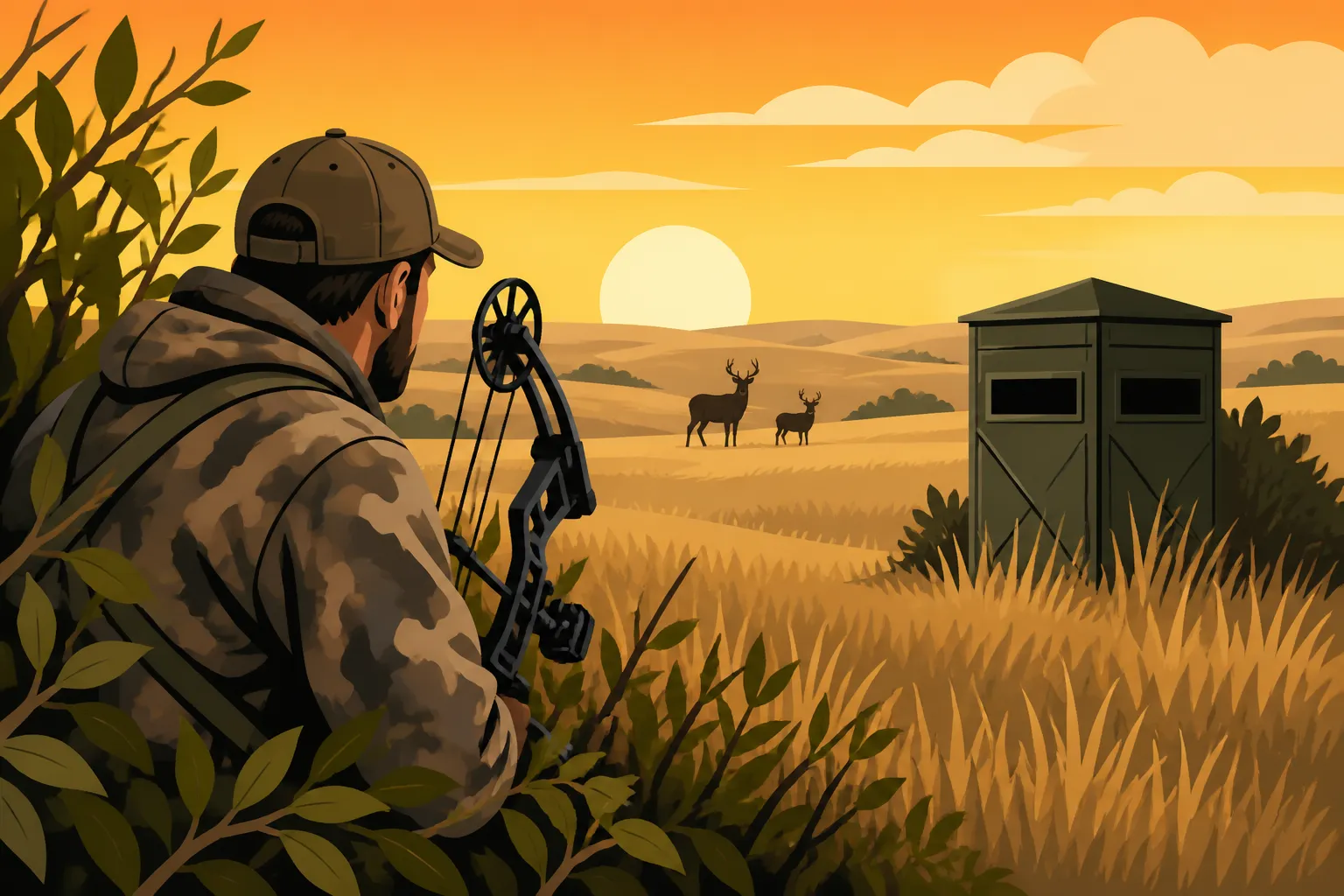
Hunting the vast, open expanses of Nebraska can be an incredibly rewarding experience, offering unique challenges and opportunities to pursue everything from mule deer to antelope and even turkeys. However, one of the biggest frustrations for hunters, especially those new to these wide-open spaces, is trying to disappear into an environment that often provides little to no natural cover. A ground blind can be your best friend, but if not set up correctly, it can stick out like a sore thumb, alerting game long before they ever get within range. This comprehensive guide is all about mastering the art of brushing in your ground blind on the Nebraska open range, turning a conspicuous pop-up into a seamless part of the landscape and drastically increasing your chances of success.
Why Brushing In Your Ground Blind Matters on the Open Range
Imagine being a pronghorn antelope, one of the keenest-sighted animals on the planet, constantly scanning the horizon for predators in an environment with minimal visual obstruction. Or consider a mature mule deer buck, wise to every change in his territory, who has seen countless hunters try to hide. When you set up a ground blind, especially a new, brightly colored one, without proper concealment, it immediately registers as an unnatural anomaly.
The Discerning Eyes of Prairie Animals
Prairie animals, whether it's the regal mule deer of the Sandhills or the incredibly vigilant pronghorn antelope of the western plains, have evolved with senses perfectly tuned to their open habitats. Their eyesight is legendary for a reason. Pronghorn can reportedly spot a small object from miles away, and mule deer, while perhaps not quite as sharp-sighted as antelope, are masters of detecting movement and recognizing unfamiliar shapes. Their peripheral vision is excellent, and they are constantly surveying their surroundings.
A ground blind, with its typically rigid, square or rectangular shape, dark mesh windows, and often artificial fabric sheen, screams "human activity" to these animals. In an environment where every yucca plant, every clump of bluestem, and every rock outcropping has a natural, irregular form, a perfect geometric shape is a red flag. If they see it, they will often skirt wide, stop to stare, or simply vanish without you ever knowing they were there. It's not just about camouflaging the fabric; it's about breaking up the distinct human-made silhouette and making it blend with the organic, irregular patterns of the prairie.
Overcoming a Lack of Natural Cover
Let's be honest, finding a perfect, natural hidey-hole for a ground blind in much of Nebraska's open range can feel like trying to find a needle in a haystack. You're often dealing with vast stretches of grass, low-lying sagebrush, small yucca plants, and maybe a few scattered cedars in a draw. There are no thick oak forests, no dense willow bottoms to just tuck your blind into. This fundamental lack of abundant, tall, or dense natural cover is precisely why "brushing in" isn't just a good idea—it's absolutely critical for success.
Many hunters make the mistake of simply popping up a blind and hoping for the best, or perhaps throwing a few sparse branches on it. But to truly fool an animal in these conditions, you need to create the illusion of natural cover where little exists. This means strategically augmenting the blind's appearance, making it seem like a natural part of the existing vegetation rather than something alien that just appeared overnight. It's a skill that takes practice and a keen eye for detail, understanding that less isn't always more when it comes to concealment on the plains.
Strategic Placement: Beyond Just Hiding Your Blind
Before you even think about cutting a single branch or grass clump, the most crucial step in effective ground blind hunting on open range is selecting the right location. Even the best brushing job can't overcome poor placement. Think of it as painting a masterpiece—you need a solid canvas first.
Utilizing Natural Contours and Features
When you're out scouting, look for any feature, no matter how subtle, that can give you a head start on concealment. A small rise, a slight depression, the lip of a creek bed, or even a subtle break in the terrain can offer a surprising amount of natural concealment. Instead of setting your blind right out in the middle of a flat expanse, try to nestle it into the landscape.
For example, on the expansive Oglala National Grassland, you might find subtle undulations or "blowouts" in the sand that offer just enough relief to place your blind. Along a fence line, where vegetation sometimes grows thicker, or at the intersection of a couple of two-track roads, there might be a small clump of heavier brush. Positioning your blind with the back against one of these natural features reduces the angles from which animals can spot its unnatural outline. A blind set into the side of a small hill, even a foot or two down from the crest, will already be less conspicuous than one perched on top. Consider how the light will hit the blind throughout the day, too. A blind set with a backdrop of a dark cedar draw will disappear much better than one silhouetted against a bright, open sky.
Considering Sun Angle and Wind Direction
These often-overlooked factors play a massive role in whether your perfectly brushed-in blind is effective or a bust. Sun angle directly affects visibility and shadows. Setting your blind so that the sun is behind it for most of the prime hunting hours can help. This keeps your blind in shadow and can make it harder for animals to pick out details, especially when they are looking into the sun's glare. Conversely, if the sun is shining directly on the front of your blind, it can illuminate the fabric, highlight any unnatural shapes, and even create a glare that makes it easier for animals to spot.
Wind direction is equally, if not more, critical on the open range. Your brushed-in blind might look fantastic, but if your scent is blowing directly into the area where animals are expected to come from or travel through, all that effort is wasted. Always set up your blind so the prevailing wind carries your scent away from the anticipated approach routes or bedding areas. This might mean having to reposition your blind based on daily wind shifts. Sometimes, it's better to accept a slightly less "perfect" visual setup if it means maintaining a consistent advantage with the wind. For detailed insights, understanding how to read "Wind Direction on Open Nebraska Prairie Stands" is essential. You can often find great articles or even maps on platforms like GoHunt that help predict wind patterns for specific areas, aiding in your strategic placement.
The Art of Brushing In: Materials and Techniques
Once you've chosen your prime location, it's time to get down to the dirty work of making your blind disappear. This isn't just about throwing some branches at it; it's about thoughtful, artistic integration.
Gathering Local, Natural Materials
The golden rule of brushing in a blind is to use materials found on-site or very close by. Bringing in cedars from a different county to a sagebrush flat will immediately look out of place. Walk around your chosen spot and identify the dominant vegetation. Is it tall prairie grass, like big bluestem or switchgrass? Are there yucca plants with their rigid, spiky leaves? Is there a patch of western wheatgrass or even some scattered small cedars or sumac? These are your building blocks.
For grassy plains, cut bundles of the tallest, driest grasses you can find. Tie them together or weave them into the blind's loops. For areas with more woody vegetation, like the edges of draws or washes in the Sandhills or Pine Ridge, clip branches from cedars, chokecherry bushes, or even dead sumac. If you're hunting pronghorn in short-grass prairie, even clumps of sagebrush, though smaller, can be effective if layered correctly. Remember to be respectful and only take what you need, and never clear-cut an area. The goal is to enhance, not destroy, the natural cover. This also applies when scouting specific "Hunting the Wildcat Hills Rimrock" or other unique environments where specific vegetation types dominate.
Mimicking Natural Shapes and Textures
The biggest giveaway for an unbrushed blind is its blocky, artificial shape. Your job is to break up that silhouette and give it an organic, irregular form. Start by layering your collected materials. Don't just stick branches straight out. Angle them, vary their lengths, and create depth. Think about how a natural bush or clump of grass grows—it's rarely perfectly uniform.
Begin at the bottom of the blind and work your way up. Weave grasses or smaller branches into the brush loops or netting that most modern blinds have. For larger branches, use zip ties, twine, or even bungee cords to secure them firmly. Overlap materials to create a dense, textured look. For example, if using cedar branches, layer them so the dark needles provide solid concealment, but leave some gaps and variations so it doesn't look like a solid wall. The aim is to make it appear like a natural feature that has grown there over time, not something assembled by a human.
The "Soft Edges" Approach
Sharp lines are unnatural in most natural environments. The hard edges of your blind are what animals will key in on. To counteract this, employ the "soft edges" approach. This means extending your brushing efforts beyond the immediate perimeter of the blind itself. Don't stop at the fabric edge; let some branches and grasses extend past it, creating a feathered, irregular outline that blends into the surrounding environment.
Consider using longer pieces of grass or flexible branches to drape over the top and down the sides, further breaking up the roofline and vertical corners. You want to avoid any distinct straight lines or sharp corners. If possible, push some of the native grasses and smaller bushes right up against the base of the blind, creating a seamless transition from the ground cover to your "new" natural bush. This technique is particularly important when using a ground blind on Nebraska public ground, where animals may be more accustomed to seeing signs of human activity.
Advanced Tips for Ground Blind Success on the Plains
Beyond the physical act of brushing in your blind, there are several strategic considerations that can greatly enhance your success, especially when hunting the wariest of open-range animals.
Giving Animals Time to Acclimate
This is perhaps one of the most important, yet often ignored, pieces of advice for ground blind hunting on open terrain. Even a perfectly brushed-in blind is a new addition to the landscape. While it might look natural to you, animals have an innate sense of what belongs in their territory. Setting up your blind at least a week or two, if not longer, before you plan to hunt from it can make a world of difference.
This "soaking" period allows deer, antelope, or turkeys to become accustomed to its presence. They'll walk by it, feed near it, and eventually, if it looks natural enough and doesn't smell like a human, they'll accept it as part of their daily routine. If you set up a blind the morning of your hunt, even if it's brushed in beautifully, its sudden appearance will likely be noticed, and the animals will be on high alert. This is particularly true for mature bucks and dominant antelope, who are notoriously wary of change. This strategy works hand-in-hand with effective scouting using tools like the Public Access Atlas, which can help you identify areas you can set up early.
Scent Control and Entry/Exit Strategies
Even with a perfectly camouflaged and acclimated blind, human scent and disturbance can blow your hunt. On the open range, where air currents can swirl and carry scent for long distances, scent control is paramount. Always approach and exit your blind with the wind in your face, or at least quartering away from where you expect game to be. Use scent-eliminating sprays, wash your hunting clothes in scent-free detergent, and store them properly.
Your entry and exit routes are just as important. Plan them carefully to minimize disturbing the area around your blind. If possible, approach from a low-lying area, a draw, or a fence line that offers some visual cover. Avoid walking directly through known travel corridors or feeding areas to get to your blind. If you're hunting mule deer in the Nebraska Sandhills, consider a route that utilizes the numerous small basins and rises to stay out of sight. Getting into your blind silently and without being seen can be the deciding factor between a successful hunt and an empty handed one.
The Role of Decoys
Decoys can be a fantastic complement to a well-brushed ground blind, especially for species like pronghorn antelope or even late-season whitetail and mule deer. For pronghorn, a buck decoy can challenge a dominant buck, drawing him directly to your concealed position. For deer, a doe decoy, sometimes paired with a small buck, can pique curiosity, especially during the rut.
Decoys work by giving the approaching animal something else to focus on, distracting their attention from your concealed blind. It gives them a reason to come closer and a specific target to look at, allowing you to draw your bow or raise your rifle undetected. When using decoys, always set them up downwind of your blind, but within comfortable shooting range, so that any animal approaching the decoy naturally offers a good shot opportunity. Reputable hunting resources like GoHunt often publish articles on "Decoying a Rutting Pronghorn Buck" or "Decoying a Nebraska Whitetail Buck," providing valuable insights into placement and technique that can be combined with expert blind brushing strategies.
| Material Type | Best Use Cases | Tips for Blending |
|---|---|---|
| Tall Prairie Grass | General prairie, field edges, Sandhills | Weave into blind loops, create vertical layers, vary heights, let dry grasses "feather" |
| Yucca Plants | Western Nebraska, Sandhills | Use spiky leaves to break up outline, place around base, mimic natural clumps |
| Cedar Branches | Draws, Pine Ridge, scattered timber | Layer densely for concealment, extend past blind edge to soften lines, vary branch size |
| Sagebrush | Short-grass prairie, western units | Small bundles to fill gaps, add texture, mimic low-lying vegetation |
| Sumac/Chokecherry | Thicker draws, river bottoms, transitions | Use leafy branches, especially if already turning color, to add solid mass |
| Dead Weed Stalks | Agricultural field edges, disturbed ground | Stand upright around the blind to mimic natural stubble, break up horizontal lines |
Disclaimer
Please note: Hunting regulations, permit requirements, and land access rules can change frequently. Always consult the most current Nebraska Game and Parks Commission regulations before planning any hunting trip. This guide is for informational purposes only and does not substitute for official regulations or professional guidance.