Rifle Scopes for Long Nebraska Shots
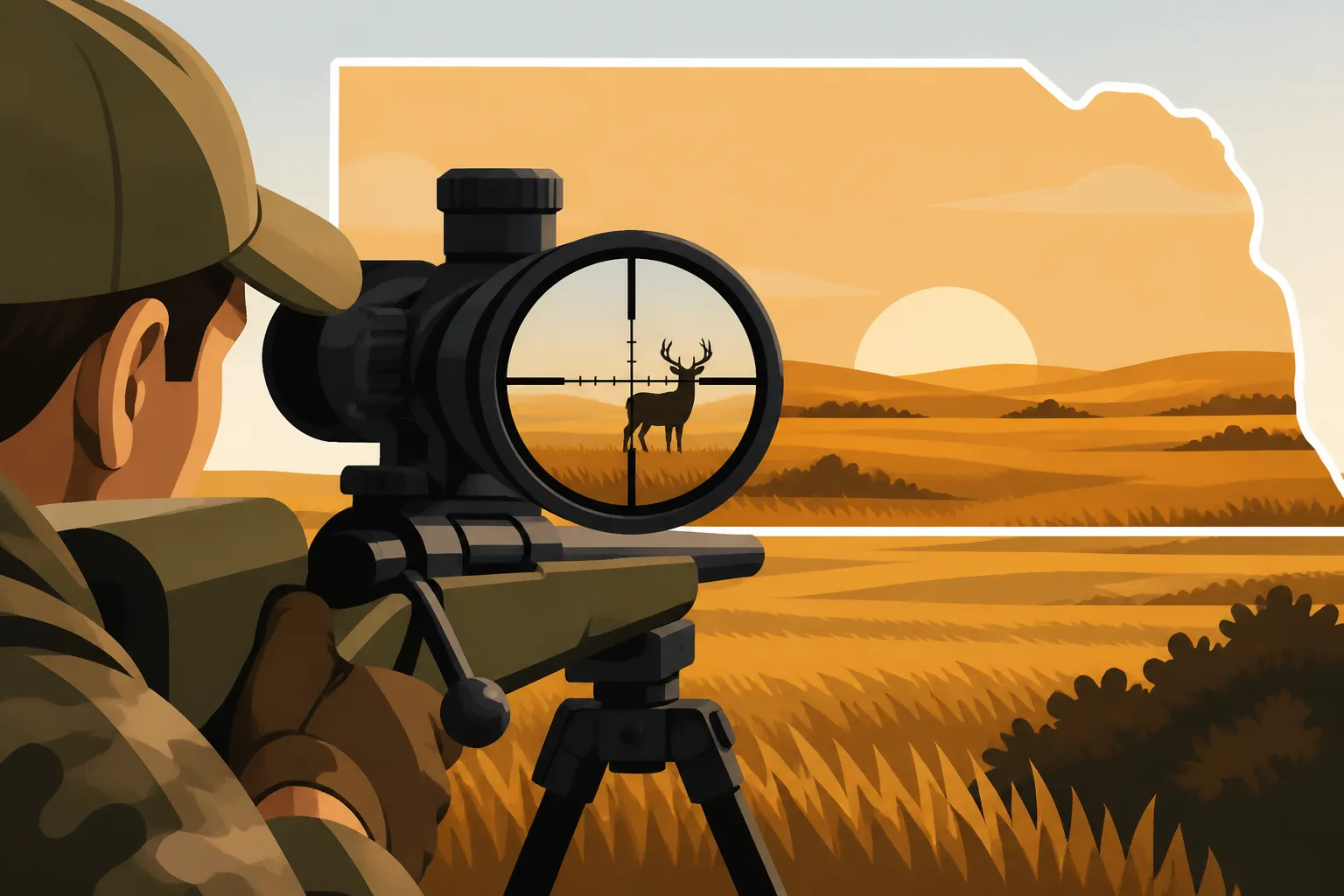
Hunting in Nebraska often means wide-open spaces and the potential for a shot that's much further than what many hunters are accustomed to. That feeling of spotting a magnificent buck or antelope way out on the prairie, only to realize your current scope might not be up to the task, can be incredibly frustrating. This guide will walk you through choosing the best rifle scopes designed to give you confidence when taking those crucial long Nebraska shots.
Understanding the Unique Challenges of Long-Range Hunting in Nebraska
Nebraska's diverse landscapes, from the rolling Sandhills to the vast agricultural fields and the rugged Pine Ridge, present a unique set of challenges for hunters, especially when it comes to shot distance. Unlike hunting in dense timber or brushy areas where shots are typically close and fast, Nebraska often demands a different approach, requiring both patience and precision over greater distances. This isn't just about spotting game far away; it's about being prepared to ethically take that shot when the moment arises, which means your rifle scope needs to be up to the task.
The Vastness of Nebraska's Open Country
If you've spent any time hunting the Nebraska Sandhills or out on the Panhandle plains, you know that cover can be sparse, and visibility can stretch for miles. A deer, antelope, or even a coyote can be spotted at incredible distances, often hundreds of yards or more. What looks like a short walk away on a flat prairie can quickly reveal itself as a 300 or 400-yard shot when you account for the dips and rises of the terrain. This environment demands optics that can not only bring distant targets into clear view but also allow for precise aiming adjustments. Trying to make an ethical shot at these distances with a scope designed for eastern timber hunting is a recipe for frustration and potentially a missed opportunity or worse.
Wind, Light, and Mirage: Factors Affecting Long Shots
Beyond distance, Nebraska weather throws a few curveballs that can significantly impact long-range shooting. Wind is almost always a factor; it's practically a constant companion on the plains. Even a mild breeze can push a bullet several inches off target over a few hundred yards. Your scope needs to be able to help you account for this, often through fine reticle subtensions or clear turrets that allow for quick adjustments. Then there's the light – whether it's the harsh glare of midday sun on dry grass or the fading light of dusk and dawn, good glass performance is paramount. And let's not forget mirage, especially on warm days, where heat rising from the ground can make a distant target appear to waver and distort. While a scope won't eliminate mirage, high-quality glass can certainly help you see through it more effectively, allowing for a clearer sight picture. Many experienced hunters use mapping software, such as GoHunt, to help them understand the terrain and elevation changes that contribute to these environmental factors, giving them an edge in planning their approach and shot setup.
Key Features of a Rifle Scope for Long-Range Hunting
When you're looking for a rifle scope that can handle Rifle Ranges Realistic on the Nebraska Prairie, there are several critical features that really set the good ones apart. It's not just about how much magnification it has; it's about the entire optical system working together to give you clarity, precision, and repeatability when it matters most. Investing in quality here isn't just a luxury; it's a necessity for ethical, confident long-range hunting.
Optical Clarity and Light Transmission
This is often where the rubber meets the road with any rifle scope. Optical clarity refers to how sharp and undistorted the image appears through the lens. When you're trying to resolve fine details on a deer's antler or the texture of an antelope's hide at 400 yards, a fuzzy or blurry image simply won't cut it. High-quality glass, advanced lens coatings, and precise manufacturing are what contribute to superior clarity. These coatings are crucial for light transmission, which is the amount of available light that actually makes it through the scope to your eye. In the low light of dawn or dusk, when deer and antelope are often most active, a scope with excellent light transmission can mean the difference between seeing a target clearly enough to shoot and only seeing a vague silhouette. Many premium scopes boast up to 95% or more light transmission, which makes a noticeable difference in those critical hunting minutes.
Durability and Reliability in the Field
Nebraska hunting isn't always gentle. You might be climbing through rugged terrain in the Pine Ridge, walking miles across the open Sandhills, or braving bitter winds and even snow during Muzzleloader Deer Hunting in Nebraska in December. Your scope isn't just a delicate instrument; it's a tool that needs to withstand bumps, drops, dust, and moisture. Look for scopes that are advertised as shockproof, fogproof, and waterproof. This usually means they have robust, aircraft-grade aluminum tubes, are nitrogen or argon purged to prevent internal fogging, and have O-ring seals to keep water out. The turrets should feel solid and track consistently, and the reticle should remain precisely zeroed, even after being jostled around in a pickup truck or during a long hike. A scope that fails in adverse conditions, whether it fogs up or loses its zero, is worse than no scope at all, potentially ruining a hunt you've worked hard for.
Magnification and Objective Lens: Finding the Right Balance
When it comes to scope features, magnification is often the first thing people think about, and for good reason—it brings distant objects closer. But it's not the only factor, nor is "more" always "better." The objective lens, the large lens at the front of the scope, plays an equally vital role, especially in Nebraska's varied light conditions. Understanding how these two work together is key to making an informed choice for Optics for Glassing the Nebraska Sandhills and setting yourself up for success.
Variable Power Ranges for Versatility
For long-range hunting in Nebraska, a variable power scope is almost universally preferred. This allows you to adjust the magnification to suit the situation. You might start your day scanning a distant hillside at 10x, but if a deer suddenly appears in a close-range pocket, you can dial it down to 4x or 6x for a wider field of view and quicker target acquisition. For true long-range capability (300+ yards), a top-end magnification of 12x, 14x, or even 18x is highly desirable. This kind of power allows you to precisely place your shot on an animal that might look like a speck with lower magnification. However, remember that higher magnification also means a smaller field of view and exaggerates any handshake, so practice at various magnifications is crucial. A common range for a versatile Nebraska hunting scope might be something like 4-16x, 3-18x, or even 5-25x for extreme long range.
The Role of the Objective Lens in Light Gathering
The objective lens diameter, measured in millimeters (e.g., 40mm, 50mm, 56mm), directly impacts how much light the scope can gather. A larger objective lens gathers more light, which translates to a brighter, clearer image, especially in low-light conditions like dawn or dusk, or when looking into shadows. This is particularly important with higher magnification settings, as increasing magnification inherently makes the image appear dimmer. A 50mm or 56mm objective lens paired with higher magnification (14x+) can maintain excellent brightness and resolution. However, a larger objective lens also means a heavier, bulkier scope that sits higher on the rifle, potentially requiring higher scope rings and affecting the rifle's balance. For many Nebraska hunters, a 40mm or 44mm objective lens offers a good balance of light gathering, weight, and profile, especially if the maximum magnification is kept to a reasonable level like 12-16x.
Reticles, Turrets, and Ballistics: Mastering the Shot
Once you've got your target in sight and the magnification dialed in, the reticle and turrets are your direct interface with aiming precision. Understanding how to use these effectively, often in conjunction with external ballistic data, is what truly enables successful long-range shots in Nebraska's wide-open spaces. This is where the magic happens for ethical shot placement.
Reticle Choices for Holdovers and Windage
The reticle (or crosshairs) is crucial. For long-range hunting, a simple duplex reticle might not be enough. Many hunters opt for reticles with holdover points or hash marks (often BDC – Bullet Drop Compensating, or MRAD/MOA-based) that allow you to quickly compensate for bullet drop at different distances without adjusting your turrets. Some reticles also include windage marks, which are incredibly useful for dealing with Nebraska's almost constant breezes. A first focal plane (FFP) reticle is often preferred for long-range work, especially if you plan to dial or holdover at various magnifications, because the reticle's subtensions (the spacing of the marks) remain true at all power settings. A second focal plane (SFP) reticle's subtensions are only accurate at one specific magnification setting (usually the highest), which can be limiting if you vary your magnification and still want to use your holdover points.
Exposed vs. Capped Turrets for Adjustments
Turrets are how you adjust your scope's point of impact. For long-range shooting, dialing precise adjustments for elevation and windage is often necessary. Exposed turrets are generally preferred by long-range shooters because they allow for quick, tool-free adjustments. They usually feature clear, tactile clicks and visible markings for each increment of adjustment (e.g., 1/4 MOA or 0.1 MRAD). When using exposed turrets, you'll want to "dial" your elevation based on the distance to your target, and sometimes your windage as well. The key is that they must "track" accurately and reliably return to zero. Capped turrets, while protecting your adjustments from accidental bumps, are slower to use as you have to remove the cap before dialing. They are often favored for hunters who prefer to "set it and forget it" or use their reticle for most holdovers. Many hunters who use tools like GoHunt for advanced ballistic calculations will appreciate the precision and consistency of quality exposed turrets.
| Feature | Description | Ideal for Nebraska Long Shots |
|---|---|---|
| Magnification | The range of power to enlarge the image. | Variable power (e.g., 3-18x or 4-20x) offers versatility for both close and distant targets found in diverse Nebraska terrain. High end 14x+ helps resolve distant detail. |
| Objective Lens | Front lens diameter, impacts light gathering. | 44mm to 56mm. Larger gathers more light for low-light conditions, but adds weight/bulk. A 50mm often strikes a good balance for typical long-range hunting. |
| Reticle | The aiming point within the scope. | FFP (First Focal Plane) with holdover points (MRAD or MOA) and windage hashes is highly recommended. This allows accurate aiming at any magnification, critical for adjusting for bullet drop and wind on the vast plains. |
| Turrets | Mechanisms for adjusting point of impact (elevation/windage). | Exposed, tactile, and resettable turrets with precise 1/4 MOA or 0.1 MRAD clicks. Essential for dialing exact corrections for Bullet Weight for Windy Conditions over long distances. Ensure they track consistently and return to zero. |
| Parallax Adjustment | Eliminates apparent movement of the reticle relative to the target. | Side parallax adjustment knob, often starting at 25-50 yards and extending to infinity. Critical for precision at long range, ensuring your reticle is truly on target. |
| Eye Relief | Distance from your eye to the eyepiece to see a full image. | Generous eye relief (3.5 inches or more) is important for safety (recoil) and comfort, especially if wearing glasses or in awkward shooting positions. |
| Tube Diameter | Main body tube size (e.g., 30mm, 34mm). | 30mm or 34mm. Larger tubes generally allow for more internal adjustment range, which is vital for dialing those extreme long-range shots. A 34mm tube will offer more elevation adjustment to reach out to those truly distant targets that can be found when Glassing the Nebraska Sandhills for Mule Deer. |
| Glass Quality | Determines clarity, brightness, and color rendition. | Premium, fully multi-coated ED (extra-low dispersion) or HD (high definition) glass. Provides crisp, bright images and excellent contrast, helping cut through mirage and identify targets in challenging light. |
| Construction | Materials and sealing of the scope body. | One-piece aircraft-grade aluminum tube, nitrogen or argon purged, and O-ring sealed. Ensures shockproof, fogproof, and waterproof performance in all Nebraska weather conditions. |
Mounting and Zeroing: Crucial Steps for Accuracy
Even the most expensive, feature-rich scope is useless if it's not properly mounted and precisely zeroed. These steps are fundamental to achieving the accuracy needed for Zeroing a Rifle for Open Country and making ethical long-range shots in Nebraska. Don't rush this part; it's the foundation of your shooting system.
Choosing the Right Mounts and Rings
The connection between your rifle and your scope is paramount. Subpar rings or a flimsy mount can lead to point-of-impact shifts, losing your zero, or even scope damage. For long-range shooting, consider a solid one-piece mount or a robust two-piece ring set. Steel rings are generally preferred for their strength and durability, though high-quality aluminum rings can also work. Ensure the rings match your scope's tube diameter (1-inch, 30mm, or 34mm) and that their height is appropriate for your rifle and scope's objective lens. You want the scope to sit as low as possible without the objective lens touching the barrel or the bolt handle clearing the eyepiece. A canted base (e.g., 20 MOA) is often recommended for long-range scopes, as it "pre-loads" some of your scope's internal elevation adjustment, allowing you to dial further for extreme distances. This is particularly beneficial when hunting in units with vast distances where shots can stretch to the limits of your rifle and ammunition.
The Art of a Precise Zero
Zeroing your rifle isn't just about hitting the bullseye at 100 yards; it's about establishing a consistent point of impact from which all your ballistic calculations will be made. For long-range Nebraska hunting, a 100- or 200-yard zero is common, but some prefer a 300-yard zero to flatten trajectory for many common hunting distances. It's crucial to shoot multiple groups to confirm your zero and ensure repeatability. After establishing your zero, practice dialing your turrets up and down, then returning to your zero. Does it consistently come back to the same spot? This is called "tracking" and "return to zero," and it's absolutely vital for a long-range scope. Once satisfied, set your turrets to mechanical zero stops if your scope has them, or otherwise mark your zero position so you can quickly return to it after making adjustments in the field. Don't forget to confirm your zero periodically, especially before a big hunt, as rifle systems can shift.
Advanced Considerations for Extreme Long Range
While many Nebraska hunting scenarios will involve shots within 400-500 yards, some hunters venturing into the most open country, perhaps Stalking Pronghorn Across Open Nebraska Ground or pursuing a wary mule deer, might push those limits. For these situations, understanding the finer points of scope technology and external factors becomes even more critical.
First Focal Plane vs. Second Focal Plane Reticles
We touched on this briefly, but it's worth a deeper dive for extreme long-range. A First Focal Plane (FFP) reticle physically grows and shrinks in proportion to the magnification setting. This means that any hash marks or subtensions on your reticle (for holdovers, windage, or range estimation) remain accurate at any magnification power. This is incredibly advantageous for long-range shooting where you might need to adjust your magnification for different scenarios while still relying on your reticle for corrections. Conversely, a Second Focal Plane (SFP) reticle remains the same size regardless of magnification. Its subtensions are only accurate at one specific magnification setting (usually the highest). If you plan to primarily dial your shots and only use the reticle for rough holdovers, SFP can work. But for precision, especially if you're holding over in windy conditions, FFP is the undisputed champion for consistency across the magnification range.
Understanding MOA and MRAD Adjustments
Scope turrets and reticles typically use one of two angular measurement systems: Minutes of Angle (MOA) or Milliradians (MRAD, often called Mil or Mil-Dot). An MOA is approximately 1 inch at 100 yards (more precisely, 1.047 inches). A MRAD is 3.6 inches at 100 yards (or 10cm at 100 meters). The key is to have your reticle and turrets in the same unit (MOA/MOA or MRAD/MRAD). This makes it easy to measure a miss, calculate a correction, and dial it in. For example, if you shoot 3 MOA low with an MOA reticle, you can simply dial 3 MOA up on your MOA turrets. There's no inherent advantage of one system over the other; it's a matter of preference and what you're most familiar with. The most important thing is consistency and understanding the system your scope uses. Many hunters find resources like GoHunt incredibly helpful for generating ballistic tables in both MOA and MRAD, simplifying these calculations.
Practical Accessories and Tips for Nebraska Scope Use
Even the best rifle scope can benefit from a few thoughtful accessories and practical habits, especially when facing the realities of hunting in Nebraska. These aren't just add-ons; they're enhancements that can make your long-range shooting experience more comfortable, efficient, and ultimately, more successful.
Scope Covers and Cleaning Kits
Dust, dirt, rain, and snow are all part of the Nebraska hunting experience. Keeping your scope's lenses clean is critical for optimal clarity. Invest in quality flip-up scope covers or bikini-style covers that protect your lenses from the elements when not in use. Beyond protection, a dedicated lens cleaning kit is a must-have. This typically includes a soft brush to remove loose debris, a lens cleaning solution, and microfiber cloths. Never wipe lenses with your shirt or a rough cloth, as this can scratch the delicate coatings. Clean lenses ensure you're getting the most out of your scope's optical clarity, especially when trying to spot game across a vast expanse or in low light.
Rangefinders and Ballistic Calculators
A rifle scope tells you where to aim; a rangefinder tells you how far your target is. For long-range hunting, a high-quality rangefinder with good maximum range and angle compensation is indispensable. You cannot accurately dial or holdover for bullet drop if you don't know the exact distance. Many modern hunting rangefinders can range out to 1,000+ yards, which is ample for most Nebraska scenarios. Beyond the rangefinder, a ballistic calculator (either an app on your phone, a dedicated device, or even printed data cards) is invaluable. These tools take into account your bullet's specifics, muzzle velocity, scope height, atmospheric conditions (temperature, barometric pressure, humidity), and the angle of your shot to give you precise drop and windage corrections. Utilizing tools like GoHunt's mapping and integrated ballistic solutions can further streamline this process, allowing you to focus on the shot.
Tripods, Shooting Sticks, and Stable Platforms
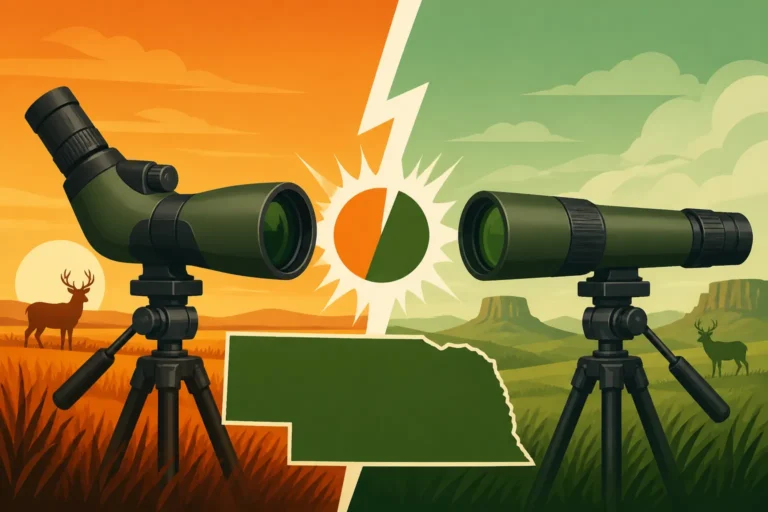
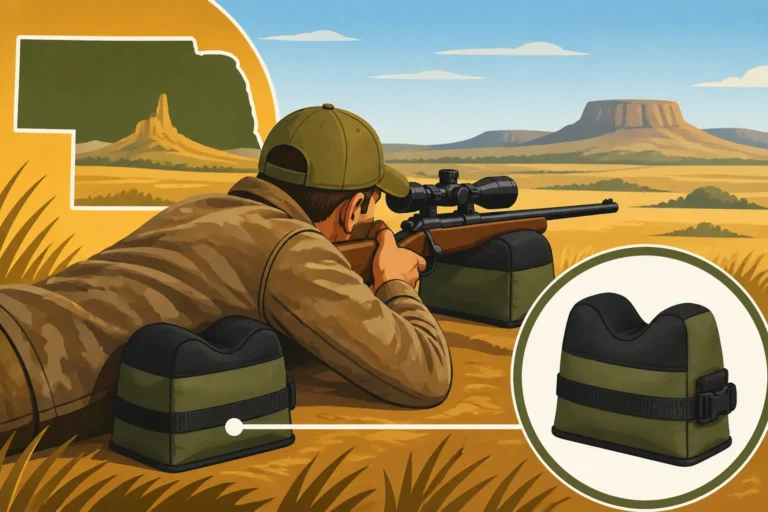
While your scope is on your rifle, getting a stable shooting platform is what allows you to truly maximize your scope's precision. For long-range shots, shooting offhand is rarely advisable. Bipods, shooting sticks, or a solid hunting pack can provide the stability needed to hold your reticle steady on target, especially at high magnifications. Many hunters use a tripod system, which can serve dual duty for glassing with Binocular Magnification for the Sandhills and then quickly converting into a stable shooting rest. Practicing from various field positions with your chosen support system is crucial, as you won't always have a perfect prone setup in the field. The ability to quickly and stably deploy your rifle, even on uneven terrain, means you can take advantage of those fleeting long-range opportunities Nebraska often presents.
Disclaimer
This article is for general informational purposes only and does not constitute professional advice. Laws, prices and regulations vary by location and change over time. Consult a qualified professional for guidance on your specific situation.