Coyotes and Bobcats in Nebraska
For anyone who spends time outdoors in Nebraska, whether you're a deer hunter, an upland bird enthusiast, or just enjoy hiking, you've undoubtedly encountered signs of our resident predators. Coyotes and bobcats are integral parts of the ecosystem here, but their presence can also bring challenges, from impacting game populations to creating concerns for livestock owners. This guide will help you understand the behaviors, habitats, and management of these fascinating, yet sometimes frustrating, wild canids and felines.
Understanding Nebraska's Apex Small Predators: Coyotes
Coyotes are perhaps the most recognizable and widespread predators across Nebraska. They are incredibly adaptable, intelligent, and persistent, making them a fixture in almost every corner of the state. While often seen as nuisances by some, their role in controlling rodent and rabbit populations is undeniable.
Coyote Distribution and Habitat Preferences
You'd be hard-pressed to find a corner of Nebraska where coyotes don't roam. From the sprawling grasslands of the Sandhills to the dense river bottoms of Eastern Nebraska, and even into the suburban fringes, these cunning canids have made themselves at home. Their incredible adaptability means they can thrive in diverse environments, often showing up where you least expect them.
They're not picky, either. They'll use anything from wide-open agricultural fields, where they might den in a small ditch or shelterbelt, to rugged canyons in the Pine Ridge. You might see them loping across a stubble field during the day, or hear their distinct yips and howls echoing through a timbered creek bottom at night. This pervasive presence is one reason they are such a constant factor for anyone recreating or working outdoors.
Coyote Behavior and Diet
Coyotes are true opportunists when it comes to their diet and hunting strategies. While often thought of as pack animals, especially when you hear a chorus of howls, they frequently hunt alone or in smaller family units. Their diet is incredibly varied, making them successful survivors. They primarily target small mammals like rabbits, voles, and mice, but they're certainly not above taking larger prey.
For deer hunters, the frustration of coyote predation on fawns is a very real concern, particularly in the spring when young deer are most vulnerable. They'll also readily scavenge carrion, clean up roadkill, or feast on fruits and insects when available. This adaptability means they rarely go hungry, even when specific prey populations are low, which contributes to their robust numbers across the state.
Coyote Population Trends in Nebraska
Despite consistent hunting and trapping pressure, Nebraska's coyote population generally remains strong and resilient. These animals have an amazing ability to compensate for losses through increased reproduction. If populations are significantly reduced in an area, females may have larger litters, and a higher percentage of pups will survive. This natural mechanism ensures their continued presence.
While localized fluctuations can occur due to disease, severe weather events, or intense control efforts, the statewide trend for coyotes typically holds steady. They are considered an unprotected species in Nebraska, meaning there are no closed seasons or bag limits, reflecting their classification as a prevalent predator that can impact livestock and game. Their numbers are a testament to their success in the modern landscape.
The Elusive Bobcat: Nebraska's Feline Predator
While coyotes are often seen, heard, and discussed, bobcats are a different story. These beautiful, secretive felines are present across Nebraska, but their reclusive nature means many people spend a lifetime outdoors without ever catching a glimpse of one. They represent a wilder, more hidden side of Nebraska's predator landscape.
Bobcat Range and Preferred Cover
Bobcats, unlike their coyote counterparts, are much more tied to dense cover. While they're found throughout Nebraska, you're most likely to encounter them in areas with rugged terrain, thick timber, and brushy draws. Think of the deep river-bottoms, the broken canyons of the Pine Ridge, or the extensive shelterbelts and uncultivated lands along major waterways. Areas like the Missouri River or Republican River corridors offer the kind of habitat these shy cats prefer.
They rely on this dense vegetation for both hunting and concealment, making them masters of stealth. They'll use rock outcroppings, fallen timber, and thickets as lairs and ambush points. Even though they may exist in the same general areas as coyotes, their reliance on heavy cover means their interactions with humans are far less frequent.
Bobcat Diet and Hunting Strategies
Bobcats are specialized hunters, primarily preying on smaller animals. Their diet largely consists of rabbits, especially cottontails, as well as various rodents, ground-dwelling birds, and sometimes even small fawns if the opportunity arises. They are solitary hunters, typically nocturnal or crepuscular (most active at dawn and dusk), which further contributes to their elusive reputation.
Their hunting strategy is one of stealth and ambush. They'll patiently stalk their prey, using their excellent vision and hearing to pinpoint movement, before pouncing with remarkable speed and agility. This efficient hunting style makes them effective controllers of small game populations within their preferred habitats. Understanding these habits is key to even hoping to spot one, let alone successfully hunt or trap it.
Bobcat Population Status and Management
Historically, bobcats faced declines due to unregulated hunting and habitat loss. However, thanks to conservation efforts and adaptive management, their populations have made a significant comeback across much of their range, including Nebraska. Today, they are a managed furbearer species in the state, which means their harvest is regulated through specific seasons, permit requirements, and often reporting mandates.
The Nebraska Game and Parks Commission monitors bobcat populations closely to ensure sustainable harvest levels. This careful management approach allows for recreational hunting and trapping while safeguarding the health of the species. For those interested in pursuing bobcats, understanding the specific regulations, which can often be complex, is absolutely essential before heading afield. You can find information about Raccoon and Furbearer Trapping Seasons on the Game and Parks website.
Key Differences and Similarities Between Coyotes and Bobcats
While both coyotes and bobcats are important predators in Nebraska, they fill distinct ecological niches and present different challenges and opportunities for those who encounter them. Understanding their unique characteristics is crucial for proper identification and effective management.
Physical Characteristics and Identification
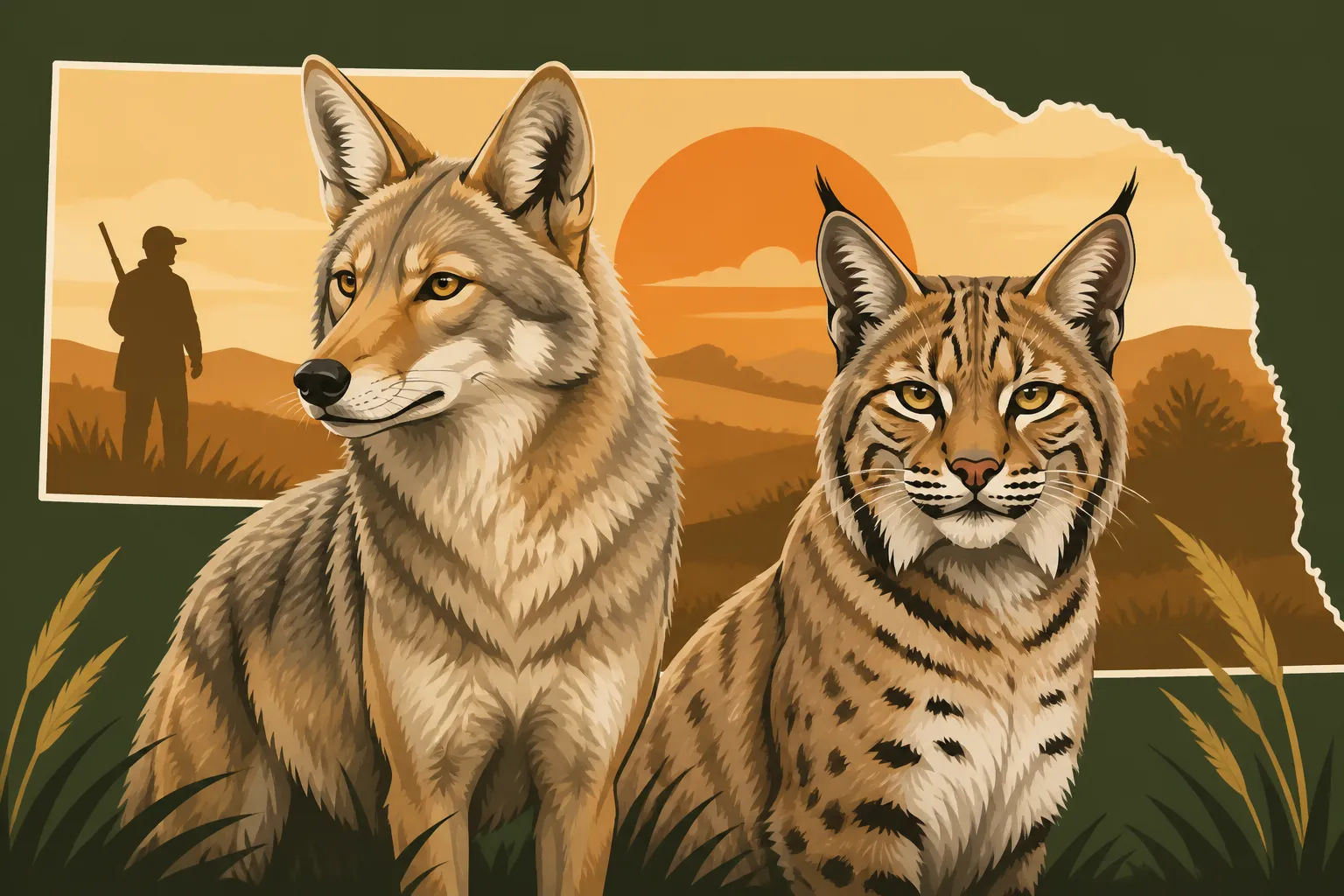
At first glance, differentiating a coyote from a bobcat might seem obvious due to their species (canid vs. feline), but in low light or at a distance, distinguishing between them, or even from other similar species, can be tricky. Both are mid-sized predators, but their builds, tails, and movement patterns are quite different. Coyotes are built for endurance, with long legs and a bushy tail, while bobcats are muscular and compact, designed for bursts of speed and agility, topped with their distinctive short, "bobbed" tail.
Here's a quick comparison to help you tell them apart:
| Feature | Coyote | Bobcat |
|---|---|---|
| Size | Medium-large canid; longer, leaner body | Medium-sized feline; stockier, muscular |
| Tail | Long, bushy, often carried low; black tip | Short, "bobbed" tail; typically black bars |
| Ears | Pointed, relatively large | Shorter, rounded, often tufted |
| Coat Color | Variable: grizzled gray, brown, tan; lighter belly | Tawny, reddish-brown, often spotted/barred |
| Gait | Loping, steady trot; often travels in open | Stealthy, crouching, quick bursts; solitary |
| Tracks | Oval, claw marks usually visible | Rounder, no claw marks (retractable claws) |
Even when simply Reading Sign on a Nebraska Sandhills Two-Track, you can often tell the difference by looking at their tracks. Coyote tracks will typically show four toes with visible claw marks, while bobcat tracks are rounder and rarely show claw marks because their claws are retracted.
Ecological Roles and Impact on Other Game
Both coyotes and bobcats play vital roles in maintaining healthy ecosystems, but their impacts on other game species can differ significantly. Coyotes are generalist predators, meaning they'll eat almost anything. This broad diet means they can exert pressure on a wide array of prey, including deer fawns, wild turkeys, and various small game species. Their adaptability sometimes leads to higher population densities, potentially increasing their impact on vulnerable game populations.
Bobcats, on the other hand, are more specialized hunters, focusing predominantly on smaller prey like rabbits and rodents. While they are powerful enough to take larger animals, their primary impact on deer or turkey populations is generally much lower than that of coyotes. They help keep small mammal populations in check, which can, in turn, reduce competition for forage with larger game animals. Understanding these roles helps us appreciate the intricate web of life in Nebraska.
Legal Status and Management Approaches for Both
The legal status and management strategies for coyotes and bobcats in Nebraska reflect their differing impacts and population dynamics. Coyotes are classified as unprotected wildlife. This means they can be hunted year-round, day or night, without specific bag limits or permits beyond a valid Nebraska hunt permit and habitat stamp. This open season reflects a management philosophy that views coyotes as a common predator that may require control, especially when impacting livestock or game. For those interested in pursuing them, there are specific techniques for Predator Calling on the Nebraska Plains or understanding Night Hunting Rules for Predators in Nebraska.
Bobcats, conversely, are managed furbearers. This means their harvest is regulated by specific seasons, bag limits, and often requires a furbearer permit in addition to a general hunt permit and habitat stamp. Successful bobcat hunters or trappers may also be required to check their harvest or report it to the Nebraska Game and Parks Commission, contributing to valuable data collection. This managed status reflects their historical vulnerability and a desire to ensure sustainable populations for future generations, making it a different kind of challenge for hunters compared to the more liberal coyote regulations.
Strategies for Coexisting or Managing Coyote and Bobcat Populations
Living and recreating in Nebraska means acknowledging the presence of these fascinating predators. For some, it's about enjoying the sight or sound of them; for others, it's about managing their impact on livestock or ensuring healthy game populations. Understanding effective strategies for coexistence and management is key.
Protecting Livestock and Small Game from Predators
For livestock producers and those raising small game, the presence of coyotes can be a significant concern. There are numerous strategies to mitigate potential conflicts. Physical barriers, such as well-maintained fences, are often the first line of defense. Specific types of fencing, like electric fences, can be highly effective against coyotes. Another common approach involves using guardian animals, such as llamas, donkeys, or specific breeds of dogs (e.g., Great Pyrenees), which are naturally protective of their herds.
Beyond physical measures, good husbandry practices play a crucial role. This includes properly disposing of carcasses, securing feed, and bringing vulnerable animals into safe enclosures at night. For small game like pheasants or turkeys, habitat management that provides dense escape cover can reduce their vulnerability. Sometimes, Getting Private Land Permission in Nebraska can also allow for proactive predator management on adjoining properties to protect your interests.
Hunting and Trapping as Management Tools
Hunting and trapping are long-standing and often effective tools for managing coyote and bobcat populations, particularly when numbers need to be reduced in specific areas due to conflicts. For coyotes, year-round hunting and trapping are permitted, and many hunters enjoy the challenge of calling them in. Techniques vary, from vocalizations that mimic prey in distress to sounds that challenge their territorial instincts. You can learn more about Coyote Calling in Nebraska Winter, which can be a prime time to target these resilient animals. Tools like the GoHunt app can be incredibly useful for identifying promising areas based on terrain features, cover, and proximity to known game populations. Using such mapping technology helps hunters and trappers be more efficient and strategic in their efforts.
Bobcat hunting and trapping are more regulated, taking place only during designated furbearer seasons. Success often requires significant scouting and knowledge of their secretive habits. Trapping is a highly effective method for bobcats and requires specialized skills and equipment, as well as adherence to strict regulations. These activities not only help manage predator populations but also contribute to conservation funding through license sales and, for some, provide valuable pelts. When planning any predator management efforts, always consult the Nebraska Game and Parks regulations thoroughly. For comprehensive mapping and scouting tools, exploring what GoHunt offers can give you a significant advantage in understanding the landscape and predicting animal movements, especially when you're Scouting Nebraska Public Ground Before Opening Day.
Ethical Considerations and Conservation
As hunters, trappers, or simply outdoor enthusiasts, it’s important to approach our interactions with coyotes and bobcats with a strong ethical compass and a respect for their place in nature. Both species are native to Nebraska and play crucial roles in maintaining ecological balance. While management may be necessary in certain situations, indiscriminate killing without purpose is not aligned with ethical hunting principles.
Conservation involves understanding the species, respecting their habitat, and adhering to all regulations. For bobcats, this means appreciating their recovered status and ensuring sustainable harvest. For coyotes, it means recognizing their resilience and the role they play in the food chain. Responsible engagement ensures that these wild canids and felines continue to thrive in Nebraska's diverse landscapes for generations to come. When evaluating areas, using platforms like GoHunt can help you visualize habitat types and understand potential wildlife interactions before you even step foot in the field.
Disclaimer
This article is for general informational purposes only and does not constitute professional advice. Laws, prices and regulations vary by location and change over time. Consult a qualified professional for guidance on your specific situation.