How Nebraska’s Prairie Grouse Season Runs
Hunting Nebraska's unique prairie grouse can feel like trying to find a needle in a haystack – vast grasslands stretch for miles, and those elusive birds seem to vanish into thin air. If you've ever felt overwhelmed by the sheer scale of the Sandhills or confused by specific regulations for these incredible birds, you're not alone. This guide aims to clear up all the mystery surrounding how Nebraska's prairie grouse season runs, covering everything from key dates and bag limits to essential permits and effective hunting strategies, so you can plan a successful and rewarding hunt.
Understanding Nebraska's Prairie Grouse Species and Seasons
Nebraska is one of those special places where you can still chase two distinct species of prairie grouse: the sharp-tailed grouse and the greater prairie-chicken. While their seasons often run concurrently, understanding the subtle differences between them, their preferred habitats, and the specific regulations is key to a rewarding hunt.
Sharptails vs. Prairie Chickens: Knowing Your Target
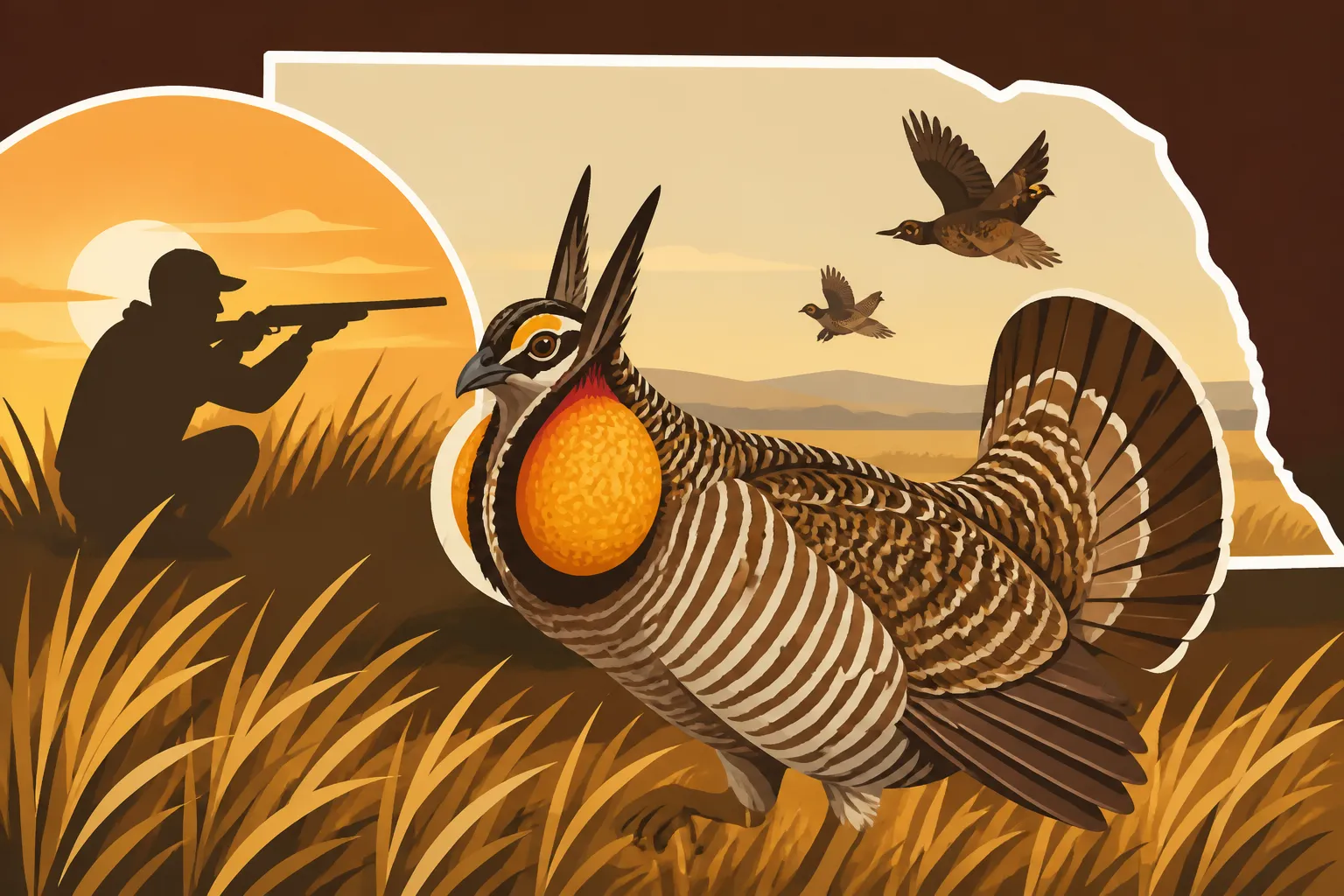
Both sharp-tailed grouse and greater prairie-chickens are magnificent birds, but they do have distinguishing features. Sharptails, as their name suggests, have pointed tails with white outer feathers, and often display more barring on their underparts. Their habitat tends to be a bit more open, favoring the short to mid-grass prairies of the Sandhills, often near shrubby areas or hayfields. On the other hand, greater prairie-chickens have rounded tails and darker, more prominent barring across their entire body, giving them a "barred" look. They prefer taller, denser native grasslands, often found in parts of the Sandhills and the eastern reaches of the grouse range.
While both species can occasionally be found in the same general areas, knowing what specific cover to focus on can increase your chances. Sharptails might flush from a small patch of plum thicket or a slightly higher rise, while prairie chickens are more likely to burst from the middle of a vast, unbroken prairie swale. Distinguishing between them in flight can be tricky, especially with the adrenaline pumping, but understanding their habits helps you predict where they might be. Nebraska's wild spaces are truly a treasure, home to these iconic birds, and a deeper dive into their natural history can be found in our guide on Greater Prairie-Chickens and Sharptails in Nebraska.
Key Season Dates and Duration
Nebraska's prairie grouse season typically opens in early September and runs through January 31st. This gives hunters a substantial window of opportunity, starting when the weather is often still warm and birds are less wary, and extending into the colder winter months when snow can make locating birds easier. The season is generally statewide for both species, meaning you don't have to worry about complex zone boundaries like with some other game birds.
The early part of the season in September offers unique challenges and opportunities. Birds are often still in larger coveys, but dense cover and warm temperatures can make finding and working them tough. As the season progresses into October and November, cover starts to thin, and birds might become more scattered but also more concentrated around reliable food sources or dense thermal cover. This long season allows for different hunting styles and experiences, from early-season walking efforts to late-season hunts with snow on the ground.
Daily and Possession Bag Limits
For both sharp-tailed grouse and greater prairie-chickens, Nebraska has a combined daily bag limit of three birds. This means you can harvest any combination of three sharptails or prairie chickens in a single day. The possession limit is generally nine birds, which means you can have up to nine birds in your freezer or in your possession at home after multiple days of hunting.
It’s crucial to keep track of your harvest, especially if you're hunting for several days or with a group. For example, if you shoot three birds on a Saturday, you can hunt again on Sunday and take three more, bringing your total to six in possession. If you then head out Monday and bag another three, you'd reach your possession limit of nine. Always check the current Nebraska Game and Parks Commission (NGPC) regulations pamphlet or their website before heading afield, as these limits can occasionally be adjusted based on population surveys and management goals. Adhering to these limits helps ensure sustainable hunting for future generations.
Essential Regulations and Permit Requirements for Grouse Hunters
Before you even think about loading up your shotgun and heading out, understanding the necessary permits and rules is paramount. Nebraska takes its hunting regulations seriously, and being fully compliant ensures a legal and enjoyable experience for everyone.
Required Permits and Stamps
To hunt prairie grouse in Nebraska, you'll need a couple of key things in your pocket. First and foremost is a valid Nebraska Annual Hunt Permit. This is your general license to hunt small game in the state. If you're coming from out of state, the Total Cost of a Nonresident Nebraska Deer Hunt article provides a good overview of general non-resident fees, but specifically for small game like grouse, you'll need the annual hunt permit. Beyond that, you'll also need a Nebraska Habitat Stamp. This stamp is a critical component, as the funds generated directly support habitat improvement projects across the state, benefiting prairie grouse and countless other wildlife species. These are the main requirements for grouse, but if you happen to be chasing waterfowl during other seasons, remember that federal duck stamps and HIP registration are additional necessities.
It’s always a good idea to purchase your permits well in advance through the NGPC website or a licensed vendor. Many hunters rely on tools like GoHunt to keep track of draw dates and specific unit regulations for big game, but even for over-the-counter permits like these, it’s good practice to secure them early. This ensures you’re ready to go when the season opens and avoids any last-minute scrambling. Remember, a printed copy or a digital version on your phone is usually acceptable, but having it readily accessible is key. For more details on what's required, check out Nebraska Habitat Stamp and Hunter Education.
Legal Shooting Hours and Equipment Restrictions
Nebraska's legal shooting hours for upland birds, including prairie grouse, generally run from 30 minutes before sunrise to sunset. This means you need to be off the birds and unloaded before the sun dips below the horizon. Always carry a reliable watch or use a sunrise/sunset app on your phone to stay within these times, especially on those cloudier days when natural light can be deceiving.
When it comes to equipment, shotguns are the primary weapon of choice for grouse. You can use any gauge from 10 to 28, but 12-gauge and 20-gauge shotguns are by far the most popular due to their versatility and ammunition availability. As for shot type, while lead shot is generally legal for upland birds on private land, nontoxic shot is required on all federal lands and many state-managed areas, including Wildlife Management Areas (WMAs) and Open Fields and Waters (OFW) tracts. Given that many of the best grouse hunting opportunities are on public lands, it's a very good habit to simply use nontoxic shot like steel, bismuth, or tungsten matrix when grouse hunting to avoid any issues. Pay close attention to signage at public access points. Also, shotguns must be plugged to hold no more than three shells (one in the chamber, two in the magazine). Safety always comes first, so ensure your firearm is in good working order and practice safe handling afield.
Public vs. Private Land Access Rules
Nebraska offers fantastic public land opportunities for prairie grouse, especially in the Sandhills and parts of the Panhandle. However, understanding the rules for both public and private land is critical. On public lands like National Grasslands (such as the Oglala National Grassland), National Forests (like the Halsey National Forest), and state Wildlife Management Areas, you generally have free access for hunting, provided you adhere to specific area regulations. When you're trying to figure out which public tracts might hold birds, resources like the Nebraska Public Access Atlas or mapping tools such as those offered by GoHunt are invaluable. They can show you precisely where you can legally hunt. You can also explore how to use Reading the Nebraska Public Access Atlas to your advantage.
Private land, on the other hand, requires explicit permission from the landowner before you step foot on it. Nebraska is not a "walk-in" state for private land unless it's specifically enrolled in a public access program. Always secure permission well in advance, and if possible, get it in writing. Be respectful, offer to share game, and always leave the property better than you found it. Many landowners are incredibly generous, but that generosity is earned through respect and ethical behavior. The Nebraska Game and Parks Commission also manages the Open Fields and Waters (OFW) program, which leases private land for public hunting access. These tracts are clearly marked with yellow signs and offer additional opportunities, often for upland birds.
Strategies for a Successful Nebraska Prairie Grouse Hunt
Successfully hunting prairie grouse in Nebraska demands a blend of good scouting, effective hunting techniques, and an understanding of how these birds react to their environment. It's rarely a "gimme" hunt, and that's part of the draw!
Scouting for Prime Grouse Habitat
Finding prairie grouse starts long before opening day. Pre-season scouting, whether on foot, from a vehicle, or with mapping apps, is crucial. Both sharp-tailed grouse and greater prairie-chickens thrive in large expanses of native grasslands, but they'll often key in on specific features within that landscape. Look for areas with a mosaic of different grass heights, interspersed with low-growing shrubs like sandhill plums or wolfberry, and crucially, reliable water sources. In the early season, birds will often be spread out across vast tracts, but as things dry out or cool down, they'll concentrate near water holes, springs, or even damp depressions in the Sandhills.
Using aerial maps on your phone or computer, like those available through GoHunt mapping subscriptions, can help you identify these key features: areas of dense grass, draws with heavier cover, and obvious water sources. Checking forecast models or platform predictions like those found on GoHunt can offer a solid starting point for where birds might be holding up. Driving gravel roads at dawn or dusk can also reveal birds flying to and from roosting or feeding areas, giving you clues to their preferred locations. Pay attention to "blowouts" – sandy depressions where short, sparse vegetation grows, as grouse sometimes dust themselves there or use them for loafing. For specific tactics related to walking these vast spaces, our article on Walking Nebraska Sandhills Meadows for Sharptails offers some excellent advice.
Hunting Methods: Walking, Blocking, and Dogs
Prairie grouse hunting is primarily a walking game. Covering ground systematically, often in a zig-zag pattern or along contours, is the most common and effective method. You're trying to flush birds that are often holding tight, relying on their camouflage. Walking into the wind is often best, as it helps carry your scent away from the birds and can also aid your dog if you have one. In vast, open country, teamwork can be incredibly effective. A common strategy is "blocking" a field or a large grass swale with multiple hunters. One or two hunters walk through the cover, pushing birds towards others positioned at the downwind end or along a known escape route. This requires good communication and safety protocols.
Speaking of teamwork, a good bird dog is an absolute game-changer for prairie grouse. Dogs cover far more ground than a human, have an incredible sense of smell for locating birds, and are invaluable for retrieving downed birds in thick cover, preventing lost game. Breeds like German Shorthaired Pointers, English Pointers, Brittanys, and setters excel in this environment. Without a dog, expect to do a lot more walking and be prepared to carefully mark where birds fall to aid in recovery. Whether you're working alone or with a partner and dogs, remember that Working Sharptails and Prairie Chickens on Foot is a marathon, not a sprint.
Reading Weather and Its Impact on Grouse Behavior
Weather, especially in Nebraska's variable climate, plays a huge role in how and where grouse behave. Early season hunts in September can be notoriously warm, with temperatures easily climbing into the 80s or even 90s. In these conditions, grouse will seek shade and water. Focus your efforts around springs, windmills, or shaded draws, and plan to hunt early mornings and late evenings. Midday can be slow and hard on both hunters and dogs, so be mindful of Hunting Grouse in September Heat.
As fall progresses and temperatures drop, grouse behavior shifts. Colder weather and light snow can concentrate birds in thicker thermal cover like plum thickets or dense grass patches that offer protection from the wind. Heavy winds, a common feature of the Nebraska plains, can make birds hold even tighter, requiring you to almost step on them before they flush. Conversely, high winds can also make birds flighty and prone to flushing wild. Pay close attention to wind direction, using it to your advantage for approaching birds, and understand that adapting your strategy to the day's conditions is crucial for success.
Key Considerations for Hunting Grouse in Nebraska's Unique Landscape
Nebraska's prairie grouse season offers some of the most unique and challenging upland hunting experiences in the country. To truly make the most of it, you need to be prepared for the distinctive landscape and understand the broader context of these remarkable birds.
Navigating the Sandhills Terrain
The Nebraska Sandhills are an iconic, breathtaking landscape, but they demand respect and preparation from hunters. This isn't flat, easy walking. You'll encounter rolling hills, deep valleys, and incredibly soft, sandy soil that can quickly bog down a vehicle. Good boots with ankle support are essential for miles of walking up and down these sandy dunes. Hydration is also critical, especially during the early season. Carry more water than you think you'll need for both yourself and any canine companions.
Vehicle preparedness is also paramount. A 4×4 truck or SUV is highly recommended, and even then, knowing how to drive in sand and having recovery gear (tow strap, shovel, traction boards) is a smart move. Getting stuck miles from pavement is a common frustration out here. Always let someone know your hunting plan and expected return time, as cell service can be spotty in remote areas. The vastness of the Sandhills is part of its allure, but it requires careful planning to navigate safely and effectively.
Conservation Efforts and Population Trends
Prairie grouse populations have faced challenges across their range, largely due to habitat loss and fragmentation. In Nebraska, sustained efforts from the Nebraska Game and Parks Commission, conservation organizations like Pheasants Forever and the National Wild Turkey Federation, and private landowners have been crucial in maintaining viable populations. Programs like the Conservation Reserve Program (CRP) have provided vital nesting and brood-rearing cover. For more on the impact of such initiatives, refer to CRP Acres and Nebraska Bird Numbers.
Nebraska actively monitors its prairie grouse populations through various surveys, including lek counts (where males perform their breeding rituals) and brood surveys. These data inform bag limits and season lengths, ensuring that hunting remains sustainable. As hunters, we play a vital role in these conservation efforts, not just through our license and stamp purchases, but also by practicing ethical hunting and respecting the land. Supporting organizations that invest in habitat is one of the best ways to ensure these incredible birds continue to thrive. You can learn more about how the state monitors wildlife populations in How Game and Parks Counts Wildlife.
Field Care and Handling Your Harvest
Once you've successfully harvested a prairie grouse, proper field care is essential, especially in the warmer early season, to ensure the meat quality is top-notch. Unlike pheasants, grouse meat can be quite delicate and benefits from quick cooling. The best practice is to field dress your birds as soon as possible after harvest. This involves removing the entrails, which helps the carcass cool down rapidly.
If you're hunting on a warm day, consider carrying a small cooler with ice in your vehicle to immediately place your dressed birds. If you're going to be walking for a long time, breathable game bags can help protect the birds and allow air circulation. Avoid piling birds in a hot vehicle or direct sunlight. Once back at camp or home, skinning and breasting out the birds for the freezer is a common method, or you can pluck them if you prefer to cook them with the skin on. Always be mindful of tagging and transport regulations; typically, one fully feathered wing must remain attached to the bird until it reaches your home or a meat processor for identification purposes. Our guide on Field Dressing and Cooling Game in Warm Weather offers more detailed advice that applies perfectly to grouse.
Nebraska Prairie Grouse Season at a Glance
For a quick reference on what to expect, here's a summary of key points for Nebraska's prairie grouse season:
| Feature | Details |
|---|---|
| Species | Sharp-tailed Grouse & Greater Prairie-Chicken |
| Typical Season Dates | Early September – January 31st (Always confirm current year's dates with NGPC) |
| Daily Bag Limit | 3 birds (combined total of both species) |
| Possession Limit | 9 birds (combined total of both species) |
| Required Permits | Nebraska Annual Hunt Permit, Nebraska Habitat Stamp |
| Shooting Hours | 30 minutes before sunrise to sunset |
| Shot Type | Lead is legal on private land; Nontoxic shot required on federal lands, WMAs, and OFW tracts |
| Habitat | Native grasslands, Sandhills, interspersed with shrubs and water sources |
| Best Hunting Tools | Good boots, 4×4 vehicle (for Sandhills), maps (GoHunt, Public Access Atlas), bird dog (highly recommended) |
Disclaimer
Please remember that hunting regulations can change. While this guide is built on the most current information available, it is always your responsibility to consult the official Nebraska Game and Parks Commission regulations booklet or website before heading afield. Stay safe and happy hunting!