Niobrara River Valley Access
Finding reliable hunting access in a unique, diverse landscape like Nebraska's Niobrara River Valley can feel like cracking a secret code. Many hunters get frustrated staring at maps, wondering which parcels are actually open and how to navigate the mixed public and private ground that defines this stunning region. This guide is here to demystify hunting the Niobrara, offering clear insights into where and how you can access prime hunting opportunities along this remarkable river.
The Niobrara River Valley: A Unique Nebraska Hunting Landscape
The Niobrara River Valley isn't just another part of Nebraska; it's an ecological marvel, often called "Nebraska's Amazon" for its incredible biodiversity. For hunters, this means a diverse array of game species and a truly unique hunting experience, far removed from the typical row-crop fields or open Sandhills prairies. Understanding the distinct characteristics of this valley is your first step to unlocking its hunting potential.
Geographical Overview and Habitat Diversity
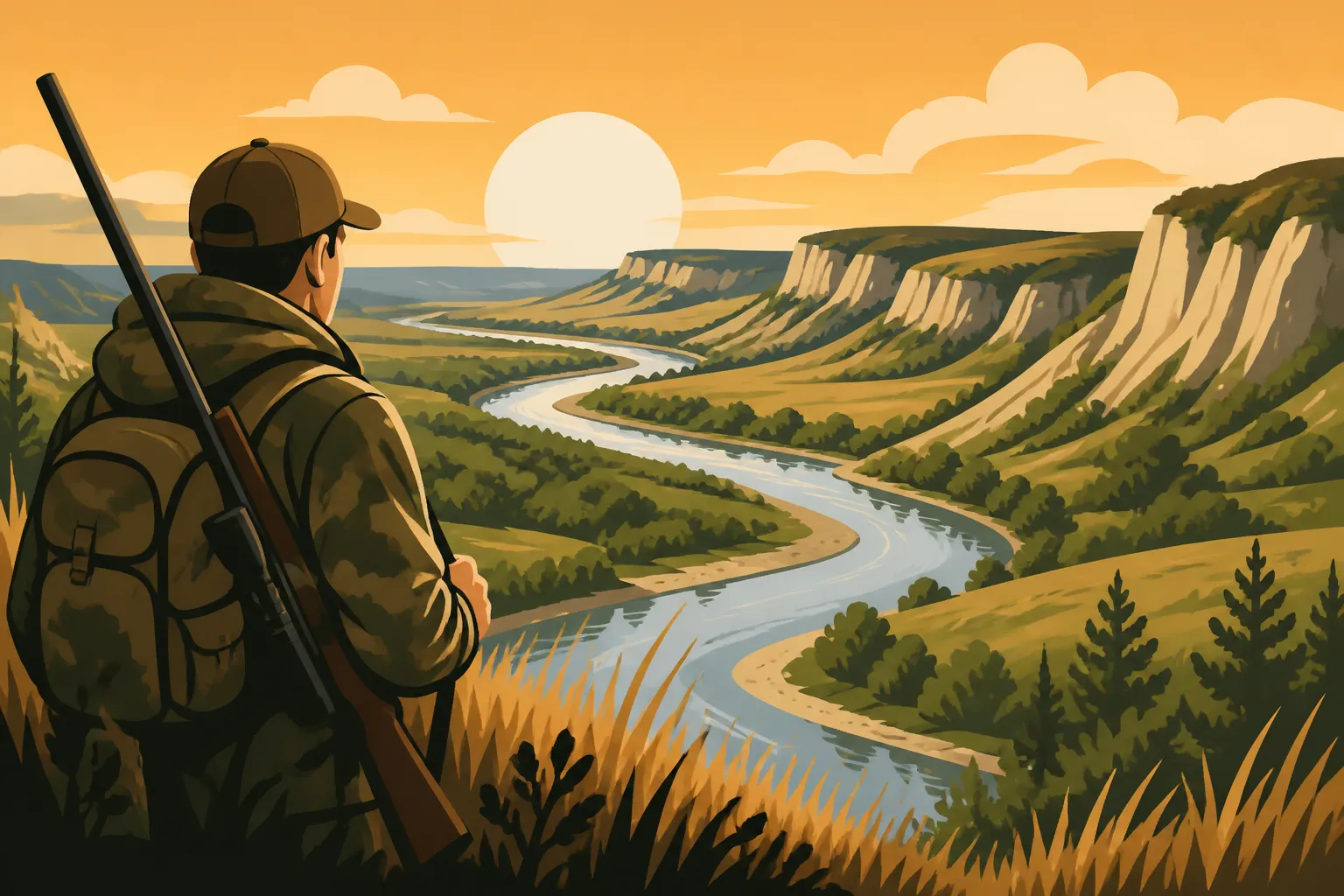
What makes the Niobrara so special, geographically speaking? Imagine a ribbon of verdant timber, rugged canyons, and spring-fed tributaries cutting through the rolling Sandhills. The Niobrara National Scenic River designation protects a significant portion of its length, highlighting its natural beauty and unique ecological features. Along its course, you'll find a blend of habitats unlike almost anywhere else in the state. From towering ponderosa pine forests that cling to the canyon walls to dense stands of hardwood timber like oak, ash, and cottonwood in the river bottom, the cover is incredibly varied. This isn't flat, open country; instead, it's a dynamic landscape of steep bluffs, hidden ravines, and narrow floodplain areas that create natural travel corridors and bedding sanctuaries for wildlife. The unique blend of eastern and western flora and fauna species creates a mosaic of ecological zones, making it a hotspot for many different types of game animals.
This convergence of ecosystems means you might find eastern species like white-tailed deer thriving alongside western species like mule deer, and a variety of upland birds and waterfowl moving through. The geological features, including exposed sandstone and limestone, add another layer of complexity to the terrain, often forming natural barriers or creating secluded pockets of habitat. Navigating this landscape requires a keen eye for topography and an understanding of how animals use these distinct features for food, water, and shelter. It's truly a place where you can feel like you've stepped into a different world, even within Nebraska.
Primary Game Species in the Niobrara
Given the rich and varied habitats, the Niobrara River Valley offers incredible opportunities for a range of game species. Without a doubt, deer hunting is a major draw. You'll find healthy populations of White-Tailed Deer Across Nebraska thriving in the dense river bottom timber, utilizing the cover and abundant food sources the valley provides. These whitetails are often accustomed to the broken terrain, making for challenging but rewarding hunts. Additionally, depending on the specific stretch of river, especially as you move west, you might encounter mule deer, particularly on the more open, prairie-adjacent slopes and bluffs overlooking the river. The blend of these two species can make for an exciting mixed-bag deer hunt.
Beyond deer, the Niobrara is also a fantastic destination for turkey hunters. The river corridors, with their mature timber and roosting trees, are ideal for Wild Turkeys in Nebraska and Their Decline. Both Eastern and Merriam's subspecies can be found here, offering varied hunting experiences depending on the specific location. Spring turkey hunting along the Niobrara, listening to gobblers echo off the canyon walls, is an unforgettable experience. Upland bird hunters also find success, particularly with pheasants and quail in areas where the timber transitions to agricultural fields or dense grassland cover on the fringes of the valley. Waterfowl, especially ducks and geese, use the river itself and associated wetlands during migration, providing additional opportunities for those willing to scout and set up near the water. The diverse habitat truly supports a thriving wildlife community.
Understanding Public Access Opportunities Along the Niobrara
For many hunters, the big question is always, "Where can I actually go?" The Niobrara River Valley, while beautiful, is a mix of private and public land, and knowing how to distinguish between the two and what opportunities exist is crucial. Thankfully, Nebraska has some excellent programs and designated areas that provide public hunting access along this scenic waterway.
State Wildlife Management Areas WMAs and State Parks
Along the Niobrara, Nebraska Game and Parks manages several Wildlife Management Areas (WMAs) and portions of State Parks that offer public hunting. These areas are specifically acquired and managed for wildlife habitat and public recreation, including hunting. For example, specific WMAs like Niobrara State Park WMA near Niobrara or Norden Bridge WMA further west provide critical access points to the river corridor and its surrounding habitats. These WMAs often consist of significant blocks of land, featuring mature timber, river frontage, and adjacent upland areas that are perfect for deer, turkey, and sometimes upland birds.
Each WMA has specific Nebraska Wildlife Management Area Rules regarding hunting, camping, and vehicle use, so always check the signage or the Nebraska Game and Parks website for the particular area you plan to visit. While State Parks are generally geared towards broader recreation, many do have designated hunting areas, especially during certain seasons. It's not uncommon to find areas open for archery deer or fall turkey hunting within a State Park or an associated WMA. These state-managed lands are often well-marked, but access points might be limited, so detailed mapping and scouting are always recommended. Don't assume that because it's a state park, the entire area is off-limits to hunting; always investigate the specific regulations for the area.
National Wildlife Refuges and Scenic River Lands
Beyond state-managed areas, the Niobrara River Valley also benefits from federal protection and public access opportunities. The Niobrara National Scenic River, managed by the National Park Service, preserves much of the river's unique character. While the scenic river designation itself doesn't automatically mean open hunting across all adjacent lands, it often leads to associated federal or state areas that do permit hunting. Furthermore, the Valentine National Wildlife Refuge, though not directly on the Niobrara, is relatively close and manages significant wetland and grassland habitat in the Sandhills region, which can be an excellent resource for waterfowl and upland birds.
It's important to understand that National Wildlife Refuges have very specific regulations, often different from state WMAs. Some refuges might allow hunting for certain species during specific times of the year, while others may be entirely closed. Always check the individual refuge's hunting brochure or website. For the Niobrara National Scenic River, hunting opportunities typically exist on adjacent state or national forest lands, or through private land access, rather than directly on all federally designated scenic river corridor lands, which can be complex due to the mixed ownership. Utilizing resources like The Nebraska Public Access Atlas will be crucial for discerning these specific boundaries and allowed activities.
Open Fields and Waters OFW Program along the River
One of the most valuable resources for hunters seeking access along the Niobrara, particularly for private land otherwise unavailable, is Nebraska's Open Fields and Waters (OFW) Program. This innovative program leases hunting and fishing access from private landowners, clearly marking these parcels with bright yellow signs. These signs are your beacon, indicating public walk-in hunting access on properties that might otherwise be completely off-limits. Along the Niobrara, you'll find various OFW tracts that can range from small pockets of river bottom timber to larger fields and grasslands bordering the river.
The Nebraska's Open Fields and Waters Program is a game-changer, especially in areas with high percentages of private land. These tracts are often managed with wildlife in mind by the landowners, encouraged by the program. They can offer fantastic opportunities for deer, turkey, and upland birds. The beauty of OFW is its simplicity: if you see the yellow sign, you can walk in and hunt according to program rules. However, these tracts can change yearly, so it's essential to consult the most current Public Access Atlas, available online or through the Game and Parks website, to see which properties are enrolled for the current season. This Atlas is your best friend for identifying these crucial access points and planning your hunt.
Navigating Access: Tools and Tactics for the Niobrara Hunter
The Niobrara's mixed landscape demands a strategic approach to finding and utilizing hunting access. Relying solely on physical signs can lead to frustration, especially when dealing with the complex patchwork of public and private ownership. Modern tools combined with traditional scouting methods are your best bet.
Utilizing Digital Mapping Tools
In today's hunting world, digital mapping applications are indispensable, especially when tackling complicated terrain like the Niobrara River Valley. Platforms like onX Hunt have revolutionized how hunters scout and navigate. With onX Hunt, you can overlay public and private land boundaries directly onto detailed topographic maps and aerial imagery. This feature is absolutely critical for deciphering the legal hunting boundaries along the Niobrara, where private property can abut public ground with little visual distinction on the ground. You can clearly see where that hidden finger of WMA land actually extends, or where an Open Fields and Waters tract begins, allowing you to confidently pursue game without worrying about trespassing.
Another excellent resource is GoHunt, which, while often focused on Western states, also provides valuable insights and tools for researching tags and units, which can indirectly aid in planning a Niobrara hunt. While its primary strength might be for big game draws in other regions, its comprehensive data and mapping features are increasingly useful across the country. For the Niobrara, specifically, using onX Hunt to identify public access points, track your movements, mark waypoints for potential stands, and understand the terrain from a bird's-eye view is paramount. It allows you to virtually scout from home, saving valuable time and ensuring you're only hunting legal ground. Features like onX Layers for Nebraska Land Status are precisely what you need in this area.
Traditional Scouting and Local Knowledge
While digital maps are a powerful ally, they are no substitute for good old-fashioned boots-on-the-ground scouting. The Niobrara's canyons, thick timber, and varied topography can obscure crucial details that only become apparent when you're physically present. Spend time hiking the public tracts you've identified on your map. Look for game trails, rub lines, scrapes, and bedding areas. Pay attention to natural funnels created by the terrain and how animals might move between different habitat types. Scouting isn't just about finding game sign; it's about understanding the land itself. How does the wind swirl in those canyons? Where are the reliable water sources? Which side of the bluff gets the most morning sun for bedding?
Furthermore, talking to local residents, especially those who don't hunt but live near hunting areas, can provide invaluable local knowledge. Conservation officers, local tackle shop owners, or even farmers whose land isn't enrolled in OFW might offer insights into historical game movement patterns or particularly active spots. Always be respectful and upfront; remember you're asking for a favor, not demanding information. Combine the bird's-eye view from your digital map with the intimate details gathered from physical scouting, and you'll build a much more comprehensive understanding of your hunting area. This blend of new and old-school tactics is how you truly crack the Niobrara code.
Respecting Boundaries and Private Land Etiquette
Hunting the Niobrara requires an absolute commitment to respecting property boundaries. With the intermingling of public and private land, it's incredibly easy to inadvertently cross onto private ground if you're not paying close attention. This is where your digital mapping tools, like onX Hunt, become your primary defense against trespassing. Always double-check your position, especially if you're tracking game or moving through dense cover. Know the What Nebraska Trespass Law Requires and always err on the side of caution. If there's any doubt about where a boundary lies, back off and find an alternative route.
Furthermore, if you are attempting to gain Getting Private Land Permission in Nebraska along the Niobrara, approach landowners with respect and a clear plan. Don't show up on opening day expecting access. Instead, make contact well in advance of the season, neatly dressed, and clearly articulate what you're asking for. Offer to help with chores, pick up trash, or share game meat. A bad encounter with one disrespectful hunter can ruin access for everyone else. Always close gates, don't leave trash, and report any illegal activity you witness. Being a good steward of the land, whether public or private, ensures a positive reputation for all hunters and helps maintain future access opportunities.
Challenges and Considerations for Niobrara Hunting
Hunting the Niobrara River Valley offers incredible rewards, but it's not without its unique set of challenges. This isn't a simple walk in the park, and preparing for these potential hurdles will make your experience safer and more successful.
Terrain and River Crossings
The Niobrara River Valley is characterized by its rugged and broken terrain. Unlike the relatively flat expanses found elsewhere in Nebraska, here you'll encounter steep bluffs, deep ravines, and eroded canyons. Walking miles to access prime spots can be physically demanding, requiring good stamina and appropriate footwear. Boots for Walking Nebraska Grass and Sand are essential, providing ankle support and good traction on slippery slopes, loose sand, and rocky ground. Expect to climb, descend, and navigate uneven surfaces, which can be particularly challenging when packing out game.
The river itself also presents a significant challenge. The Niobrara is often shallow enough to wade in places, but currents can be strong, and the bottom uneven. Attempting a river crossing, especially if you're unfamiliar with the area or if water levels are high due to recent rains, can be dangerous. Never attempt to cross the river if you're unsure of the depth or current, especially with heavy gear or after dark. Always scout potential crossing points carefully or, even better, stick to areas with established bridges or designated access points that don't require river crossings. Understanding the river's dynamic nature is key to both safety and effective hunting.
Weather and Seasonal Fluctuations
Nebraska weather is notoriously unpredictable, and the Niobrara River Valley is no exception. Early archery seasons can bring intense heat, requiring careful planning for Field Dressing and Cooling Game in Warm Weather and carrying ample water. Days can start cool and quickly warm, or vice versa. The fall and winter seasons usher in cold winds, freezing temperatures, and sometimes significant snowfall. The canyons can trap cold air, making it feel much colder than forecasted. Clothing for Nebraska Wind and Cold becomes critical, with layers being your best friend. A good wind-blocking outer shell is essential, as the wind whipping through the valley can cut right through inadequate clothing.
Rain can quickly turn dirt roads into impassable mud bogs, and snow can completely alter the landscape, making navigation difficult and increasing the risk of getting stuck. Always check the forecast leading up to and during your hunt. Be prepared to change plans or even shorten your hunt if severe weather is predicted. Having a reliable vehicle, preferably 4×4, is highly recommended if you plan to explore some of the more remote access roads in the valley. The river's water level can also fluctuate dramatically with rainfall, impacting potential crossing points or low-lying access roads.
Sharing the Resource: Dealing with Other Users
The Niobrara River Valley is a popular destination not just for hunters, but also for kayakers, canoers, campers, hikers, and wildlife observers. As a scenic river, it draws a diverse crowd, especially during warmer months. This means hunters need to be extra mindful of sharing the resource. During early archery seasons, particularly in September and October, you might encounter recreational users on the river or hiking trails, even in areas open to hunting. Always be aware of your surroundings, identify your target positively, and be extra cautious with your shot selection to ensure safety for all.
Communication and courtesy go a long way. If you encounter other users, a friendly nod or greeting can help foster a positive image for hunters. Avoid setting up in high-traffic areas if possible, or adjust your hunting times to less popular hours for other users, such as early mornings or late evenings. Public areas can sometimes see increased pressure, especially during opening weekends. Scouting Nebraska Public Ground Before Opening Day can help you find less-pressured pockets, and walking a little further from parking areas often yields a more secluded experience. Table of common public access types along the Niobrara:
| Access Type | Typical Habitat/Terrain | Primary Game Species | General Rules & Considerations | Digital Map Visibility |
|---|---|---|---|---|
| State Wildlife Mgmt. Areas | River bottom timber, bluffs, uplands | Deer, Turkey, Upland Birds | Specific WMA rules apply; check signage. Often well-marked. | Excellent |
| Open Fields and Waters (OFW) | Diverse, private land by river | Deer, Turkey, Upland Birds | Walk-in only; check current Atlas. Yellow signs mark boundaries. | Excellent |
| National Scenic River (NPS) | River corridor, adjacent canyons | Limited direct hunting | Focus on adjacent public lands, not necessarily NPS land itself. | Good |
| Private Land (with permission) | Varied, depending on landowner | Deer, Turkey, Upland Birds | Requires explicit permission; respect landowner rules. | Visible as private |
| School Trust Lands | Scattered, often grasslands | Deer, Antelope (west), Birds | Check specific lease rules; access can be restricted. | Visible as public |
Strategies for a Successful Niobrara Hunting Experience
To truly make the most of your Niobrara hunting adventure, a thoughtful approach to planning, gear, and safety is paramount. This unique environment rewards preparation and adaptability.
Planning Your Trip
Thorough planning is the cornerstone of a successful hunt in the Niobrara River Valley. Start by identifying your target species and the season you plan to hunt. Then, dedicate significant time to researching specific hunting units and public access points. Nebraska Big Game Permits and How to Get One and Nebraska Turkey Permits and the Nonresident Cap are vital first steps for big game and turkey. Utilize The Nebraska Public Access Atlas extensively, both online and with the mobile app, to pinpoint WMAs, OFW tracts, and other public ground. Don't just look at a map; study the topography, identify potential bedding areas, travel corridors, and access routes.
Consider the timing of your hunt. Early season archery might mean dealing with heat and insects, but potentially less hunting pressure from other users on public land. The firearm seasons, while often colder, concentrate deer movement and can be very productive. If you're planning a multi-day trip, research local accommodations or camping options available on public land. Pack enough food, water, and emergency supplies for the duration of your stay, accounting for the remoteness of some areas. Having a backup plan for unexpected weather or access issues is always a smart move.
Essential Gear for River Valley Hunting
The diverse and challenging nature of the Niobrara calls for specific gear choices to ensure comfort, safety, and success. As mentioned before, sturdy, comfortable, and waterproof boots with good ankle support are non-negotiable for traversing the uneven terrain. Layered Clothing for Nebraska Wind and Cold is key, allowing you to adapt to changing temperatures throughout the day. A good waterproof and windproof outer shell is critical. For deer hunters, reliable Bow Setups for Nebraska Whitetails or Rifle Setups for Nebraska's Open Country are important, depending on your chosen method. Remember to check regulations on specific calibers, especially if you're hunting with a straight-wall cartridge.
Beyond your weapon, essential items include a quality backpack to carry water, snacks, extra layers, and first-aid supplies. A good rangefinder is invaluable for accurate shot placement in broken terrain, and binoculars or a spotting scope can help locate game in distant canyons. A headlamp or flashlight is crucial, as you may be entering or exiting in low light. For those relying on digital maps, ensure you have a portable power bank to keep your devices charged, as cell service can be spotty in the valley. Game bags and a cooler with ice are vital, especially during warmer seasons, for proper Field Dressing and Cooling Game in Warm Weather. Don't forget bug spray for early season hunts!
Safety First: Water, Wildlife, and Remote Area Considerations
Hunting in the Niobrara River Valley means embracing a wilder, more remote experience, which inherently carries certain risks. Water safety is paramount if you're hunting near or planning to cross the river. Always assess currents and depths carefully. Never go alone if you plan a water crossing, and consider carrying a dry bag for essential electronics. Be aware of other wildlife beyond your target species; rattlesnakes can be present, especially in warmer months, so watch your step and wear appropriate snake-resistant footwear if concerned.
The remoteness of some areas means help can be a long way off. Always let someone know your hunting plans, including your exact location and expected return time. Carry a fully charged cell phone, but don't rely on it for navigation or communication in areas with no service. A GPS unit or a downloaded offline map on your phone, like those offered by onX Hunt, is a much safer bet. A comprehensive first-aid kit, a whistle, and emergency signaling devices are also wise additions to your pack. Always practice safe firearm handling, be aware of your surroundings, and hunt within your physical capabilities. The Niobrara is a special place, and respecting its challenges ensures a safe and memorable hunt.
Disclaimer
This article is for general informational purposes only and does not constitute professional advice. Laws, prices and regulations vary by location and change over time. Consult a qualified professional for guidance on your specific situation.